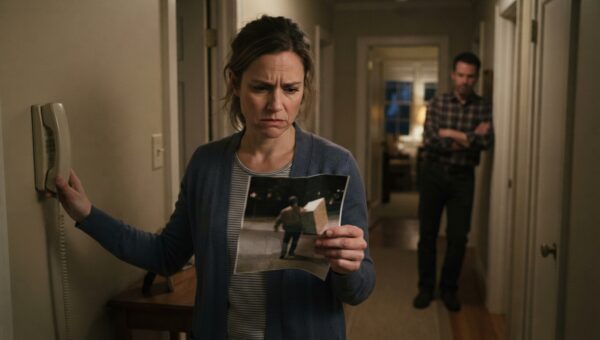
The lobby of the San Juan airport smelled like damp carpet and stale diesel fumes, and I remember staring at the green plastic numbers on the departure board while my hands shook so hard I dropped my boarding pass onto the linoleum. Forty-seven minutes had passed since Dorothy hung up on me. Forty-seven minutes of staring at an unresponsive screen, dialing and redialing a number that went straight to voicemail every single time while Albert stood beside me, his face turning the color of wet lime under the flickering fluorescent tubes.
We had been married for twelve days. We left our six-year-old son, Theo, with Dorothy because she insisted she wanted the bonding time, because she promised she was rested, because I was foolish enough to believe that a grandmother could put a child’s safety above her own deep-seated need to run our household from three miles away. Two days into what was supposed to be a seven-day trip, my phone rang with her voice screaming through the speaker at a volume that made my ears ring.
“Elena, you need to come back now! Something terrible happened to Theo. IT MIGHT BE TOO LATE IF YOU DON’T COME!”
She didn’t give me a hospital name. She didn’t tell me if he was breathing. She just severed the connection with a sharp click that sounded like a dry twig snapping under a heavy boot. We didn’t talk on the way to the ticket counter.
We didn’t talk during the four-hour layover in Miami where we sat on hard metal chairs watching passengers board flights to places that weren’t our hometown. I spent the entire flight with my forehead pressed against the cold plastic of the cabin window, watching the cloud banks roll past below us like dirty wool, convinced that when we landed, a police cruiser or an ambulance would be waiting at the gate to tell me my only child was gone.
When our cab pulled up to the curb at 4:14 in the morning, the house was dark. That was the first wrong note. A house with a medical emergency has porch lights burning, doors standing open, neighbors pacing on the porch. Our house looked like it was sleeping.
I didn’t wait for Albert to pay the driver. I threw the back door of the sedan open, scrambled up the porch steps, and jammed the brass key into the front door lock with fingers that felt like blocks of ice.
The key turned with a loud, familiar clatter. I shoved the door wide and stumbled into the hallway, my lungs burning, my mouth open to scream my son’s name.
The house smelled faintly of cinnamon toast and lemon furniture polish. From the living room came the cheerful, tinny chatter of a Saturday morning cartoon show.
I froze in the archway, my coat still half-zipped, my shoulder bag slipping down my arm. Theo was sitting cross-legged on the blue braided rug right in front of the television, wearing his dinosaur pajamas and eating a bowl of dry cereal out of a plastic red bowl. He wasn’t crying. He wasn’t bandaged. He didn’t even have a smudge of dirt on his knees.
He looked up, blinked against the hallway light, and smiled. “Mom? You’re back early.”
The sudden rush of air leaving my lungs sounded like a tire deflating. I dropped to my knees on the carpet right there by the coat rack, my knees hitting the floorboards with a dull thud that made Theo jump.
I crawled to him on all fours, grabbed his shoulders, and pulled him against my chest so hard I could feel the rapid, steady thrum of his little heart beating against my ribs. He felt warm. He felt solid. He felt entirely, impossibly unharmed.
“Are you okay?” I gasped, my fingers frantically searching his arms and back for blood or bruises that weren’t there. “Theo, baby, did something happen? Did you fall?”
Theo pulled back, looking mildly annoyed the way six-year-olds do when an adult interrupts their cartoon. “No. Grandma made pancakes. Then she watched cartoons with me. But she had to go home a little while ago because she forgot her medicine.”
“She what?” Albert’s voice came from the doorway, flat and hollow as he stepped into the hall with our heavy suitcases dragging behind him.
Before I could answer, the front door, which I had left unlatched, creaked open a few inches, and Dorothy stepped into the foyer. She wasn’t wearing her coat. She had her house slippers on, the gray felt ones with the faux-fur trim I bought her for Christmas two years ago. She looked entirely composed, carrying a wicker laundry basket she must have left out on the porch earlier that morning.
She stopped when she saw us kneeling on the rug. Her face didn’t show guilt or panic or relief. It showed a tight, self-satisfied smugness that made my blood run hot enough to sting.
“Well,” Dorothy said, adjusting the handle of the laundry basket on her hip. “You made good time. I told Albert you’d catch the red-eye if I laid it on thick enough.”
I stood up slowly, keeping Theo behind my leg. The relief that had flooded my veins five seconds ago was rapidly hardening into something dark and heavy, a cold weight settling behind my ribs.
“What did you just say?” I asked. My voice didn’t shake. That surprised me. It came out quiet and flat, the way my grandmother used to talk right before she took a switch to the porch rail.
Dorothy walked right past us toward the kitchen, setting the basket down on the counter with a deliberate clatter. “I said you made good time. Honestly, Elena, what did you expect? You leave a boy this age for a whole week with people who don’t know his routines, and you expect the world to just keep spinning while you sip tropical drinks on a beach somewhere? I had to do something to get your attention. You wouldn’t answer my text about the grocery delivery schedule on Friday night, so I had to make sure you understood the gravity of the situation.”
“Gravity,” I repeated. The word tasted like metal in my mouth. “You told me it might be too late. You told me something terrible happened to my son.”
“And did it?” Dorothy turned around, crossing her arms over her chest, leaning back against the refrigerator as if she were inspecting our kitchen paint job. “He’s right there eating his cereal, isn’t he? He’s fine. But you needed a reality check about where your priorities belong. Marriage is fine, Albert, but a mother is a mother for life. A new wife can wait a few days. A child cannot.”
Albert didn’t move. He stood just inside the front door, his hand still resting on the handle of my suitcase, looking between his mother and me like he had just walked into a foreign country where he didn’t speak the language.
“Mom,” Albert said, and his voice sounded thin, almost like a stranger’s. “You told us it was an emergency. You told us he was hurt.”
“I said something terrible happened,” Dorothy corrected him, her chin lifting with that familiar, untouchable arrogance. “And it did. He threw a terrible fit because you left him, Albert. He cried for forty-five minutes on Sunday night, asking why his daddy ran away to Mexico. That’s a terrible thing for a little boy to go through. Somebody has to look out for that child’s emotional stability since neither of you are doing it.”
I looked down at Theo, who had gone back to watching his show, entirely oblivious to the fact that his grandmother had just used him as a grenade to blow up our marriage’s first week of peace. Then I looked at Albert. I waited for him to roar. I waited for him to use that deep, booming voice he used when contractors tried to shortchange him on lumber down at the yard.
Instead, Albert just stood there, his jaw working, his eyes darting between the floor and his mother’s face.
“She called us, Albert,” I said, my voice dropping an octave, every word clipped and sharp. “She told us it might be too late. We spent six thousand dollars rebooking flights in the middle of the night. We sat in an airport terminal terrified our son was dead. And she did it because she wanted to prove she could whistle and make us dance.”
Dorothy scoffed, waving a dismissive hand in the air. “Oh, stop being so dramatic, Elena. You’re always looking for a reason to play the victim. I saved you from being bad parents. If you’d stayed down there another five days, that boy would have forgotten who his mother even was.”
That was the exact second the last thread snapped.
I didn’t yell. I didn’t cry. I walked straight past Albert, crossed the kitchen floor, and stopped two inches away from Dorothy. She was taller than me by half a head, but I looked right up into her pale, watery blue eyes, eyes that had watched me raise my son through three years of single motherhood before Albert and I ever went on our first date.
“Give me your keys,” I said.
Dorothy blinked, her smug expression slipping for a fraction of a second. “Excuse me?”
“The spare house key,” I said, holding my palm flat out between us. “The one to the front door, the back door, and the mailbox. Put them in my hand right now.”
“Albert,” Dorothy snapped, looking past my shoulder to her son with a theatrical look of betrayal. “Are you going to let your wife talk to me like this in my own son’s house?”
I didn’t turn around. I kept my hand out, my fingers trembling slightly with a rage so cold it felt like frostbite.
“Tell her, Albert,” I whispered, and I didn’t have to raise my voice because the kitchen was so quiet we could hear the refrigerator compressor humming in the corner. “Tell her whose house this is. Tell her who signed the mortgage before you even met me. Tell her right now, or I’m calling a cab back to the airport and I am not coming back with you.”
Albert took two slow steps forward. He didn’t look at his mother; he looked at me, and I saw the exact moment the fog cleared out of his eyes, replaced by a heavy, burning shame that finally matched my own. He had spent thirty-four years being trained to jump whenever Dorothy whistled. He had spent our entire courtship apologizing for her little intrusions, telling me *that’s just how she is, she only cares, she’s old-fashioned.*
He stopped beside me, reached into his jacket pocket, and pulled out his own key ring. Then he looked straight into his mother’s face.
“Give her the keys, Mom,” Albert said. His voice didn’t waver. It was the hardest I had ever heard him sound. “And then you need to walk out that back door.”
Dorothy stared at him, her mouth slightly open, the color draining out of her cheeks until her skin looked like old parchment. “You’re choosing her over me? After everything I did for you? After I raised you by myself for twelve years after your father, “
“Give her the keys,” Albert repeated, stepping closer so his mother had to physically back up against the counter.
With shaking fingers, Dorothy reached into the pocket of her cardigan, pulled out a small brass ring with three keys dangling from a faded leather fob, and dropped them into my palm. The metal felt heavy and cold.
“You’ll regret this,” Dorothy whispered, her voice shaking with genuine venom now as she straightened her sweater with jerky, violent movements. “Both of you. You think you’re safe in this little house, but you’re nothing without family. You’ll be begging me to come back by next weekend.”
“We won’t,” I said.
She turned on her heel, marched down the hallway without looking at Theo, and slammed the back screen door behind her so hard the glass rattled in its frame.
The silence that followed was massive. It filled the kitchen, spilled out into the hallway, and settled over the living room like a heavy winter blanket.
Albert stood there with his head down, staring at the linoleum where Dorothy’s slippers had been. He didn’t say anything for a long time, and honestly, that felt worse than any apology he could have offered. He just reached out slowly, took the brass key ring out of my open hand, and walked over to the back door, turning the deadbolt until it clicked shut with a solid, final sound. Then he dropped the keys into the ceramic bowl by the mail rack.
I walked back into the living room, sat down on the braided rug right beside Theo, and picked up a wooden blue block from his pile.
“Hey, buddy,” I said, my voice cracking just a little as I stacked the block on top of another one. “You want to finish your breakfast?”
Theo nodded, scooped another spoonful of cereal into his mouth, and leaned his head against my shoulder. Albert didn’t join us on the floor; he stayed standing by the kitchen threshold, watching us through the doorway with his hands shoved deep into his pockets, looking like a man who had finally figured out which house he actually lived in.
Outside, the neighborhood was starting to wake up, car engines turning over down the block, morning light hitting the tops of the maple trees. I reached down, picked up the brass keys from the ceramic bowl where Albert had left them, and slid them deep into the pocket of my jeans. Then I zipped the pocket shut, and for the first time in three days, I took a breath that reached all the way to the bottom of my lungs.