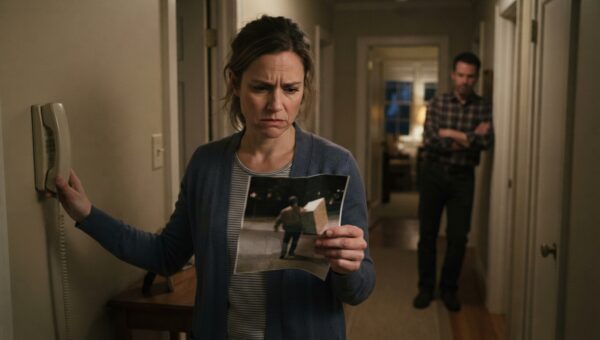
The cedar mail holder by our front door had a tiny notch on the left corner where the wood had splintered back when we first moved into this house, and I used to trace that little groove with my thumb every single morning while I waited for the coffee to perk. Arthur always told me I was going to wear right through the oak if I kept it up, but habits are funny things once they settle into your bones.
That splinter was the last normal thing I touched before the whole rhythm of our life together unraveled.
It started six months back when Arthur sat at the kitchen island, staring down into his coffee mug like there was something written at the bottom of it. He told me his mother Evelyn was struggling with her heating bills and her prescriptions down in Portland, her fixed income just not stretching the way it used to. We both agreed without a second thought because that was just the kind of people we were, or at least the kind of people I thought we were. We set aside two hundred and fifty dollars every single month, cash pulled straight from our joint savings, and Arthur took it upon himself to drive down to the village post office every third Tuesday to buy a money order and mail it off so Evelyn wouldn’t have to feel embarrassed about taking charity from her daughter-in-law.
“I’ll handle the errand, Clara,” Arthur had said, sliding the white envelope into his breast pocket with a little nod that always made me feel like I was married to a good, solid man. “Save you the trip in the rain.”
I believed him for half a year. I handed him the crisp bills every month, sometimes adding an extra twenty for her arthritis cream, never once doubting the weight of his handshake. My own parents had left us comfortable enough that I didn’t watch every single penny with a magnifying glass, which apparently made me look like an easy mark right inside my own kitchen.
The unraveling started on a Thursday afternoon when I was looking for the spare flashlight in the back of Arthur’s cedar closet because the fuse box had acted up during a midday squall. His old hunting jacket was bunched up on the top shelf, heavy and smelling faintly of mothballs and damp wool, and when I shoved it aside to reach the plastic box, a shoe box tumbled down and spilled its guts across the floorboards.
It wasn’t old tax forms or spare keys. It was rubber-banded stacks of twenty and fifty-dollar bills, thick enough to choke a horse.
I dropped to my knees right there on the dusty floor, my heart doing a strange, heavy stutter against my ribs. I reached out and pulled the top rubber band away, sliding my thumb across the face of the bills. My fingers caught on something stiff and uneven. I pulled it out into the dim closet light. It was a fifty-dollar bill with a distinct, jagged tear across the lower left corner, right through Alexander Hamilton’s collar.
I knew that exact tear because I had taped it together with transparent mending tape myself just two days earlier when I pulled it out of my purse to hand to Arthur for Evelyn’s June envelope.
Nobody said anything to me in that empty bedroom, and honestly the silence felt heavier than a physical blow.
I just sat there on my heels with that torn bill between my fingers, feeling the last six months of my marriage turn into dust. Arthur hadn’t mailed a single dime to Portland. He had been pocketing the cash, stuffing it away in a shoebox while his mother lived on a fixed pension, entirely unaware that her name was being used as a cover story for whatever game he was playing.
By the time I heard the front door click open an hour later, I had the box put back just the way I found it, though my hands wouldn’t stop shaking.
“Going down to the post office before they close the window,” Arthur called out from the entryway, his voice entirely too bright, too casual, rattling his car keys against the wooden hall table the way he always did when he was putting on a performance. “Back in twenty minutes.”
I didn’t answer him. I waited five long seconds until the front door shut and his sedan coughed to life in the gravel driveway. Then I slipped out the back door, got into my station wagon, and left the headlights off until I rolled past the hedge at the end of our lane.
I didn’t have to chase him far. Arthur didn’t go down the county road toward the village center at all. He took a sharp left down the old lumber access road, pulled into the empty gravel lot behind the abandoned feed store, and just sat there in his car for ten minutes staring at the steering wheel. Then he put it in reverse, turned right back around, and drove straight home, pulling into the garage with the exact same rehearsed expression of a man who had just finished an honest day’s errand.
I parked down by the mailboxes, waiting until he went inside before I killed my engine. That was when I decided I wasn’t going to scream, and I wasn’t going to cry until I had every last piece of the puzzle in my hands. If I’d known where he was really spending that money, my plan right then would’ve been a whole lot harsher, but I figured I needed to start at the source.
So that same evening, as the sun was dipping below the ridge and turning the sky the color of bruised plums, I drove straight out to Evelyn’s little house on the edge of town.
Evelyn was sitting in her floral armchair with a shawl around her shoulders, knitting a yellow baby blanket that looked like it had been in progress since the Eisenhower administration. She looked up over her half-moon reading glasses when I knocked, her face lighting up with that warm, slightly confused smile she always had when visitors dropped by unannounced.
“Clara, honey, what are you doing out so late?” she asked, setting her needles down on the side table beside a half-empty cup of chamomile tea. “Is Arthur alright?”
I stood in her tiny doorway with my coat still buttoned up tight against the chill, my fingers dug deep into my pockets. “Evelyn, I need to ask you something straight. Did Arthur send you money last week?”
She blinked once, her eyebrows drawing together in a small, puzzled line. “Money? No, dear. Why would he send me money? You know my pension covers my groceries just fine, and if I ever need anything extra, I tell you straight to your face.”
“And the month before?” I asked, my voice dropping lower than I meant it to. “Or the month before that?”
Evelyn set her teacup down, the china making a tiny, sharp clink against the saucer that seemed to echo in the quiet little living room. “Clara, nobody has sent me an allowance. What on earth is going on? Has Arthur been saying something to you?”
“He told me every month that he was mailing two hundred and fifty dollars down here for your heating and your medicine,” I said, the words coming out flat and hard like stones dropping into a bucket.
Evelyn didn’t gasp or cover her mouth the way women do in the movies. She just looked down at her knitting, her knuckles turning white against the yellow wool. She reached out and smoothed the edge of the blanket with a slow, heavy motion.
“Oh, Arthur,” she whispered, and the sound of it broke something in the room. She looked up at me with tired, knowing eyes. “I didn’t want to say anything to upset you, Clara. I really didn’t. But I saw him downtown three weeks ago when I went in for my dentist appointment. He wasn’t at the post office. He was walking out the side door of that card room behind the hardware store. The one where men sit around smoking cheap cigars until two in the morning.”
“The card room,” I repeated.
“The Velvet Table,” Evelyn said softly. “His father left him that bad streak before he passed, but I thought Arthur had outgrown it years ago. I suppose a man doesn’t ever really outgrow the things he keeps hidden in the dark.”
I didn’t stay for tea. I gave Evelyn a tight hug that felt more like holding onto a post in a gale, got back into my station wagon, and pointed the hood straight toward downtown.
The Velvet Table didn’t look like much from the outside, just a faded wooden shingle hanging over a narrow green door between the laundry mat and the locksmith. But when I pushed the door open, the wall of stale cigarette smoke and cheap whiskey hit me right in the back of the throat. The room was loud with the clatter of plastic chips and the low, heavy murmurs of men who didn’t want to look up when the door opened.
I found him at the back table under a green-shaded hanging lamp that cast a greasy yellow light over his face. Arthur was leaning forward, his sleeves rolled up to his elbows, his eyes locked on a stack of cards he was squeezing between his fingers. There was a fresh pile of twenty-dollar bills sitting right beside his elbow, thick and rubber-banded, looking identical to the ones hiding in the shoebox back home.
“Call,” Arthur muttered, tossing two green bills onto the felt without even looking up to see who had walked in.
I walked right up behind his chair, reached down, and scooped the entire stack of cash off the table before his hand could even twitch.
Arthur jumped like he’d touched a live wire, his chair legs screeching against the linoleum floor as he whipped around. “Clara! What in the hell are you, “
“You’re done playing, Arthur,” I said, my voice barely above a whisper, but it cut through the noise of the room like a butcher’s knife. The other men at the table froze, their cards hovering inches from the felt, nobody daring to breathe.
Arthur scrambled to his feet, his face turning a sickly, mottled gray under the green lamp. “Clara, put that down. You’re making a scene. Let’s just go home and talk about this like, “
“We are done talking,” I said, holding the cash up high enough for him to see the torn corner of the fifty sticking out from the middle of the stack. “I went to see your mother tonight, Arthur. She didn’t get a dime. You lied to her face, you lied to mine, and you’ve been stealing our savings to fund this pathetic little habit while you pretended to drive to the post office.”
Arthur opened his mouth, but nothing came out except a dry, ragged cough. He reached out a hand toward my wrist, but I stepped back so fast he nearly lost his balance against the edge of the felt table.
“Don’t touch me,” I told him, and the quietness in my voice made him drop his hand like it was burned. “You can pack your bags tonight, or you can wait until I call the lawyer tomorrow morning to freeze every single joint account we share. But either way, you aren’t sleeping under my roof another night.”
I turned my back on him right there in the middle of that smoky room, listening to the absolute silence of the other players watching us from the shadows. I walked out the heavy green door and let it swing shut behind me with a solid, satisfying thud.
The drive back home was quiet, just the hum of the tires against the wet asphalt and the heater blowing warm air across my shins. By the time I pulled into the garage, Arthur’s car wasn’t behind me, and I knew he wouldn’t be following me home tonight.
Inside the kitchen, the cedar mail holder still had that little splinter on the left corner where I used to rest my thumb. I walked over, laid the recovered cash flat on the counter next to the coffee maker, and reached into the hall closet to grab the spare key to our safety deposit box at the downtown bank. I locked the new financial documents and the asset division papers inside that heavy steel drawer the very next morning, stepped out into the sharp autumn sunlight, and took my first real breath in six months.