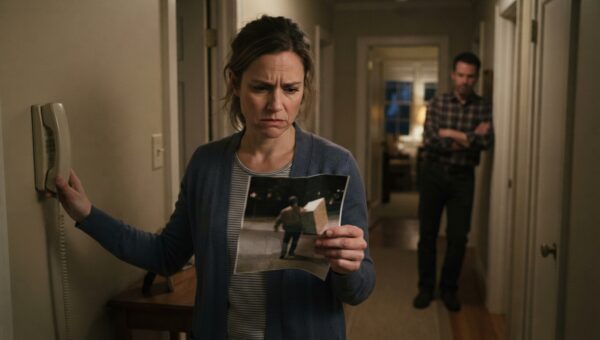
The wool coat hung on the back of the basement door long after winter had given up, heavy and smelling faintly of cedar and pipe tobacco. Dwayne never was one to take his winter things to the dry cleaners when April rolled around. He just shoved them into the back hall closet and left them there until the first cold snap of November made him dig them out again.
I was looking for the box of spare freezer bags behind his winter gear when my knuckles caught on something hard in the left pocket. I thought it was a cough drop wrapper at first. Or maybe a stray nickel from the toll road.
Instead my fingers hooked around a piece of cold stamped metal. I pulled it out into the dim light of the basement landing. It was a brass key, small and old-fashioned, with a little metal tag dangling from the ring. Unit 38. That was all it said. No address, no company name, just those two words stamped by a machine that had seen better days. I stood there on the bottom step for a minute turning it over in my hand. Sixteen years we had been married. Sixteen years of sharing grocery lists, tax forms, and Sunday dinners at his sister’s house in Bayou La Batre.
I knew every habit he had. I knew the way he stacked his coffee mugs and how he checked the locks twice before turning in.
Dwayne was upstairs watching the evening news when I walked into the den with the key pinched between my thumb and forefinger. He didn’t look up right away. The television cast a pale blue light across his face, highlighting the lines around his mouth that had deepened over the last few winters. I dropped the key onto the wooden coffee table right beside his ceramic coaster. It made a sharp little clink that cut through the anchor’s voice on the screen.
“What’s this?” I asked.
Dwayne glanced down. Just a quick, half-second look. The kind of look a man gives when he is figuring out which story to tell before his mouth even opens. He reached out and picked it up, rolling the brass between his thumb and index finger.
“Where’d you find that?” he asked. His voice was too steady. That was always the tell with Dwayne. When he was genuinely confused, he sputtered a little. When he was caught, he got very quiet and very smooth.
“In your wool coat,” I said. “In the pocket.”
He nodded once, slow and deliberate, and tossed the key back onto the coffee table like it weighed nothing at all. “Oh. That’s from the old place on Government Street. From before we got married. I guess I forgot it was in there.”
“Unit 38,” I said. “That must have been a pretty big apartment building.”
“It wasn’t an apartment,” he said, and his eyes flicked back to the television screen. “It was just a storage closet in the basement. Drop it in the junk drawer, honey. It doesn’t open anything anymore.”
That was the moment the floor felt a little softer beneath my slippers.
Government Street was miles away, and we had never lived in an apartment with basement storage. We rented a small duplex on Oak Street when we first met, back in 2008, and it didn’t have a basement at all. It had a dirt crawlspace and a rusted oil drum out back. Dwayne had lived with his parents before we married. He had never rented a place on Government Street in his life.
The lie wasn’t even a good one. That was what bothered me most. After sixteen years, he thought he could hand me a scrap of nonsense and I would just swallow it down because the sun was going down and supper was almost ready.
I didn’t put it in the junk drawer. I slipped it into the pocket of my own cardigan and went back to the kitchen to stir the pot of red beans on the stove. I watched him through the kitchen pass-through. He sat there staring at the television, but his shoulders were stiff. He hadn’t blinked in ten seconds.
The next morning, Dwayne left for his hardware supply route at six-thirty sharp, just like he did every Tuesday. I waited twenty minutes after the truck rumbled down the gravel drive, then I grabbed my car keys and my handbag. I didn’t go to the grocery store. I drove straight into town and started looking at every fenced-in yard with a corrugated metal roof within twenty miles of our house.
There were four storage facilities between the river bridge and the industrial park. The first two had computerized gate logs and digital entry pads, the kind of sterile, modern places where nobody knew your name and everything was handled through an app on your phone. Unit 38 didn’t fit those places. Unit 38 sounded old. It sounded like faded paint and rust on iron hinges.
The third place was called Gulf Coast Storage, tucked away behind an auto body shop off old Highway 90. The chain-link fence was sagging at the corner, and the gravel lot was full of weeds that had gone to seed. The main office was a trailer with a window air conditioner rattling in the frame. A middle-aged man with grease under his fingernails looked up from a crossword puzzle when the bell over the door chimed.
“Help you?” he asked.
I laid the brass key on the counter. I didn’t say anything. I just pushed it across the scarred laminate surface until it hit the edge of his newspaper.
He looked at the key, then up at me, squinting through bifocals that had a piece of yellow tape holding the bridge together. “That’s an old one. We changed the main gate locks back in nineteen-ninety-something, but the individual doors on the south row still take these Yale pins.”
“Unit 38,” I said. My voice sounded thin, like paper tearing. “Is it still active?”
The man reached out and picked up the key, turning it over to look at the stamped numbers. “Let me check the ledger. Most of those south row units haven’t been touched since the hurricane, but a few folks keep paying year after year like clockwork.”
He turned to a heavy black binder sitting on a metal shelf behind him. The pages were yellowed around the edges, filled with columns of neat, faded handwriting. He ran a blunt finger down the third column, stopped, and traced the line across.
“Unit thirty-eight,” he muttered. “Dwayne Miller? No. That ain’t the name.”
My heart gave a hard, ugly thud against my ribs. “What name is on the lease?”
He looked up over his glasses, his expression turning cautious, the way people get when they realize they’re standing in the middle of someone else’s trouble. “Name’s Arthur Vance. Been paying cash or cashier’s check every six months for eleven years. Never miss a payment. Never ask for a discount.”
Arthur Vance. The name hit me like a splash of cold ditch water. I didn’t need to dig through old newspapers to remember where I had heard it, but the memory came rushing back anyway, sharp and clear from the autumn of 2013. The local news had run stories for weeks about the disappearance of Clara Vance, a young woman who worked down at the county tax office. Her brother, Arthur Vance, had made tearful appeals on the evening news, begging for information about her whereabouts before he moved away down to Texas after the investigation stalled.
“Arthur Vance,” I said out loud.
The clerk nodded. “That’s what the card says. You family?”
“I’m his friend,” I lied, because the truth, *I’m the wife of the man holding the key*, felt too heavy to set down on a dirty counter. “Can I see it? Just for a second. He asked me to check on a box of old books he left in storage.”
The clerk hesitated, looked at the key in his hand, then looked out the window at my sedan parked by the fence. “Well, I ain’t supposed to let folks in without the lessee present, but seeing as you got the brass… South row. Last building on the left. Door sticks, so you gotta give it a solid hip-check when you turn the key.”
He slid the key back across the counter. I took it, my fingers cold against the metal, and walked out into the bright morning glare.
The south row was a long, low concrete-block building with rust weeping down from the gutters like dried blood. The gravel crunched under my boots as I walked down the narrow lane between the rows. The air smelled of hot tar, dry weeds, and old dust. Unit 38 was near the end, right where the shade from a live oak tree kept the concrete damp.
I put the key into the padlock hasp. It slid in easily, but the brass cylinder wouldn’t turn until I gave the heavy steel door a sharp shove with my shoulder. The latch clicked back with a dry, metallic snap that sounded entirely too loud in the quiet yard.
I pulled the door upward. It groaned on its tracks, lifting into the dim interior and letting in a square of harsh sunlight.
I stepped inside.
The first thing I noticed was the smell. It wasn’t mildew. It was lavender soap and stale cedar, a scent that had no business being inside a concrete box off Highway 90. My eyes adjusted slowly to the gloom. There was no stack of old tires, no boxes of forgotten Christmas decorations, no spare furniture from a bachelor apartment.
Against the back wall sat a single twin bed, made up with a pale blue quilt patterned with small white daisies. A wooden nightstand stood beside it with a small brass lamp and a paperback book laid face down on the corner. On the metal shelves along the right wall hung rows of women’s clothing. Blouses, skirts, lightweight cardigans, and dresses. All of them in my size. I recognized a green linen dress immediately, it was the exact twin of one I had owned back when we first moved into the house on Oak Street, a dress I had lost out of the laundry basket years ago.
My breath caught in my throat. I took two steps further into the room and looked at the left wall.
Photos. Dozens of them, framed in cheap black wood, pinned directly to the pegboard lining the concrete blocks. Pictures of a woman with dark hair cut into a neat bob, smiling at a picnic table, laughing against the backdrop of the courthouse steps, sitting at a desk with a stack of property tax rolls in front of her.
She looked like me. Not a little bit. She looked like me in the mirror when I was thirty years old, before the lines settled around my eyes. Same jawline, same build, same dark hair parted slightly to the left.
I stood there in the center of that room for nine minutes. I timed it later when the police asked me. I didn’t move. I didn’t touch anything. I just stared at the face on the wall, Clara Vance, frozen in 2013, smiling out at a concrete box where nobody could see her, and realized that the man I had shared a bed with for sixteen years had never really looked at me at all. He had just been tending a garden he planted five years before we ever met.
The math of it settled in my brain with cold clarity. Eleven years of payments. At $175 a month, that came out to $23,100 spent on a shrine to a dead woman while we argued over grocery bills and whether we could afford to replace the hot water heater.
My hand shook as I pulled my phone from my cardigan pocket. I didn’t call Dwayne. I dialed 911.
“Bay County Sheriff’s Department,” a calm dispatcher’s voice answered. “What is your emergency?”
“I’m at Gulf Coast Storage off Highway 90,” I said, my voice sounding like it belonged to someone else standing across the room. “Unit 38. You need to send investigators. The woman in the photos on this wall… she’s Clara Vance. And my husband has been paying for this room since the year she disappeared.”
The patrol cars arrived twelve minutes later, their blue lights flashing silently against the rusted tin roofs of the storage yard. Two deputies in yellow high-visibility vests jogged down the lane, their boots crunching on the gravel, followed shortly by an unmarked sedan carrying two detectives from the criminal investigation division.
They didn’t let me stay inside the unit once they saw what was on the walls. One of the detectives, a tall man with tired eyes named Henderson, led me out into the sunlight and sat me down on the bumper of his Ford cruiser. He handed me a bottle of water from his trunk, though I couldn’t bring myself to unscrew the cap.
“Mrs. Miller,” Detective Henderson said, pulling a small notebook from his breast pocket. “Let’s start from the beginning. How did you get the key?”
I told him about the coat. I told him about Dwayne’s lie regarding the old apartment on Government Street. I told him about finding the ledger in the office with the name Arthur Vance. As I spoke, crime scene technicians in blue paper jumpsuits walked past us carrying metal cases and camera equipment toward Unit 38.
“Arthur Vance,” Henderson repeated, writing something down with a stubby yellow pencil. “The brother. He told us back in 2013 that he was moving to El Paso to start over after Clara went missing. Said he couldn’t stand the town anymore. But he didn’t move until three months after she vanished.”
“The clerk said the lease was in his name,” I said.
“We’ll check the signature on the original contract,” Henderson said quietly. “If Arthur Vance didn’t sign it eleven years ago, someone else did using his name. And if your husband was the last person to see Clara alive before she dropped off the map… well, that changes the nature of an old cold case file quite a bit.”
They didn’t take me home in my own car. One of the deputies drove my sedan behind the unmarked cruiser all the way to the county sheriff’s station on 11th Street. They put me in a small interview room with a scarred laminate table and two plastic chairs. There was a large mirror on the wall that didn’t reflect anything back, just a dark, flat pane of glass.
I sat there for two hours watching the second hand on the wall clock tick around twice. Nobody yelled. Nobody came in to offer me coffee. Outside in the hallway, I could hear the muffled thud of boots and doors opening and closing as the detectives brought Dwayne in through the back entrance.
When the door finally opened, it wasn’t Henderson who walked in. It was a younger detective with rolled-up sleeves and a sheaf of computer printouts in his hand. He sat down across from me and laid the papers on the table.
“We brought him in from the hardware yard about twenty minutes ago,” the detective said, not looking at me directly. “At first he tried the same story about the old apartment on Government Street. Then we showed him the photos from Unit 38 and told him we recovered financial records showing eleven years of money orders purchased from the same branch where he has his personal checking account.”
“What did he say?” I asked.
“He stopped talking about the apartment,” the detective said. He tapped a corner of the printout. “He told us Clara Vance was a friend from the tax office. Said she confided in him that her brother Arthur was threatening her over family property. Said Arthur left town right after she disappeared, and Dwayne figured the police bungled the whole thing. He claims he rented the unit to preserve her things, to keep her memory safe until he could prove what her brother did.”
“That’s a lie,” I said, my voice dropping into a flat, hard register. “Look at the clothes in that room. Look at the sizes. They aren’t Clara’s clothes. They’re mine. Or rather, they were bought for someone who looked like her.”
The detective looked up then, his eyes sharp and steady. “He didn’t mention your resemblance to her in the initial statement. But forensics is going through the lease agreements and the security footage from the storage facility now. We’re looking at identity theft, fraud, and obstruction of justice regarding a 2013 homicide investigation. The state attorney’s office is already drawing up the warrants to search your primary residence.”
“Go ahead,” I said. “There’s nothing left there that belongs to me anyway.”
They let me leave through the front lobby after taking my final statement. The afternoon sun was low over the Gulf, throwing long, orange shadows across the parking lot asphalt. I didn’t go back to the house on Oak Street. I drove to a motel off the interstate, a clean, anonymous place with white plastic chairs outside the doors and the hum of an ice machine down the hall.
Dwayne was booked into the county detention center before dinner. The local news ran a brief update at ten o’clock, showing grainy footage of the storage facility and mentioning that the 2013 disappearance of Clara Vance was now officially classified as a homicide investigation linked to fraudulent lease documents and withheld evidence.
I spent three days in that motel room with my phone turned off. I called a lawyer recommended by the clerk at the desk, filed for an immediate divorce on the grounds of severe marital deception and fraud, and arranged for a moving company to clear my personal belongings out of the house before the police finished executing their search warrants.
On the fourth day, I went back to Oak Street one last time to supervise the movers. The driveway was empty except for a county patrol car parked near the curb to ensure the property remained undisturbed during the ongoing investigation. The front door still had the old brass deadbolt we had installed back when we first moved in.
I unlocked it using the spare key from my bag, the metal making a familiar, dry click that I had heard every evening for sixteen years. Inside, the hallway smelled like nothing at all. The cedar and pipe tobacco were gone, replaced by the faint, antiseptic odor of rubber gloves and fingerprint powder where the investigators had dusted the doorframes.
I packed the last of my things into the back of my sedan, closed the trunk, and walked back up the front steps one final time. I pulled a brand-new silver key from my pocket, a key that didn’t match any lock on that house, and slid it into a padlock I had brought with me, securing the front door against a life that had never really belonged to me.