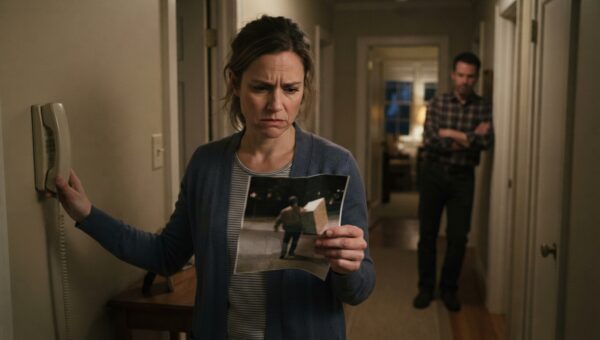
The phone call came at 2:14 in the afternoon on a Tuesday that smelled faintly of pine cleaner and burnt toast. I was standing in the middle of the hallway with a stack of Quincy’s winter flannels in my arms, trying to figure out if they belonged in the charity box or the top drawer. My knees were already aching from the damp weather, and when the landline started ringing, I actually considered just letting it roll to the machine.
But the machine was broken, the little tape spool jammed three weeks ago, so I dropped the shirts onto the cedar chest and picked up the receiver with a small sigh.
“Hello?” I said.
“Is this Martha?” Dr. Evans asked. His voice sounded thin, like he was calling from a hallway with bad acoustics. I’d known his voice for twenty years, ever since Quincy went to him for his high blood pressure pills, but he didn’t usually call our house unless there was an unpaid bill or a reminder about annual checkups.
“Yes, Dr. Evans. Is everything okay?” I asked, shifting my weight from one hip to the other because my lower back was throbbing.
“I’m calling to offer my condolences again, Martha,” he said, and I could hear him clearing his throat, that dry, papery sound older men make when they’re about to say something difficult. “I couldn’t make it to the service with the hospital board meeting running late, but I wanted to reach out personally.
He was remarkable, you know. Working that hard while keeping it from you.”
Keeping what? I stood there by the telephone table, the yellow notepad with my grocery list staring up at me, and my brain just stalled out. “I’m sorry?” I managed to say. “Quincy retired three years ago. What do you mean, working hard?”
There was a long, heavy pause on the other end of the line, just the sound of distant office paging and a door clicking shut. “I shouldn’t say too much over the phone,” Dr. Evans murmured, but then he sighed, a deep, weary sound. “Martha, Quincy knew about his heart two years ago. End-stage congestive failure. He had twelve months, maybe eighteen on a good day. He made me promise on his first visit back that I would never breathe a word to you.”
The receiver felt suddenly very heavy in my hand, like it was made of cast iron. “Two years?” I whispered. “He never said a word about his heart. He went fishing every Thursday.”
“He didn’t go fishing, Martha,” Dr. Evans said softly. “He came to my clinic for checkups, and then he went out and did heavy manual labor until his chest gave him warnings he couldn’t ignore. He told me specifically why he was doing it. He said, ‘Don’t tell her till it’s over, because I’d rather she spend my last months…’ and that was all he cared about.”
My legs went out from under me right there in the hallway. I didn’t drop gracefully; I just sort of folded down onto the braided rug, the phone cord pulling taut against the wall unit until the plastic base rattled. Dr. Evans was still talking, his voice small and tinny from the receiver lying on the floor beside my knee, but I couldn’t catch the words over the ringing in my ears. Two years. Two years of Quincy taking the grocery bags out of my hands before I could even shut the car door.
Two years of him insisting on hauling every single cord of firewood from the truck bed to the back porch by himself, sweating through his flannel shirts until I got mad at him and told him to stop acting like I was made of glass.
“You’re treating me like an invalid,” I had snapped at him just last November, standing right by the wood stove while he stacked oak logs into the copper bin. My back had been sore from weeding the garden, and I was in a foul mood about nothing in particular. “I can lift a ten-pound sack of flour, Quincy. I’ve been running this house since before we married.”
Quincy hadn’t yelled back. He never yelled back in all our thirty-four years. He just wiped his forehead with the back of his thumb, leaving a smudge of gray wood ash right across his cheekbone, and looked down at the floorboards. “I know you can, Marth,” he had said quietly. “Just let me do it. Humor an old man.”
“You’re not that old,” I muttered, turning back to my mixing bowl and letting the screen door slam behind him when he went back out to the truck.
Sitting there on the hallway rug with the phone buzzing against the baseboard, the memory of that afternoon hit me with the force of a physical blow. He wasn’t treating me like an invalid because he thought I was weak. He was treating me like someone he had to protect from a future he knew he wouldn’t be here to share. My back problems, my knee flare-ups, the chronic fatigue that made getting out of bed a chore on cold mornings, he had cataloged every single ache I ever complained about over coffee, and he had translated them into a checklist of heavy lifting he needed to finish before his time ran out.
I finally managed to reach down, pick up the receiver, and whisper into it, “Thank you, Doctor,” before the line went dead with a soft click.
I stayed on the floor for a long time, watching the dust motes drift in the bar of sunlight coming through the front window. The house was too quiet. That was the first thing you noticed after a man like Quincy died, not just the absence of his boots by the back door or the low rumble of the radio tuned to the farm report at noon, but the sheer, deafening weight of all the things he had quietly managed without ever asking for a thank-you.
When I finally got up, my knees stiff and protesting, I didn’t go back to the flannels in the hallway. I put on my old barn coat over my sweater and pushed open the back door, stepping out onto the porch Quincy had rebuilt two summers ago. He had spent three solid weeks out there in the July heat, measuring twice, shimming the joists, cursing under his breath when the circular saw jammed. I had complained about the noise every morning while trying to watch my morning program. Now, looking down at the heavy cedar boards, I could see the exact precision of his work, countersunk screws set flush into the grain, treated wood that wouldn’t rot for another twenty years.
I walked down the steps and past the garden beds toward the woodshed at the back of the property. The gravel crunched under my boots with that familiar dry rattle. Quincy always bought the crushed limestone from the quarry three miles down the road because he said the river rock was too round and rolled under your ankles when you were carrying a full load.
The woodshed door was unlatched, swinging slightly in the autumn breeze. When I pulled it open, the rich, dry smell of seasoned oak and cedar hit me all at once. I stopped in the doorway and just stared.
It was packed to the rafters. Not just stacked, but engineered. Every log was split to the exact same thickness, laid out in alternating rows with air gaps left for proper drying, four deep rows reaching all the way back to the cedar wall. There must have been four winters’ worth of firewood in that shed, every single stick hauled out of the creek bottom, cut on his old Sears chainsaw, split with the heavy maul, and stacked by a man whose heart was failing him with every single swing.
“You’re going to kill yourself out here,” I had told him that spring when I found him sitting on an overturned bucket by the woodpile, breathing a little too hard, his face pale under his weathered skin.
“Just getting ahead of the cold, Marth,” he had said, smiling that slow, easy smile that always made the corners of his eyes crinkle. “A man likes to have his wood dry before the snow flies.”
He hadn’t been worried about the snow. He had been worried about me hauling a twenty-pound armful of logs from the shed to the porch when my spine started acting up in January. He had spent his final two years trading his remaining breath for my future comfort, turning his own body into a shield against the years when I would be here alone.
I walked over to his workbench in the corner of the shed, where a blue plastic tarp covered his tools. Resting on top of the old metal grinder was a black composition notebook with duct tape around the spine. It was Quincy’s workshop journal, the one he kept for tracking equipment maintenance and repairs.
I flipped it open with trembling fingers. The pages were filled with his neat, blocky handwriting, the kind he learned back in the Navy.
*October 12:* *Cleaned out the chimney flue. Replaced the gasket on the wood stove door. Left two extra gaskets in the bottom drawer of the workbench so Martha doesn’t have to hunt for them.*
*November 4:* *Serviced the lawn mower. Changed the oil, put fresh fuel stabilizer in the tank. Marked the spark plug size on the wall by the shelf.*
*January 19:* *Stacked the north bay of the woodshed. That’s enough for three seasons if she burns slow on mild nights. Checked the well pump pressure; looks steady at forty psi, but filter needs changing next November.*
Page after page, year after year, right up until three weeks before he passed away. There were no grand declarations of love in those pages, no poetry or dramatic farewells. Just a list of chores done in advance, a map left behind by a man who knew he was running out of time and wanted to make sure the woman he married wouldn’t have to struggle with the things he was strong enough to carry.
I stood there in the dim light of the woodshed, running my hand along the rough bark of the top log in the stack. A sharp wave of guilt washed over me, hot and stinging behind my eyes, remembering every time I had brushed off his help, every time I had snapped at him for hovering in the kitchen or taking the laundry basket out of my hands. I had thought he was just being an old-fashioned, fussy husband who didn’t trust me to run my own house. I had no idea I was yelling at a man who was quietly breaking his own heart to keep mine from aching later.
I walked back toward the house as the sun began to dip below the tree line, casting long, cold shadows across the grass. The wind picked up, rustling the dry corn stalks in the field across the fence, carrying that unmistakable bite of November.
Instead of going straight inside, I stopped by the woodpile near the back door. Quincy had stacked a small, neat tier right under the eaves so I wouldn’t have to walk all the way to the big shed in bad weather.
I reached down and picked up a single cedar tote, filling it with three dry, split logs of oak. It wasn’t heavy, Quincy had made sure of that, sizing the pieces so they wouldn’t strain my wrists, but as I lifted the canvas handles, my arms felt steady and strong.
I carried it up the newly reinforced steps, pushed open the kitchen door, and set the tote down by the stove. The kitchen was warm, holding the heat from the afternoon sun through the west-facing windows. My purse was sitting right where I left it on the clean laminate counter, light and empty.
I stood there for a moment in the quiet room, listening to the old Seth Thomas clock tick against the wall. The grief was still there, sharp and heavy in my chest, but the anger and the stinging confusion were gone, replaced by something much quieter and harder to bear. He had loved me enough to lie to me, enough to carry every burden so I wouldn’t have to feel the weight of his dying.
I reached out and touched the smooth edge of the wood stove, feeling the faint residual warmth from the morning fire, and for the first time since the phone call, I took a deep, steady breath that reached all the way down to my toes. I had a lot of winters ahead of me in this house, but I wasn’t walking into them empty-handed. He had seen to that.