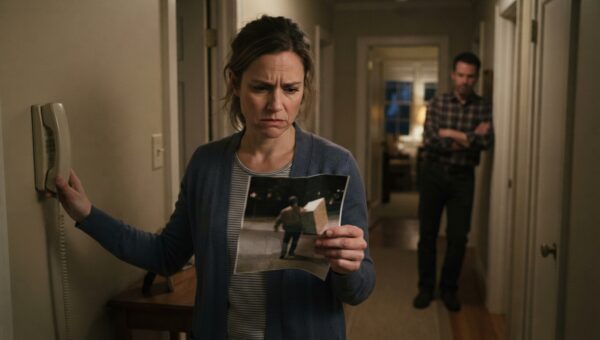
The square of paper was stiff, folded four times over into a tiny white tile that felt heavy in my palm.
Zola pressed it into my fingers right there by the oak sideboard in my room, her thumb brushing my knuckle with that familiar, dry warmth she always carried from washing her hands ten times an hour. Two years she had worked the second floor of the Oaks, and she was the only person on that payroll who never looked right through me like I was part of the wainscoting.
My son, Arthur, pays eight thousand six hundred dollars every single month for this room, and I see him twice a year if I count the quick twenty minutes he drops in on Christmas Day with a box of pecan sandies he bought at the gas station.
Last Tuesday I was sitting by the radiator with my afghan when I heard his voice out in the corridor talking to Director Vance. Arthur thought the door was latched, but it was cracked an inch to let the draft out.
“She’s just too familiar, Vance,” Arthur said, his voice dropping into that flat, corporate register he uses when he’s annoyed with his junior analysts. “My mother doesn’t need a best friend. She needs a nurse who stays in her lane. Get someone else on this hall by Monday.”
Zola wasn’t stealing my jewelry, because I don’t have any left worth taking. She just knew that I take my coffee with two sugars and a splash of oat milk, and that sometimes when the rain hits the glass too hard in the middle of the night, I still cry for my Elzie.
When Zola came into my room on Friday afternoon with her canvas bag over her shoulder, she didn’t look mad. She looked tired in the way people look when they’ve finished a long shift and know nobody’s waiting up.
She folded my fingers around that square of paper, leaned down until her breath smelled like peppermint gum against my ear, and whispered, “Don’t let them make you feel invisible. Call this number.”
Then she turned around and walked out the door before I could even get my slippers on.
I sat there for a long time watching the dust motes drift in the sunbeam that cut across the carpet.
The room was quiet, except for the radiator clanking like it always did around three in the afternoon.
I unfolded the paper on my tray table, smoothing the creases out with the flat of my thumb so I could read the ink.
It wasn’t just a phone number.
In the margins of a torn shift-report sheet, Zola had written her own cell digits, but underneath that, she had jotted down the name of the state long-term care ombudsman and three specific article numbers from the resident handbook that Vance keeps locked in the bottom drawer downstairs.
I didn’t even know half those rights existed.
Elzie used to tell me I was too quiet for my own good, that I’d let the grocery clerk short-change me a twenty and just smile because I didn’t want to make a fuss.
“You’re not keeping the peace, Martha,” he’d say over his evening paper. “You’re just letting them walk over your flower bed.”
I picked up the bedside phone, the old black plastic one with the big numbers that Arthur had installed so I wouldn’t misdial his office.
My hand was shaking a little bit, not from fear, but from something hotter and sharper that I hadn’t felt in the ten years since Elzie passed away.
The woman who answered at the ombudsman’s office had a voice like she had just finished a cup of black coffee and meant business.
“State resident advocacy, this is Brenda,” she said.
“My name is Martha Gentry,” I said, and my voice sounded clearer than it had in months. “I’m in room 214 at the Oaks, and I need to know who actually holds the primary care contract for my room.”
Brenda stayed on the line for twenty minutes while we sorted through the paperwork that Arthur had brought me to sign last winter when my hip gave out.
“Well, Mrs. Gentry,” Brenda said after a long rustle of papers on her end. “Your son pays the monthly billing invoice through his corporate account, but your private annuity funds the trust, and according to this rider, you never surrendered your power of attorney for placement decisions.”
“Are you telling me Arthur can’t just fire my aide because he doesn’t like her?” I asked.
“I’m telling me that unless you’re legally incapacitated by a probate judge, you can pick whoever you want to help you to the dining room,” Brenda said. “It’s right there in section four.”
The next morning, Director Vance knocked twice on my door and poked his head in with that smooth, slippery smile he wears when he’s trying to sell an upgraded room to a family from out of town.
“Good morning, Mrs. Gentry,” Vance said, stepping inside like he owned the baseboards. “I wanted to let you know that we’ve transitioned Zola to the evening shift on the third floor.
We’ve brought in a wonderful new lady named Brenda, well, not Brenda, Beatrice, to handle your hall starting today.”
I didn’t look up from my crossword puzzle.
“Send Beatrice back downstairs, Mr. Vance,” I said.
Vance blinked, his smile hitching just a fraction of an inch near his left ear. “I beg your pardon?”
“You heard me,” I said, setting my pencil down on the oak table. “I want Zola back on my hall by noon, or I’ll have Brenda from the state ombudsman’s office sitting in your leather armchair before the lunch trays are cleared.”
Vance went very still, the kind of still where a man tries to calculate how much trouble he’s in before his afternoon golf game.
“Now, Martha, Mrs. Gentry, let’s not get hasty,” Vance stammered, his fingers twitching toward his lapel. “Your son expressed some concerns regarding professional boundaries.”
“My son doesn’t live here,” I said. “And unless he’s got a signature from a judge I haven’t met, he’s just paying the rent on a room that belongs to me.
Call Arthur and tell him to be here at four o’clock this afternoon. We’re going to have a little chat about who runs my life.”
By three-fifty, the hallway outside my room sounded like a construction site because Arthur had arrived twenty minutes early with his briefcase clicking against the linoleum.
He didn’t knock. He just pushed the door open and let it bang against the wall stop.
“What is this nonsense about an ombudsman, Mother?” Arthur demanded, not even taking off his overcoat. “Vance called me in the middle of a board meeting saying you were threatening a state inspection over a nurse’s aide.”
He looked just like his father when Elzie was trying to fix the lawnmower carburetor and it wouldn’t catch, all red in the neck and convinced the whole world was conspiring against his common sense.
“Sit down, Arthur,” I said.
I didn’t point to the hard wooden chair by the desk. I pointed to the armchair where he usually sat when he wanted to check his watch three times in ten minutes.
Arthur stayed standing, his hand hooked over the back of the wood like he was ready to bolt out to his Lincoln in the parking lot.
“I’m busy, Mother,” Arthur said. “I have dinner reservations in the city with the regional partners. Why are you making a scene over Zola? She’s an employee. She’s replaceable.”
“She’s the only person who knows how I take my coffee,” I said, and the room got very quiet.
“That is the most ridiculous reason I have ever heard,” Arthur said, his voice rising until the nurse walking past in the hall slowed her steps. “I pay eight thousand six hundred dollars a month so you don’t have to worry about coffee preferences. I pay professionals to manage your environment so I can focus on my work.”
“You pay eight thousand six hundred dollars so you don’t have to feel guilty when you drive past this place on your way to the country club,” I said.
The words didn’t come out shaking. They came out flat and hard like stones dropped into a bucket.
Arthur stared at me then, really stared at me, for the first time since he helped me move my dresser in here eighteen months ago.
“You think I don’t care about you?” he whispered, and for a second he looked smaller than his graying temples let on.
“I think you love me from a distance, Arthur, and I’m tired of being managed like an inventory item on your monthly spreadsheet,” I said. “Zola stays. And starting tomorrow, she isn’t just an aide on this hall. I’ve already spoken to the business office about reassigning my trust disbursement.”
Arthur’s jaw went slack. “What did you do?”
“I hired her privately as my personal companion for four hours every afternoon,” I said, picking up my pen again. “She’ll have her own key to my door, and she’ll come in through the front entrance just like any other visitor. If you don’t like it, you can take your business meetings somewhere else.”
Vance appeared in the doorway then, looking like a man who had just swallowed a nickel, holding a yellow slip of paper between two fingers.
“Mrs. Gentry,” Vance said softly. “Zola is downstairs. She… well, she heard you requested her.”
“Send her up,” I said.
When Zola walked through that door ten minutes later, she didn’t look down at her shoes anymore.
She had a fresh tray in her hands with a white ceramic mug, the steam rising up in a little thin curl toward the ceiling fan, smelling faintly of sweet oat milk and dark roast.
She set it down on the table beside my chair, her fingers warm and steady against the rim.
Arthur didn’t say another word about his dinner reservations.
He stood there by the window for a long minute watching Zola adjust my blanket before he finally reached into his coat pocket and laid his car keys down on the sideboard with a dry little clink.
“I’ll come back on Sunday,” Arthur said, and his voice wasn’t corporate anymore. “Not just for twenty minutes. We can actually sit down.”
“Bring those pecan sandies if you want,” I said, taking my first sip of the coffee. “The good ones from the bakery on Fifth, not the gas station.”
Arthur gave a short, dry nod that might have been a laugh if he’d had the practice for it, and then he let himself out without closing the door too hard behind him.
Zola pulled up the green vinyl chair right across from mine, unfolded her small notepad, and looked at me with those sharp, dark eyes that had seen every old woman on this floor give up or give in.
“Well, Martha,” Zola said, her voice dropping into that low, easy rhythm that always made the rest of the building go quiet. “Where were we on that crossword?”