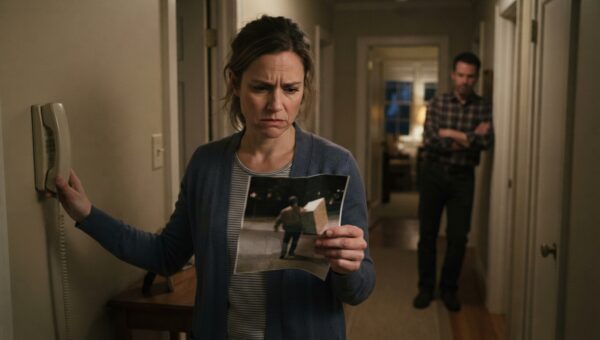
The blue medical folder was sitting right next to the toaster when I came down the stairs, and honesty compels me to admit I didn’t even want to touch it. The regional reproductive endocrinology group down in Knoxville doesn’t send certified files by regular mail unless you have hounded them for three straight weeks through their legal department. It was a Tuesday morning, raining hard enough to rattle the aluminum gutters against the side of the house, and my coffee had already gone cold while I was on hold with the county clerk trying to settle the last bits of the divorce paperwork.
Five years of my life had boiled down to a cardboard box of tax returns and a stack of medical bills that Greg had managed to stick me with before he packed his monogrammed duffel bags and moved into Melissa’s townhome.
I picked up the heavy manila envelope with two fingers, the way you handle something you know is going to leave a stain on your hands. Inside was the complete historical genetics file from our third and final round of fertility treatments back when we were still living in that red-brick house on Sycamore Street. Back then, Greg used to sit at the kitchen island every single night, shaking his head while the bill collectors called, telling anyone who would listen that the doctor’s office hadn’t found anything wrong with him. He let our friends believe the empty nursery was my fault. He let his mother, Evelyn, look at me across her holiday dining room table with that quiet, disappointed pity that hurts worse than outright screaming.
I remember the exact way Evelyn used to stir her tea during those family dinners, her silver spoon clinking against the porcelain while she talked about how important a bloodline was to the family name. Greg was her golden boy, the youngest, the one who took over the insurance agency and inherited his father’s tall posture. She never blamed him for anything in his entire life, not even when he wrecked his first three trucks before he turned twenty. When our marriage finally cracked down the middle because Melissa decided she wanted a husband who came with established equity and a country club membership, Evelyn didn’t even wait for the ink to dry on the decree before she was hosting Sunday suppers for the new couple.
The postman had dropped off the second piece of mail around eleven, right when the rain had turned into a steady, miserable mist. It wasn’t a bill and it wasn’t a court notice.
It was a thick, cream-colored envelope with gold calligraphy spelling out my maiden name. I knew Melissa’s handwriting before I even turned it over. She always wrote her capital letters with these sharp, aggressive little loops that she probably thought looked sophisticated.
I opened it over the sink because my hands were shaking slightly, though I told myself it was just from the damp chill in the kitchen. Inside was a heavy cardstock baby shower invitation, embossed with silver rattles and pale blue bows. Down at the bottom, written in that familiar spiky hand, was a little postscript that made the blood ring in my ears. Come celebrate our little miracle, she had written, adding a bright yellow smiley face right beside the date. Sorry you couldn’t give him a son.
Nobody said anything in the empty kitchen for a full minute, and honestly that silence felt heavier than any scream.
Melissa had spent five years pretending to be my confidante, sitting on my porch drinking iced tea while she listened to me cry about negative pregnancy tests and failed procedures. Then she had moved into our bed before the moving truck even reached the county line. The sheer cruelty of mailing me an invitation to celebrate the child she had stolen from my life was almost impressive in its malice.
I pulled the medical report out from the manila folder again, skipping past the insurance codes and the itemized lab fees until I reached page four. There it was in black and white, signed by a doctor whose name I remembered from the fluorescent-lit waiting room where Greg used to sit scrolling on his phone instead of holding my hand. Congenital bilateral absence of the vas deferens. The medical term for a permanent, genetic condition that renders a man completely sterile from birth. It cannot be fixed with vitamins, it cannot be cured by changing your diet, and it certainly doesn’t appear halfway through a marriage. Greg had known about it since he was nineteen years old, when he had his first routine physical for college athletics and chose to keep it a secret so nobody would ever question his manhood.
I stared at the paper for a long time, watching the rain streak the kitchen window. Then I opened the second envelope that had arrived from the clinic’s authorized family-dispute audit department. Melissa had always been ambitious, but she wasn’t particularly subtle. When she realized Greg couldn’t give her the visible, socially secure family foundation she wanted within six months of moving in together, she hadn’t looked very far for a substitute. Bradley, Greg’s older and wealthier brother, had been dropping by their townhome three or four times a week under the guise of helping them remodel the kitchen cabinets. Bradley had already submitted his own samples to the regional registry two years prior during a messy custody dispute with his second ex-wife, and the lab cross-reference matched his DNA profile to Melissa’s unborn child with a 99.9 percent certainty.
My fingers didn’t shake anymore. The numbness was gone, replaced by a cold, very quiet clarity that I hadn’t felt since the day I signed the divorce papers and handed over the keys to the Sycamore Street house. I walked over to the sideboard and picked up a small gift box I had saved from my birthday, the sturdy kind with a magnetic lid that snaps shut with a satisfying click.
I placed the certified medical records of Greg’s lifelong sterility at the bottom of the box. Right on top of them, I laid the comparative paternity audit naming Bradley as the biological father. Then I pulled a length of wide, satin blue ribbon from my sewing basket, wound it around the cardboard corners, and tied it into a neat, perfect bow.
The phone on the wall was an old cordless with a cracked screen, but the battery was fully charged. I dialed Evelyn’s number before I could talk myself out of it, letting it ring twice before her familiar, clipped voice answered on the other end.
“Hello,” Evelyn said, sounding like she was already in the middle of something important involving committee work for the hospital auxiliary.
“Evelyn,” I said, keeping my voice entirely level. “It’s Elena.”
There was a sharp pause on the line, the kind of stiff hesitation that usually preceded one of her lectures about decorum or community standards. “Elena. I didn’t expect you to call. We’re quite busy here preparing for Melissa’s shower this weekend at the River Crest Inn.”
“I know you are,” I said, smoothing a finger over the edge of the blue ribbon sitting on my kitchen table. “And I think you really need to be there. In fact, I wouldn’t miss it for the world.”
“What on earth are you talking about?” she asked, her tone dropping into that cold, aristocratic register she used when people didn’t behave the way she wanted them to. “You certainly aren’t on the guest list.”
“Oh, I’m not attending as a guest,” I said softly, staring out at the gray rain bending the lilac bushes in the front yard. “You may want to make sure you have a seat right near the front table, Evelyn. Your family is about to meet its secret.”
She tried to ask another question, but I hung up the phone before she could finish, letting the dial tone hum into the quiet room.
By Saturday afternoon, the parking lot of the River Crest Inn was packed with luxury SUVs and white catering vans. The sky had cleared up into a pale, washed-out blue, but the air still had that sharp autumn bite that makes you want to keep your coat buttoned all the way to the chin. I checked my reflection in the car’s rearview mirror one last time, smoothing down the lapels of my dark gray wool blazer and making sure my hair was pinned back neatly. I didn’t look like a woman nursing a grudge. I looked like an accountant arriving for an audit.
The ballroom smelled overwhelmingly of white roses and expensive French vanilla candles the moment I pushed the heavy double doors open. About forty women from the local country club set were sitting at round tables covered in floor-length linen cloths, sipping mimosas and laughing at something Melissa was saying up near the gift display. Melissa looked radiant in a fitted emerald dress that hugged her protruding belly, her blonde hair styled in loose, glossy waves that caught the light from the crystal chandeliers. Greg and Bradley were standing near the corner by the bar, both of them wearing matching navy blazers and holding scotch glasses like they owned the county courthouse.
The chatter died down almost instantly as I walked down the center aisle. Heads turned, whispers started rustling through the tables like dry leaves, and Melissa’s smile froze halfway across her face.
“Well,” Melissa said, her voice carrying clearly across the quiet room as she stepped out from behind the gift table. “Look who decided to crash the party. I didn’t think you had the stomach for this kind of gathering, Elena. Especially since you never quite managed to fit in with the rest of us.”
I didn’t stop walking until I was standing right at the edge of the head table, just a few feet away from where Evelyn was sitting with her hands folded tightly over her leather handbag. Greg had gone entirely pale, his glass tipping slightly before he set it down on the mahogany surface with a sharp clink. Bradley just stood by the bar, his eyes narrowing as he looked at the square box in my hands.
“I wouldn’t miss this for anything, Melissa,” I said, my voice cutting through the heavy scent of roses without a single tremor. “You went to a lot of trouble to make sure I knew about this child. I figured the least I could do was bring a proper gift for the family.”
I placed the blue-ribboned box right in the center of the gift table, right on top of a stack of silver-wrapped packages from local boutiques.
“Open it, Evelyn,” I said, looking straight at the matriarch. “Go ahead. It’s a family heirloom of sorts. Certified by the state registry.”
Evelyn looked down at the box, her chin tilting up with that familiar haughty defiance. “I don’t know what kind of game you’re playing here, Elena, but security can easily escort you back to your car if you’ve forgotten your manners.”
“Open it,” I repeated, my voice dropping an octave so that only the people at the front tables could hear every word. “Unless you’re afraid of what your golden boys have been hiding in the basement.”
Bradley took a half-step forward from the bar, his face darkening. “Back off, Elena. This has gone far enough.”
“Shut up, Bradley,” I said without even turning around to look at him. “You’ve been quiet for five years. Let your mother see what you bought with your silence.”
With trembling fingers, Evelyn reached out and untied the satin bow. She lifted the magnetic lid off the cardboard box, pushing aside the tissue paper until her fingers brushed against the heavy legal stationary bearing the seal of the regional reproductive health registry. She pulled out the top document, adjusting her reading glasses with a sharp, impatient twitch.
The silence in the ballroom became absolute. You could hear the hum of the air conditioning vents in the ceiling and nothing else.
Evelyn read the first page silently, her lips thinning into a hard, bloodless line as her eyes tracked down the clinical diagnoses, the medical license numbers, and the explicit genetic findings detailing Greg’s congenital sterility from birth. Then her hand shook as she reached further down into the box and pulled out the second report, the comparative paternity audit bearing Bradley’s name and social security digits.
She didn’t scream. She didn’t drop the papers. Instead, she slowly lowered her glasses and turned her head to look directly at her oldest son standing by the bar.
“Bradley?” Evelyn’s voice sounded small, thin, like dry paper tearing in the wind. “What is this?”
Bradley didn’t answer. He just stared at the floor, his face turning the dull, mottled red of a man who had just realized the trap had snapped shut behind him and there was no way out of the clearing.
Greg moved forward, shoving past a chair that rattled against the floorboards. He grabbed the papers out of his mother’s hands, his eyes darting frantically across the medical terminology.
“No,” Greg whispered, his voice cracking on the syllable. “No, this is a mistake. This is fake. Elena forged this.”
“It’s from the Knoxville clinic, Greg,” I said, looking him dead in the eye for the first time in a year. “The same clinic where you sat on your phone while I cried into a paper cup. The doctor who signed that paper is the same one who told us year after year that the problem wasn’t on my side of the bed. You’ve known since you were nineteen years old.”
Greg spun around to face Melissa, his face twisting in horror. “Melissa. Tell me this isn’t true. Tell me this is one of her lies.”
Melissa had lost all the color in her glossy face. She backed away against the gift display, her hands flying up to shield her stomach as the entire room began to buzz with sharp, horrified whispers from the surroundingtables. “Greg, please, don’t listen to her, “
“Whose is it?” Greg shouted, his voice finally breaking into a ragged, desperate sound that echoed off the crystal chandeliers. He grabbed Melissa by the arm, his fingers digging into the emerald fabric of her dress. “Whose baby is that, Melissa? Answer me right now!”
Bradley turned and headed straight for the side exit without saying a single word, his head down and his shoulders hunched against the weight of forty pairs of eyes burning holes into his back. Evelyn sat frozen in her chair, staring straight ahead at nothing at all, her entire world collapsing into a pile of expensive paper and blue ribbon.
Greg turned around, his eyes wild and bloodshot, reaching out a trembling hand toward me like a drowning man grabbing at driftwood. “Elena. Please. I was a fool. I didn’t know, “
“Don’t,” I said, stepping back out of his reach.
I didn’t yell, and I didn’t let my voice shake. I just turned my back on the wreckage of the River Crest ballroom, walked down the center aisle through a sea of stunned silence, and pushed open the heavy glass doors into the cool afternoon air.
My car was parked right by the fountain, the engine idling quietly with the air conditioning humming. I climbed into the driver’s seat, pulled the door shut with a solid, satisfying thud, and adjusted the rearview mirror to catch my own reflection. My eyes were clear, my breathing was steady, and for the first time in five years, my shoulders didn’t carry the invisible weight of a lie that was never mine to bear. I put the gear shift into drive and pulled smoothly out of the lot, leaving the blue ribbon and the shattered family behind me in the dust.