PART 1
At forty-four, you think you know who you can trust, especially when you share a workbench, a set of keys, and eighteen years of building custom timber frames with your wife’s younger brother. Julian Cross had always been the fast talker of the two of us. While I spent my days covered in sawdust, planing white oak and cutting mortise and tenon joints for historic homes along the Maine coast, Julian handled the phones, the client meetings, and the bookkeeping.
We were fifty-fifty partners in Vance & Cross Millwork. At least, that is what I believed until my right retina detached while I was laminating a set of mahogany headers.
The surgery required a gas bubble in my eye, face-down positioning for two weeks, and strict orders from the ophthalmologist to stay away from dust, stress, and heavy lifting. I spent those first fourteen days in a darkened living room, my world reduced to the muffled hum of the refrigerator and the sound of my wife, Sarah, moving quietly around the kitchen. Julian came by on the third day. He brought a box of donuts and a worried look, telling me not to worry about the shop, the upcoming municipal restoration contract, or the payroll. He said he had everything under control.
I trusted him. That was my blind spot. I had known Julian since he was twenty-two, when he dropped out of community college and I taught him how to square a board on a jointer without taking his fingers off.
I assumed our blood ties and our handshake agreement overrode the necessity of checking corporate filing updates while I was medically incapacitated. I thought family meant something.
The first crack appeared on day eleven of my recovery. My phone buzzed on the nightstand with a text message from Julian that read: You need to sign the restructuring papers before the county tax assessment changes on Friday, or we are going to lose the workshop property to a commercial lien.
I sat up too fast, sending a sharp, blinding pain through my recovering eye. I squinted at the glowing screen. A county tax lien? We had paid our property taxes six months in advance. We held $417,000 in total workshop assets, commercial real estate equity, and machinery, and our cash reserves were sitting safely in our operating account. Why would a tax assessment change force an emergency restructuring?
When Julian came over the next afternoon to drop off some client invoices, I asked him to sit down.
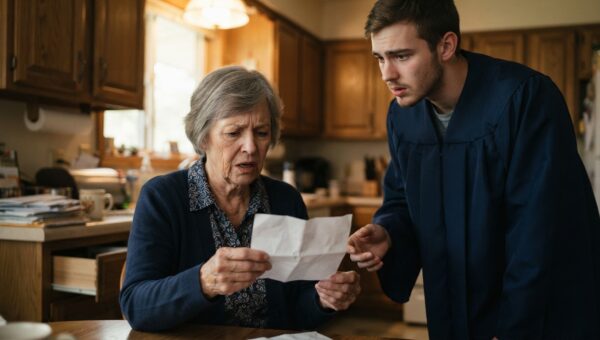
I told him my eye was still too swollen for me to read fine print on a screen, but asked him to explain the lien. He became unusually defensive, crossing his arms and snapping that I needed to stop second-guessing him from my sickbed and just trust that he knew what he was doing with the paperwork. He dropped a manila folder on the coffee table and said the lawyer needed my signature by Thursday morning or the deal was off.
After he left, I did not touch the folder. Instead, I waited until Sarah went out to the pharmacy. My vision was still blurry, but I managed to walk out to my truck in the driveway. I needed the physical key to the workshop safe deposit box, where our original 50-plus-50 master operating agreement had lived in a fireproof tin since the day we opened our doors. I kept a spare key on my personal key ring in the glove compartment.
When I let myself into the quiet workshop that evening, the place smelled of linseed oil and pine dust. It felt foreign, like a house you used to live in years ago. I walked back to the office, unlocked the floor safe behind the filing cabinet, and pulled out the small metal box.
I popped the latch. The box was empty.
Our master operating agreement, our original property deeds, and our corporate seal were completely gone. In their place lay a single, thin sheet of paper bearing a typed title I had never seen before.
PART 2
I stood in the dim office of the workshop, holding that single sheet of paper under the desk lamp. It was a simplified waiver of partnership rights, stating that due to my medical incapacitation, Julian Cross had assumed eighty percent voting control to save the business from imminent financial default. Attached to it was a token buyout offer of $14,200 for my entire half of the real estate equity, machinery assets, and client contracts. Fourteen thousand dollars for eighteen years of blood, sweat, and heavy timber.
My hands shook, not from fear, but from a cold, sharp realization settling into my chest. Julian had not come to visit me out of family loyalty. He had been clearing the board while I was lying face down in a dark room.
I did not call him that night. I did not throw the paper against the wall or smash a chisel into his desk. Instead, I folded the document, slid it into my jacket pocket, and drove straight home. The next morning, as soon as the state commercial registry archives opened their online portal, I logged in using my business credentials. I paid the rush fee to pull our complete corporate filing history for the past thirty days.
The digital receipt arrived in my inbox twenty minutes later. It contained an unauthorized digital submission timestamp matching a Tuesday when I had been heavily sedated in post-op recovery, receiving drops that left me unable to even hold a pen, let alone log into a state database.
I downloaded the newly filed operating agreement and zoomed in on the signature block. There was my name, sprawling across the digital line. But it was not my handwriting. It was an exact replica of an architectural vector signature I had designed years ago as a digital template for title blocks on our custom blueprint drawings. Julian had copied my digital asset file and pasted it onto a fraudulent emergency restructuring document.
I called Marcus Vance Legal Group downtown, scheduling an emergency consultation with a commercial attorney I had done millwork for back in 2018. By Thursday afternoon, sitting across a glass conference table with my eye patch still on, I laid out the evidence. My lawyer, a quiet, thorough man named Thomas, looked over the state filing receipt, the forged signature comparison, and my post-op hospital discharge logs proving I was physically incapable of executing a legal document on that date.
Thomas leaned back and crossed his hands. Marcus, this is not just a civil partnership dispute. This is corporate forgery and attempted asset conversion. Under our state commercial code, an emergency restructuring clause requires a mandatory notarized countersignature and a physical medical board certification of total incapacitation. Julian never provided either. Instead, he manufactured a digital ghost filing.
We filed two motions before the close of business that day. The first was an emergency commercial injunction halting any property sales, transfers, or encumbrances on the Vance & Cross workshop parcel. The second was a formal notice of default and corporate audit request, backed by forensic digital validation of the forged signature.
Julian found out about the injunction on Friday morning when he tried to meet with a commercial developer who had optioned our land behind my back. The developer called Julian to ask why a federal hold was slapped on the property title. Within ten minutes, my phone rang. I let it go to voicemail.
Julian showed up at my house thirty minutes later, pounding on the front door while Sarah was out grocery shopping. I opened it slowly, keeping my weight balanced on my good foot.
His face was flushed, his hair uncombed. He tried to push past me into the hallway, his voice rising in panic. What the hell have you done, Marcus? You filed an injunction? Do you have any idea what you are doing to us? The developer is going to walk away from the commercial sale.
I did not step aside. I looked him straight in the eye and said quietly, Julian, you tried to steal $417,000 worth of equity for fourteen thousand dollars while I was recovering from eye surgery. You forged my signature using an old CAD template from my desktop.
He stopped moving. The color drained completely from his face, and his mouth opened slightly, but no words came out. He knew the game was over.
PART 3
The confrontation did not last long on my front porch. Julian tried to stammer something about mounting debts, about high-interest loans he had taken out to cover lifestyle mistakes and secret gambling losses totaling $88,400, but I cut him off. I told him our business relationship ended the moment he decided my blindness was an opportunity rather than a misfortune.
Over the next two weeks, the full scope of Julian’s actions came to light through the corporate audit. Not only had he attempted to execute the fraudulent buyout, but he had also drained our secondary equipment reserve account to make payments on his personal debts. The commercial developer he had been dealing with formally withdrew their purchase inquiry the moment their legal counsel saw the active commercial injunction and the attached state registry fraud flags.
We did not need a prolonged courtroom drama. Thomas handled the corporate dissolution and restructuring according to a pre-existing buyout default clause built into our original, uncompromised master contract from eighteen years ago. Under that clause, any partner attempting corporate fraud or unauthorized asset transfer forfeited their voting shares and real estate equity as restitution for damages.
Julian tried to contest it through his own counsel, but his lawyer withdrew from representation within forty-eight hours once the forensic digital submission timestamps and the hospital medical records were entered into the record. Faced with the choice between surrendering his equity stake or answering criminal fraud inquiries regarding the forged state filing, Julian chose the only path left to him.
He signed the quitclaim deed transferring his remaining thirty percent voting share and property interest back to me in exchange for dropping the formal criminal referral with the state prosecutor’s office. He walked away with zero dollars, zero equity, and a ruined reputation in the regional historic preservation community where every master builder and contractor now knew what he had tried to pull while his partner was flat on his back.
Sarah and I sat at the kitchen table the evening the final paperwork was stamped and approved by the county clerk. She reached across the laminate surface, took my hand, and let out a long breath she had been holding for a month. We were bruised, our savings had taken a hit from legal fees, and the trust we had placed in family had been shattered beyond repair. But the workshop was mine. The property equity was secure. My children’s inheritance of a legitimate trade legacy was intact.
ENDING
Three weeks later, the doctor cleared me to return to the shop full-time. I walked in early on a Tuesday morning before the apprentices arrived, unlocking the heavy front deadbolt with my own key. The morning sun slanted through the tall multi-pane windows, catching the drifting motes of sawdust suspended in the quiet air.
I walked past the band saw, past the jointers Julian had neglected to grease properly, and straight to my primary workbench of eighteen years. It was a solid maple top scarred with burn marks, glue drips, and pencil lines from a thousand completed projects.
I placed my palm flat against the cool, smooth wood, feeling the grain beneath my hand, steady and unmoving.