My pills cost $312 a month. My check is $1,540. So I started cutting the little white ones in half, then in quarters, and telling my doctor I felt fine. I did that for eight months. I sold the good dishes first, then stopped answering when my daughter asked how I was. Last Tuesday my grandson stayed over. He counts everything, that boy.
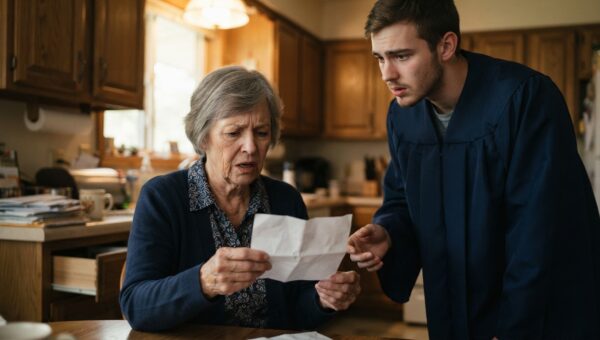
He lined my pill bottles up on the counter and did the arithmetic out loud. “Grandma, there’s supposed to be sixty. There’s a hundred forty.” He looked at the halves, then at me. My chest had been tight for a week, an ache I kept calling heartburn. I opened my mouth to explain, and the kitchen floor came up to meet me.
The ambulance ride was a blur of flashing amber light against the ceiling panels and the low, steady drone of a diesel engine that rattled right through my shoulder blades. I remember the paramedic holding a plastic oxygen mask near my nose, his fingers thick and calloused, smelling faintly of laundry soap and old paper. “Stay with me, Clara,” he kept saying, his voice entirely too loud in the small space. I tried to nod, but my neck felt like dry timber. Leo was in the front seat, peering back through the little glass partition between the cab and the back, his small face pressed so hard against the glass that his nose looked flat.
I hated that he saw me fall. I hated that the numbers I had spent eight months trying to hide had spilled out across the linoleum like spilled beans.
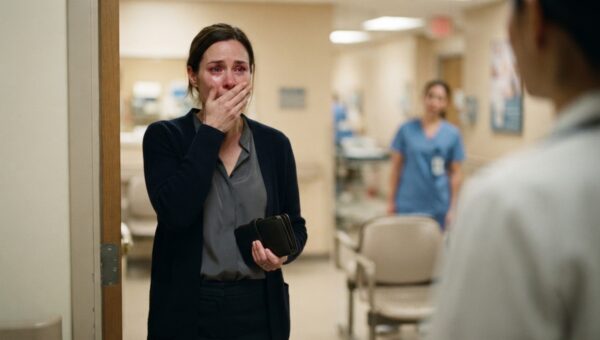
By the time the emergency room doors swung open, my daughter Sarah was already standing at the nurses station. She looked like she had run all the way from her car, her keys still dangling from her fingers and her hair pulled back into a crooked clip she must have thrown together in a panic. When the orderlies wheeled me past, she didn’t cry right away. She just reached out and caught the metal rail of my stretcher, her knuckles turning bone-white. “Mom,” she said, and her voice cracked right down the middle on that one syllable. “What happened to you?” I couldn’t answer because my throat was full of sand and the doctors were already pushing my bed through double doors marked Authorized Personnel Only.
They kept me overnight in a room that smelled of industrial bleach and floor wax, the kind of sterile quiet that makes you feel like time has stopped entirely. Sometime around three in the morning, Sarah came back in with a clear plastic Ziploc bag resting in the palm of her hand. Inside were the plastic orange prescription bottles Leo had lined up on the counter, along with the little white halves and quarters I had spent months carving with an old kitchen knife. She pulled a chair right up beside the metal bed rail, sat down, and laid the bag on the white linen sheet between us. Nobody said anything for a full minute, and honestly that felt worse than any lecture she could have given.
“I found the utility notices in the bottom drawer, too,” Sarah said softly, staring down at the plastic bag instead of looking at my face. “The past-due ones from water and electric.
Mom, why didn’t you just call me?” I stared up at the acoustic tiles on the ceiling, counting the little pinholes the builders had stamped into them. “Because you have two kids in braces and a mortgage that eats half your paycheck every month,” I told her, my voice sounding thin and small even to my own ears. “I didn’t raise you to take care of me twice. Once was enough.” She let out a long, shaky breath, reached across the space between us, and took my hand. “We are a family, not a balance sheet,” she whispered. “You don’t get to starve your heart just to save a few dollars on refills.”
The cardiologist, a tall man with tired eyes named Dr. Evans, came in just as the morning sun was starting to turn the hospital window the color of an old peach. He didn’t lecture me either, which I suppose was mercy. He just sat on the edge of the mattress and laid out the facts like a mechanic talking about a worn-out fan belt. “When you cut those blood pressure tablets in half, Clara, you weren’t saving money,” he said plainly. “You were building up pressure until something had to give. Your heart didn’t break because you’re old. It broke because you were running on fumes and stubborn pride.” He wrote down the names of two generic discount programs and a local clinic that helps seniors with prescription gaps. “We’re going to fix the dosage safely, and we’re going to make sure the pharmacy auto-ships them to Sarah’s house so you don’t have to play pharmacist with a kitchen knife anymore.”
Three days later, Sarah drove me back home. The house felt different when we walked through the front door, smaller somehow, but lighter. The kitchen counter was entirely clear of the orange bottles and the little white crumbs I used to sweep into my palm every Sunday night. Sarah had spent her morning off going through the pantry and the spare room, hauling out the old cardboard boxes I had been secretly packing to sell to the antique shop down on Market Street. She put the kettle on the stove and handed me a mug of hot tea without a word about my stubbornness. We didn’t need to talk about it anymore. The damage was out in the open, and for the first time in eight months, the knot behind my ribs didn’t feel quite so sharp.
Two days after that, Leo came over after school with his backpack slung over one shoulder and a brown paper bag from the bakery tucked under his arm. He didn’t look at the counter where the bottles used to sit. He just walked straight into the kitchen, set his bag down, and pulled out a pint of fresh peas in a plastic tub that Sarah must have given him. “Mom said we have to shell these together,” he announced, hopping up onto one of the wooden barstools with a serious look on his face. “She said you’re the only one who knows how to do it without crushing the small ones.” I pulled a ceramic bowl out of the lower cabinet and sat down across from him, my fingers a little stiff still, but steady enough.
The sun came in through the back window, throwing long, warm bars of light across the oilcloth table. Leo picked up a green pod, split it down the seam with his thumb, and dropped three bright little round peas into the bottom of the bowl with a soft clatter. I took another one, feeling the cool, firm weight of it between my fingers, and did the same. We sat there together in the quiet afternoon, counting nothing at all, just listening to the steady rhythm of green shells popping open in the warm air.