My mother took the oxygen tubing out of my father’s nose to make a point during an argument. Four seconds, maybe five. She held it in his own graying living room light and looked straight at me while she said it.
“You want to see what happens when I’m not here doing everything?”
He was eighty-one years old and his chest barely moved under his flannel shirt.
He didn’t have the strength to reach up and fix the prongs himself, so his eyes just shifted over to me instead of her. I reached out, my fingers clumsy and cold, and got the plastic back into place before his lips started turning that frightening shade of blue.
I left the room right after that because my lungs felt like they had shrunk to the size of marbles. I went out to the gravel driveway with the afternoon sun hitting the windshield of my sedan and I called the home care agency with my hands shaking so badly I hit the wrong digits twice.
“I need someone here,” I told the dispatcher. “Today. Right now.”
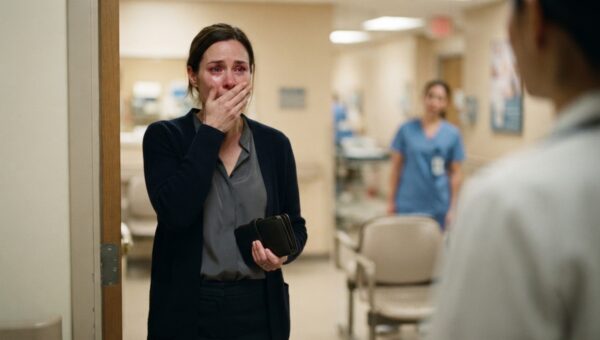
The nurse who came out that afternoon was Brenda. She had silver hair pulled back into a tight bun and a clipboard that she carried like a shield. She spent forty minutes alone in my father’s bedroom with the door shut tight while my mother sat on the porch swing outside, rocking back and forth with her mouth pressed into a thin, bitter line.
When Brenda finally came out, she didn’t look at my mother through the screen door. She just asked me to sit down at the yellow Formica kitchen table, and she said he’d told her something, and…
“He says she’s done it before,” Brenda whispered, leaning her forearms on the table. Her voice was steady, but her eyes were hard. “Not just today. Twice last month during arguments over his medication schedule. She told him she could turn off his air whenever she felt unappreciated.”
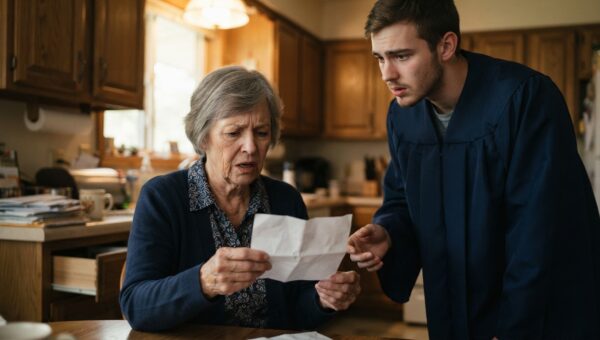
I sat there in the quiet kitchen with the refrigerator humming against the wall. Brenda’s words just hung in the air between us like woodsmoke. I wanted to tell her she was wrong, or that my father was just confused, or that my mother was under an impossible amount of strain. But I couldn’t say any of it because I had just watched her pull the tubing out with my own two eyes.
“Is he safe here?” I asked.
Brenda looked toward the hallway where my father’s bedroom door was cracked an inch. “Not unmonitored. Not with the way things are right now. Your mother is drowning, but she is pulling him down with her.”
Three hours later, my mother came back inside through the back door, wiping her hands on a dish towel and talking about how hard she worked to keep the house clean. She stopped when she saw me standing by the counter.
“What did that nurse say to you?” she asked, her voice instantly defensive. “Are you complaining about me again?”
“She didn’t have to complain,” I said. “Dad told her about the oxygen.”
My mother’s face didn’t go pale. Instead, she just tightened her grip on the dish towel until her knuckles turned white. “He’s an ungrateful old man,” she snapped. “He has no idea what it takes to look after someone twenty-four hours a day without a single thank you. If I stop for five minutes, everything falls apart.”
“Taking his air away isn’t looking after him,” I said. My voice didn’t shake this time. It felt flat and heavy, like lead.
“It was a second of frustration,” she shot back, her voice rising. “I didn’t hurt him. He’s breathing right now, isn’t he?”
“Not because of you.”
That was the moment the house changed. The quiet that settled over us wasn’t the comfortable kind of quiet we used to have when I was growing up. It was the heavy, loaded silence of a truce signed after a war neither side actually won.
The next morning, the agency sent out a different nurse with a new set of orders. We installed a locking box over the oxygen regulator in the hallway, and we set up a schedule where a professional aide came in every single morning and every afternoon. My mother tried to fight it at first, calling the agency twice to cancel, but Brenda had already filed the report with the state intake coordinator. The daily assistance wasn’t optional anymore.
For the next few weeks, my mother moved around the house like a ghost, keeping to the kitchen and refusing to look me in the eye when I came over to check the logs. She still cooked his meals, but she didn’t talk to him the way she used to. The martyrdom she had worn like a heavy coat for forty years had been stripped away, leaving nothing underneath except a bitter, exhausting emptiness.
My father didn’t talk much about what happened behind that closed door with Brenda. He spent his afternoons sitting in his recliner by the window, watching the delivery trucks go by on the blacktop outside.
One evening, I walked into his room to check his water pitcher. The steady, rhythmic hum of the oxygen compressor filled the corner of the room, keeping time like a metronome. The new tamper-proof plastic tubing clip was locked securely in place right where Brenda had put it, impossible to slide off without the key.
My father looked up from his lap, his thin hands resting on the armrests of his chair. He didn’t look angry, and he didn’t look scared. He just looked tired.
I pulled up the wooden chair beside him and sat down, holding a fresh glass of cold water without my hands shaking at all.
“How are you feeling today, Dad?” I asked.
He took a slow breath, his chest rising and falling evenly through the clear plastic prongs. “I’m breathing,” he said quietly. “That’s enough.”