Why do we always remember the exact words we should have swallowed? Two years have passed since that afternoon, but the sound of my own voice still echoes in the back of my skull whenever the house gets too quiet. I spent my whole life building a wall between myself and my family, and the worst part is that I laid every single brick with my own two hands.
Clara never asked for much. While I spent my late teens buried in textbooks and applying for every academic scholarship our high school guidance counselor mentioned, Clara was already working six days a week at the regional hospital downtown. She took the evening shift starting at 3:00 PM and scrubbed linoleum until her knuckles turned red and swollen from the industrial bleach. I used to watch her sit at our kitchen table after a double shift, rubbing her lower back with a grimace she tried to hide behind a tired smile. I didn’t feel pity for her back then. I felt a cold, arrogant detachment. I looked at her patched-up winter coat and her worn sneakers and convinced myself that I was destined for a different kind of life.
By the time I got my acceptance letter from the state university with a partial tuition waiver, I thought I had earned every single bit of it through sheer brilliance.
The remaining balance of $4,850 per semester was supposed to be my problem, but somehow, mysteriously, the bills always got paid. A regional educational trust fund kept depositing checks right on schedule. I never asked questions. I just assumed the university had internal grants they handed out to promising students who wrote good essays. I took the money, bought my expensive textbooks brand new instead of used, and moved into an apartment three miles from campus. I stopped calling home on weekends. When Clara did call, I usually let it ring until it went to voicemail, telling myself I was simply too busy studying organic chemistry or writing papers on nineteenth-century economic theory.
The final fracture happened on a Tuesday in late May. I had just walked out of my senior exit interview, diploma practically in hand, feeling like I had conquered the entire world. My phone buzzed while I was standing on the brick walkway outside the administration building.
It was Clara. Her voice sounded thin, almost breathless, like she had just run up a flight of stairs. She told me she was so proud of me and asked if she could take me out for a cheap diner coffee to celebrate. I was standing with three people from my honors seminar who were heading off to internships in Boston, and the sheer embarrassment of being seen with my cleaning-lady sister made my blood hot.
“Don’t bother,” I snapped. “Go clean toilets. That’s what you’re good at.”
She went quiet. The silence on the line stretched out for five long seconds, filled only with the faint hum of distant traffic. Then she softly wished me well anyway and hung up. I didn’t think about it again that night. I went out for drinks with my classmates and laughed too loud, cementing my place in a world I thought I belonged to.
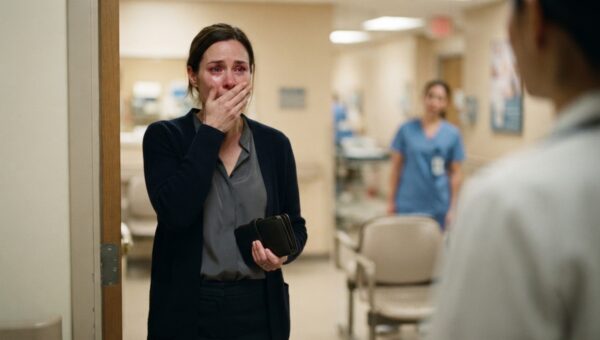
Three months later, Clara was dead at thirty-four. An undetected heart condition, accelerated by years of chronic exhaustion and untreated high blood pressure, simply stopped her heart while she was folding sheets in the laundry room of the hospital.
At her funeral, the small Baptist church on the edge of town was packed with people I had never seen before. Old men in worn flannel shirts, nurses in blue scrubs, and women who carried themselves with the same weary posture Clara always had. I stood near the back in a tailored black dress I had bought specifically for the occasion, feeling like an intruder at my own sister’s farewell. After the service, while the mourners were filing past the open casket, my Aunt Martha caught my elbow and pulled me toward the small vestry room behind the altar. Martha’s hands were shaking as she closed the heavy oak door behind us. She looked at me with eyes that held no warmth at all.
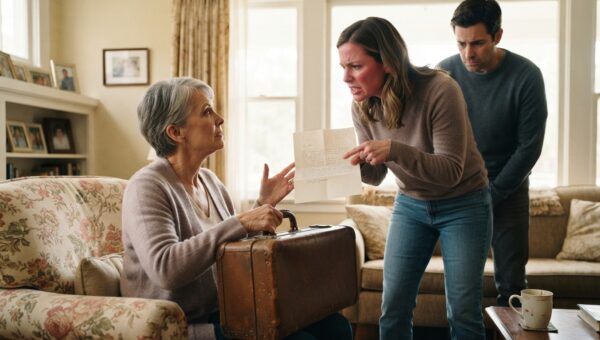
“Now it’s time for you to know the truth,” Martha said, her voice dropping to a harsh whisper.
My stomach tightened into a hard knot. Then she whispered words that made my blood run cold. “Your sister made sacrifices for you. Sacrifices you never knew about.”
I stood there because my brain kind of stopped working for a second. “What are you talking about?” I asked, my voice sounding small in the empty room. “There was a trust fund.”
Martha let out a bitter, dry laugh. “There was no trust fund. Clara didn’t sleep for six years. Every single dollar of your tuition came out of her bucket and her mop water.”
I couldn’t breathe. I drove straight from the church to Clara’s apartment on the north side of town, the keys Martha had pressed into my hand feeling like lead in my palm. The place smelled faintly of lavender floor soap and old paper. It was devastatingly small. A single bed pushed against the peeling floral wallpaper, a hot plate on the counter, and a plastic laundry basket in the corner. There was no television, no microwave, and no computer. On the small wooden kitchen table sat a chipped ceramic mug with a tea bag dried out at the bottom.
I walked into her bedroom and found a metal lockbox tucked beneath a pile of folded flannel sheets in the bottom of her wardrobe. The key was hanging right there on a small nail beside the closet frame. My hands were shaking so badly I dropped the key twice before I managed to turn the brass lock.
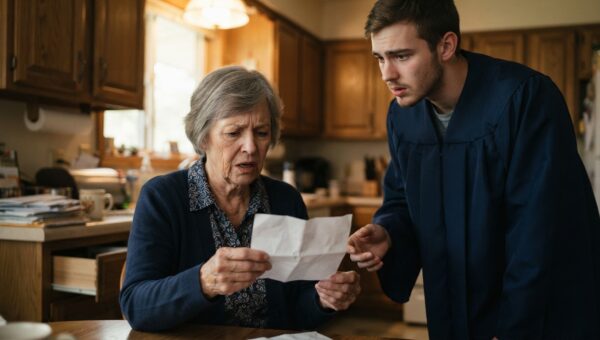
Inside the box were no family photos or sentimental trinkets. It was packed tight with bank withdrawal slips and Western Union transfer receipts, all dating back through my entire four years at university. The name on the recipient line of every single wire transfer was my own university student ID number. The amounts matched every single tuition shortfall down to the penny. Beneath the receipts was a small, spiral-bound ledger book with Clara’s neat, tired handwriting filling every line. She had tracked her earnings by the hour. $8.50 an hour cleaning office parks. $9.25 an hour scrubbing surgical suites. Next to each total, she had written tiny calculations in the margin, subtracting the cost of bus fare and cheap groceries to ensure the remainder would cover my lab fees and parking passes.
On the very last page of the ledger, dated the exact week of my graduation, she had written one sentence in pencil. “She’s going to be somebody important now.”
I sat down hard on the edge of her narrow mattress as the full weight of what I had destroyed finally crashed over me. I had treated her like an embarrassment while she was literally breaking her spine to buy my future. Every fancy textbook, every academic honor, every single step I took toward my shiny new career had been paid for with Clara’s breath. Her phone call on graduation day wasn’t an intrusion. It was just an older sister wanting to hear her little sibling say thank you. And I had told her to go clean toilets.
The next few months were a blur of quiet reckoning. I didn’t go to Boston. I didn’t take the high-paying corporate job I had interviewed for during my final semester. Instead, I packed up my apartment and moved back into the small house we had grown up in, using my meager savings to pay off the last of Clara’s hospital bills and her modest funeral expenses. I spent my days working part-time at the very same hospital where she had spent her nights, pushing a supply cart down the long, linoleum hallways and learning the names of the women who worked beside her.
Yesterday afternoon, I finished sorting through the last of her things in the spare room. Among the worn cloths and empty bottles of detergent, I found something I hadn’t noticed before. Clara’s old, silver-bristled cleaning brush was sitting on the wooden shelf right next to my freshly framed university diploma, which I had brought over and propped against the wall. They rested side by side in the quiet room, two different tools from the exact same struggle. I finally bowed my head, and for the first time since she passed away, I let myself cry without trying to make it sound pretty.