The upholstery on the passenger side of that old gray sedan always did trap everything. Pennies, dried bits of pine needles from the driveway, receipts for feed and oil filters that Arthur never bothered to throw away.
I was down on one knee on the gray rubber floor mats, digging my fingers into the dark gap where the seatbelt anchor bolted to the floorboard, when my knuckles brushed something hard and smooth. It was small.
I pulled it out into the thin afternoon light coming through the windshield and wiped the gray dust off my thumb. It was a gold earring. A small teardrop loop with a tiny red ruby chip tucked into the center of the metal scrollwork.
I sat back on my heels, the dusty mat biting into my kneecaps, and stared at it for a long second. My ears weren’t pierced. I never wore earrings, let alone anything with red stones that looked like it came from an antique shop rather than a modern store.
I didn’t yell. I didn’t drop the thing. I just slipped it into the front pocket of my canvas gardening apron and finished vacuuming the footwells until the machine made that high-pitched whine it always made when the bag was full.
Arthur had been talking about trading the car in for months, saying the transmission was starting to slip whenever he took it up the highway toward Knoxville.
He was forty-eight years old, with those broad shoulders that had started to round just a bit from thirty years of leaning over an engine block down at the machine shop, and he always liked things tidy.
We had been married twenty-two years come November, living out here on three acres of scrub grass and red clay just outside of Maryville, where the mountains sat against the sky like gray teeth.
“You’re making that place spotless,” Arthur said later that afternoon, leaning against the kitchen doorframe while I was wiping down the laminate counters with a damp rag. He had his work boots on, unlaced and dragging at the heels, the way he always did when he came home tired. “It’s just a trade-in, Clara. The dealer’s going to hose it down anyway.”
“I like things clean before they leave my hands,” I said. My voice didn’t shake. I kept my eyes on the white cloth moving in circles over the Formica. “Your mother coming tonight?”
“Yeah,” he said, rubbing the back of his neck with a grease-stained thumb. “She called around noon. Said she wanted to drop off those jars of peach preserves she put up last month.”
“Tell her I’ve got pot roast going,” I said.
That was the normal rhythm of our Tuesdays. Nailing down the mundane things while the world outside our kitchen window turned that dull, bruised color it gets right before an autumn rain starts coming down off the ridge.
When Clara Senior pulled her Buick up the gravel drive at five past six, I was standing by the stove stirring the carrots. She didn’t wait for Arthur to open her door. She pushed it herself, her knees clicking as she stepped down onto the loose stones with her heavy walking shoes.
She walked up the porch steps carrying a brown paper grocery bag folded twice at the top, her chin tilted up the way it always was when she wanted you to know she thought she was the smartest person in the room.
“It’s drafty on that highway,” she said the second she swung the screen door open, unbuttoning her navy wool coat before she even reached the rug. “They ought to pave the whole stretch between here and Townsend. Shakes the teeth right out of your head.”
“Hang your coat by the door, Evelyn,” I said, turning the burner down to a simmer.
That was when I saw it.
She had her gray hair pinned up in that stiff little bun she favored, and tucked into her left earlobe was a single gold teardrop earring with a tiny red ruby chip catching the light from the overhead fixture.
She didn’t have a matching one on the right. Her right earlobe was bare, just an old gold stud shaped like a tiny daisy she’d worn since I met her back in nineteen-ninety-five.
I didn’t say anything right away. I pulled two white porcelain plates down from the cupboard and set them on the wooden table, right across from where Evelyn always liked to sit so she could watch the road through the kitchen window.
“Something smells good,” Evelyn said, settling her bulk into the oak chair with a heavy sigh that smelled faintly of peppermints and damp wool. “Arthur, did you get the oil changed in that truck yet?”
“Tomorrow, Ma,” Arthur muttered from the sink, where he was running cold water over his hands and scrubbing the grease out from under his thumbnails with an old toothbrush.
I reached into the pocket of my apron. My fingers found the little gold loop I’d pulled from beneath the car seat that afternoon.
I walked over to the table and set it down right beside Evelyn’s water glass. It made a tiny, sharp *clink* against the glass rim.
Evelyn stopped mid-sentence about the county commissioners. Her eyes dropped to the shiny metal sitting there on the wood, right next to her napkin.
She didn’t touch it. Her face went tight, all those little wrinkles around her mouth pulling together like a drawstring purse, and then she slowly raised her eyes to look at Arthur.
Arthur was still standing at the sink, the toothbrush frozen halfway to his palm, staring straight down at the white porcelain basin like he could melt right through the drain.
Nobody said anything for three seconds. The refrigerator gave that heavy, rhythmic thrum in the corner, and then Evelyn looked right at me, her chin coming up another notch.
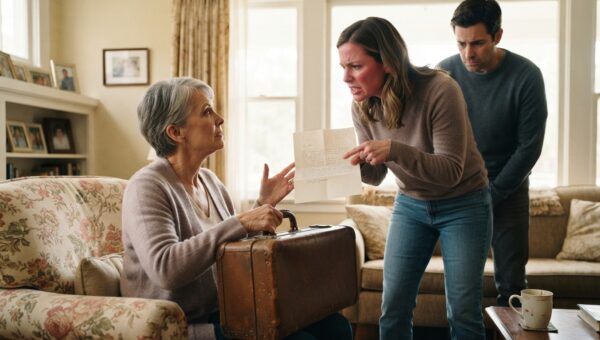
“She didn’t leave it there, dear,” Evelyn said. Her voice didn’t shake at all. It was flat and cold, like water dipped out of a horse trough in January. “He brought her to the house while you were at your mother’s, and she is the sister you agreed to pay for three years ago.”
The kitchen seemed to tilt just an inch.
I didn’t drop my plate. I didn’t scream. I just stood there with my hands flat on the edge of the table, feeling the grain of the oak pressing into my palms.
“What sister?” I asked. My voice sounded thin, like paper tearing in another room.
Arthur finally turned around from the sink, water dripping off his elbows onto the linoleum. “Clara, look. It’s not what, “
“Shut up, Arthur,” Evelyn snapped, her eyes hard as river stones. “She has a right to know where the roof over her head came from. You think this house was paid off by your little dress shop downtown? You think those dividends from the mill just appeared out of thin air?”
I looked from Evelyn to my husband. The man who had kissed my forehead every morning before dawn for twenty-two years. The man who had helped me plant the hydrangeas by the back porch and held my hand when my father was lowered into the clay over in Clinton.
“Arthur,” I said again, and this time my voice didn’t shake at all. “What is she talking about?”
He wiped his hands on his jeans, leaving two dark gray smears across the denim. “My dad had another family down in Chattanooga before he died, Clara. You know that. We talked about it years ago.”
“We talked about an old man who walked out,” I said. “We never talked about a sister. And we certainly never talked about supporting her.”
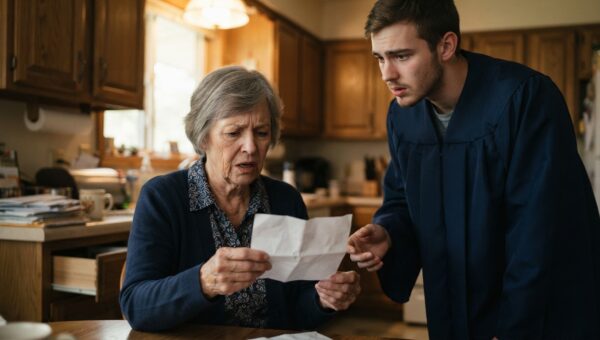
Evelyn let out a dry, rattling laugh that had no humor in it. “Support? She’s got three kids in private school in Cleveland, Clara. Arthur’s been wiring four thousand dollars every first of the month out of that joint savings account you two set up when you sold your uncle’s timber land. For six years. Since before your mother got sick.”
The room went completely silent. The peach preserves in the brown paper bag on the floor seemed to smell heavier, like rotting summer fruit.
“Six years,” I whispered.
“She was drowning,” Arthur said, taking one step toward the table before he saw the look on my face and stopped dead. “She was my half-sister. What was I supposed to do, let her kids starve on the street? You had your mother’s inheritance tucked away. You didn’t miss it.”
“I didn’t miss it,” I repeated. The words felt heavy in my mouth, like dry salt. “You stole from every acre of timber my family left me. You put another woman’s children through school while I was driving a ten-year-old station wagon with bald tires.”
“She came up to visit last month,” Evelyn chimed in, smoothing her apron over her knees with those thick, liver-spotted fingers. “Needed some papers signed regarding the estate settlement down south. Arthur brought her by the house to use the computer while you were spending the weekend over at your sister’s place in Bristol. She dropped her earring under the seat on the way to the diner. I told him he should have cleaned that car out better.”
She looked at the single gold earring sitting on the table, and then she looked at me, as if expecting me to nod and thank her for the honesty.
I didn’t yell. I didn’t throw the pot roast against the wall, though I felt the red heat of it burning right behind my ribs.
I walked over to the wall phone by the pantry, picked up the receiver, and dialed three digits without taking my eyes off Arthur.
“Who are you calling?” Arthur asked, his voice finally cracking, that big frame of his suddenly looking smaller under the yellow kitchen light.
“Howard Vance,” I said, waiting for the third ring. “His office is still open until seven on Tuesdays. I want to know if a wife can lock a joint account before her husband finishes his coffee.”
Arthur took a half-step forward, his hand coming up. “Clara, don’t do that. We can talk about this. We can work out a budget, “
“Howard,” I said into the black plastic mouthpiece as the line clicked over. “This is Clara Henderson. I need you to draw up papers first thing in the morning. Full financial freeze, an inventory of every asset since nineteen-ninety-nine, and notice to vacate the premises by Friday.”
Arthur didn’t say another word. He just stood by the sink, staring at the floor where the gray rubber mat was still rolled up by the back door.
Evelyn stood up, her coat still draped over the back of the oak chair, and picked up her brown paper bag of peach preserves. She didn’t look at me as she walked toward the screen door, but she paused with her hand on the latch, looking out into the dark yard.
“You always were too hard-headed, Clara,” she muttered, pushing the door open into the damp night air.
The screen door banged shut behind her.
I stayed on the phone with Howard for twenty minutes, giving him names, numbers, account digits I had memorized from the tax returns I filed myself every April while Arthur pretended to understand the deductions.
When I hung up, the kitchen was dead quiet except for the hum of the refrigerator.
Arthur was still standing in the exact same spot, his shoulders slumped, looking like a man waiting for a sentence that had already been handed down.
I didn’t look at him. I walked over to the kitchen counter, picked up the single gold earring Evelyn had left beside her plate, and dropped it into the palm of my hand.
Then I walked over to the drawer by the silverware, pulled out its matching twin where I had laid it earlier that afternoon, and set the two of them side by side on the bare wooden counter.
They sat there in the yellow light, identical and bright, catching the edge of the knife block.
I left them right there on the counter, walked down the hall to the spare bedroom, and closed the door behind me with a soft, clean click.