The plastic tray made that hollow, cracking sound when I peeled back the foil corner. It was 1:52 on a Thursday afternoon in late November, and the gravy on the convenience-store turkey dinner had formed a hard, greasy skin while it spun around in the box. I remember looking down at the gray meat and the three little cubes of watery carrots and thinking that this was just how things were going to be from now on.
My apartment smelled like damp carpet and old radiator dust. I didn’t even bother setting a table. I just sat on the edge of the sagging armchair with the cardboard tray balanced on my knees, staring at the muted television screen where some parade float was bouncing past a row of frozen bystanders.
Then the phone on the coffee table gave a short, sharp buzz.
The screen lit up with a message from an unknown number. Dinner is at 2. Don’t be late, David!
My name isn’t David. My name is Arthur, though nobody had really said it out loud with any warmth in a very long time. I sat there with the fork halfway to my mouth, looking at the glowing numbers on the glass. It was such a small, ordinary mistake, the kind of fat-fingered typo anyone makes when they are rushing to get a turkey into the oven while half a dozen relatives yell questions from the living room.
I could have just locked the screen and gone back to my gray turkey. I could have deleted the thread and pretended I never saw it.
Instead, I looked down at the pathetic little foil tray and let out a dry, rattling sort of laugh that felt rusty in my throat. I tapped out a quick reply. You have the wrong number. But can still get a plate? I was joking, of course. It was a stupid, lonely impulse born of a quiet apartment and too much time spent staring at walls. I set the phone down, figuring whoever was on the other end would curse at me for a creep and block my number.
The reply came back forty seconds later. Of course you can. That’s what grandmas do. We feed everyone. Here’s the address.
I stared at the screen until the backlight faded to black. I didn’t know the street name, but I knew the town layout well enough to know it was about twenty minutes away across the river, up in that older neighborhood where the houses have wrap-around porches and big, heavy oak trees that drop leaves all over the pavement until the city street-sweeper finally comes by in December.
I sat there for another five minutes, arguing with myself. It was a prank. Or it was a mistake, and when I showed up on some stranger’s doorstep smelling of cheap laundry soap and wearing my oldest flannel shirt, they would look at me like I had lost my mind.
I don’t even know why I grabbed my coat. I think I was just that tired of the quiet.
The drive took twenty-four minutes because of holiday traffic near the bypass. By the time I pulled my old sedan up to the curb of the house on Maple Street, the sun was already starting to dip behind the rooflines, casting a pale, weak yellow light across the frosty lawns. The house was glowing. Every single window had warm light spilling out onto the bushes, and I could hear the muffled sound of people talking and laughing over some kind of football game through the closed front door.
My hands were shaking slightly against the steering wheel. I actually put the car in reverse, ready to back out and drive straight back to my microwave dinner.
The front door swung open before I could turn the key.
A tiny woman with white hair pulled back into a messy bun and a flour-dusted apron tied around her waist stepped right out onto the top porch step, shading her eyes against the late-afternoon glare. She didn’t look like a homeowner waiting for a guest of honor. She looked like someone who spent forty years keeping everybody fed and nobody argued with her.
She looked straight at me through the windshield, and even though she had never seen my face in her life, she waved her hand impatiently, motioning for me to get out of the car. I killed the engine and pushed the door open, my boots crunching loud against the dry gravel in the driveway.
Before I could stutter out an explanation or tell her about the text message, she had closed the distance between the porch and the bottom of the steps. She didn’t ask who I was. She didn’t check my ID or look at me with suspicion. She just reached up, grabbed the lapels of my coat, and pulled me into a hug that smelled intensely of roasted sage, melted butter, and old peppermint.
Come in, baby. Put your coat, she said, her voice small and raspy like dry paper, but steady as a anchor. You’re freezing.
She led me straight through the front door into a hallway that was already crowded with muddy boots and heavy winter jackets. The heat inside hit me like a physical wave, thick with the smell of gravy, burnt sugar, and forty years of family gatherings. Before I could catch my breath, she had steered me right into a dining room where twelve people were crammed around a mahogany table that looked like it was bowing under the weight of heavy ceramic bowls and platters.
Who’s this, Grandma? a voice called out from the head of the table.
It was a tall kid, maybe twenty-two or three, with broad shoulders and messy brown hair that looked like he had run his hands through it a hundred times while driving. He was wearing a faded college sweatshirt and holding a carving knife in one hand. He looked at me, then looked at Wanda, and the confusion on his face was so plain it almost made me laugh.
That’s David, Wanda lied without blinking an eye, turning to grab a clean plate from the sideboard as if she hadn’t just invented an entirely new grandson out of thin air. He ran late because of traffic. Now sit down before the turkey gets cold.
The kid, the real David, just stared at me for three long seconds. I stood there in the doorway, my hands stuffed deep into my pockets, feeling like an absolute fraud. I opened my mouth to tell the truth, to explain about the wrong number and the pathetic microwave dinner, but the look in David’s eyes shifted from confusion into something surprisingly soft. A slow, crooked grin spread across his face. He pulled out the empty chair right beside his own.
Well, David, he said, his voice dry and amused. You look like you got lost on the way from the turnpike. Sit down before my cousins eat all the drumsticks.
That was six years ago.
Over the next few years, that accidental text turned into the backbone of my entire calendar. I stopped spending holidays alone in my apartment. I became a fixture at Wanda’s house, showing up early on Thanksgiving mornings to help peel potatoes or carry out the heavy trash bags. David and I became inseparable. We worked on cars together in his uncle’s gravel driveway, helped each other move apartments twice, and spent countless Sunday afternoons sitting on the back porch drinking black coffee while the world went by. He was the brother I never had, given to me by a woman who refused to let an empty seat exist at her table.
Wanda treated us both the exact same way. She didn’t care about bloodlines or official certificates. To her, if you were in her house, you were hers. She had a way of looking right through whatever armor you wore, finding whatever loneliness you were carrying around, and burying it under an avalanche of home-cooked food and blunt advice.
Then came last year.
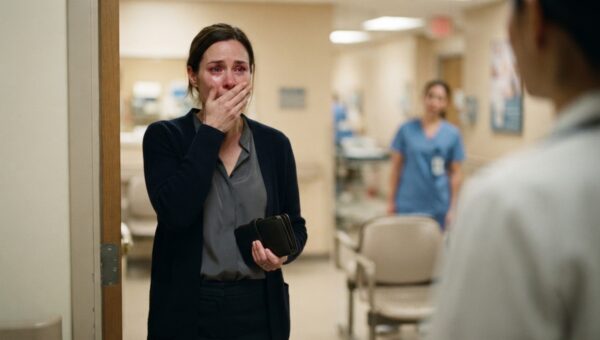
The frost had barely touched the grass when the hospital called in late October. It wasn’t a long illness, thankfully, but it was fast enough that none of us really had time to brace for it. When we gathered back at the house on Maple Street last November, the kitchen felt too big and too quiet, even with twenty people packed into the dining room. Nobody wanted to touch the carving knife. Nobody wanted to stand at the stove and stir the gravy.
David ended up at the head of the table, wearing one of Wanda’s old linen aprons that still smelled faintly of peppermint and flour. His hands were shaking just a little bit as he picked up the serving spoon. We all sat there in the heavy silence, the kind of silence where everyone is trying very hard not to look at the empty chair at the side of the room. A couple of people were wiping their eyes with paper napkins, trying to keep it together for the sake of the younger kids.
Before anyone took a bite, David stood up and reached for two extra ceramic plates from the stack. He didn’t say anything fancy. He didn’t give a big speech about grief or legacy.
He walked over to Wanda’s usual chair, placed a full plate of turkey, stuffing, and cranberries right there in front of the empty seat, and set a single white candle beside it. Then he walked back to the center of the table, set down one more empty plate right next to his own, and looked around the room at all of us.
We set a plate for her, David said, his voice cracking just a tiny bit before he cleared his throat. And we set an extra empty plate right here, just in case someone sends a wrong text.
I looked down at that clean white ceramic plate sitting right beside my silverware, waiting for a stranger who might be sitting alone in a cold apartment twenty miles away with a microwave dinner on their lap. The room went very still for a second, and honestly that felt right. Family isn’t always about blood or matching last names or legal ties. Sometimes, it’s just an open door and a woman who refuses to let you eat alone.