For most of a year I was thirsty and so tired I’d nap before lunch. My throat always felt like it had been scrubbed with dry wool, no matter how many tall glasses of tap water I drank down right out of the faucet. I just figured my get-up-and-go had finally got up and gone for good.
My primary care physician, Dr. Evans, gave me the exact same line during my annual checkup back in November.
I sat across from him in that crinkly paper-lined chair while he tapped his pen against his knee. He looked at me over his half-moon reading glasses and gave a little dismissive laugh that had worn out its welcome decades ago.
“Doris, that’s seventy-three for you,” he said, tapping his chart like he was handing down stone tablets from the mountain.
He told me to take a walk around the block more often, prescribed a mild vitamin supplement I didn’t need, and sent me home. I believed him because he was the doctor and I was just an old woman whose joints creaked in the morning. I went home and drank another glass of water and took another nap before the afternoon news came on.
The real trouble started when my dentures stopped staying put. I’d had my full upper plate for six years, and it had always snugged right up against my gums like a well-worn glove.
But by early spring, I couldn’t eat a saltine cracker without the whole arch sliding around like a loose shingle in a gale. I had lost twelve pounds without trying a single diet, my favorite house slippers felt loose around my heels, and my mouth tasted like old pennies from morning till night.
I finally gave up and booked an appointment at the dental place over at the plaza, figuring I needed a relining. It cost $140 just for a standard cleaning, which felt like highway robbery for someone on a fixed pension, but I needed to chew my Sunday pot roast without choking.
The young hygienist, Chloe, draped that heavy lead apron over my chest and started in with her little metal pick. She worked quietly for a few minutes, but then she slowed down and kept peering under my upper lip with her little round mirror. She stopped the vibrating scraper and wiped her brow with the back of her gloved hand.
“How long have your gums been looking like this, Doris?” she asked, her voice dropping down low and careful.
“Like what?” I said around the rubber bite block stuck in the corner of my mouth. “Dry?”
“Not just dry,” she murmured, pulling her little mirror back. “Inflamed. And the tissue recession is pretty severe for someone who keeps up with their cleanings.”
She stepped away from the chair, pulled off her blue latex gloves in one quick snap, and left the room without another word. I sat there in the harsh overhead light, listening to the hum of the small suction tube dangling against the tray. A minute later she came back with Dr. Aris, the senior dentist at the practice, a man with kind eyes and salt-and-pepper hair who usually only dealt with crowns and root canals.
Dr. Aris didn’t even pick up the dental tools. He didn’t look at my teeth at all.
He pulled my dental chart off the door clip, flipped straight to the medical history page, and looked over the top of his glasses right into my eyes.
“Doris, when was the last time anyone checked your blood sugar?” he asked.
“Never that I recall,” I told him, feeling foolish for not having an answer ready. “Dr. Evans does my blood work every fall for my cholesterol, but he never mentioned sugar.”
Dr. Aris closed the chart with a soft thud that sounded entirely too heavy for such a small folder. He leaned against the counter, crossed his arms, and his face went completely flat and serious.
“I want you at the county hospital ER tonight,” he said. “Your body has been trying to tell us something very loud for a long time, and your gums are just the final messenger. Your system is dangerously overloaded, and we cannot wait until Monday morning.”
I sat there in the vinyl chair because my brain kind of stopped working for a second. I wanted to tell him I had laundry to fold and a loaf of sourdough rising on the counter at home. But the look in his eyes stopped any argument dead in my throat. He didn’t ask me if I wanted to go. He reached for the desk phone and dialed the intake triage desk right in front of me while Chloe stood by the sink and squeezed my trembling hand.
That evening found me sitting in a sterile county hospital cubicle with a plastic IV catheter taped to the back of my right hand. The nurses moved fast, talking in clipped acronyms I couldn’t follow, sticking strips of paper into little grey machines and shaking their heads at the numbers flashing on the screens. My blood glucose reading when I walked through those sliding glass doors was four hundred and eighty-two milligrams per deciliter.
The endocrinologist on call, a young woman named Dr. Patel who looked barely old enough to drive, sat on a rolling stool beside my bed and explained it to me with brutal, quiet clarity. My body hadn’t just been aging. For nearly twelve months, my pancreas had stopped producing enough insulin, forcing my cells to starve while sugar built up thick as syrup in my veins. To survive, my body had started burning through its own muscle mass and fat reserves, which explained the rapid weight loss, the shrinking gums, and why my dentures had suddenly stopped fitting. If I had stayed home another forty-eight hours, Dr. Patel told me, I would have slipped into a diabetic coma from which I might not have returned.
“You’ve been living on borrowed time for months, Doris,” she said gently, pressing a warm hand over my knuckles.
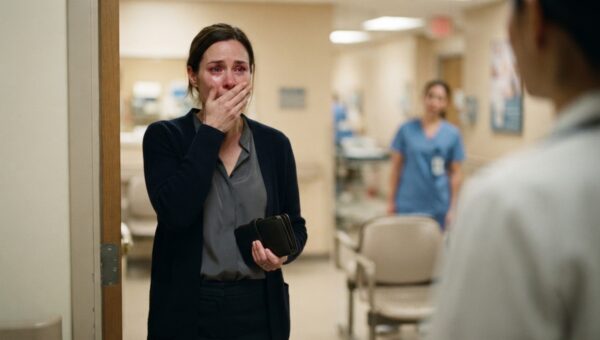
My daughter Sarah arrived around midnight after driving two towns over, her coat crooked and her eyes red with panic. When she saw the IV pole and the monitor beeping softly in the corner, she didn’t cry. She just got mad, the way people do when they’re terrified. She stood right at the foot of my bed and demanded to know why Dr. Evans hadn’t caught it on my annual lab work last October.
“I trusted him,” I whispered, feeling the full weight of my own foolish compliance settle into my chest. “He told me it was just seventy-three.”
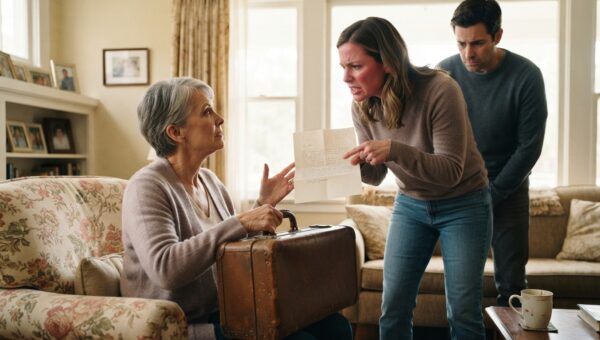
“Well, seventy-three is an age, Doris, not a fatal diagnosis,” Sarah snapped, running a hand through her hair. “We are going to have a conversation with him once you’re discharged.”
For three days I stayed in that hospital room, learning how to count carbohydrates, how to prick my finger with a little spring-loaded clicker, and how to inject clear insulin into the fleshy part of my stomach with a tiny needle that didn’t hurt nearly as much as I thought it would. My body felt heavy and sore, but as the days ticked by and the sugar levels on the monitor finally dropped into the safe double digits, the constant, clawing thirst began to fade. The woolly feeling in my throat cleared away, and for the first time in a year, I didn’t feel the need to lie down and sleep before the clock struck noon.
When Tuesday morning came around, I was discharged with a thick brown envelope of medical summaries, a prescription for long-acting insulin, and a referral to a new clinic across town. But before I went home to my sourdough loaf, I had one stop left to make.
Sarah drove me straight to Dr. Evans’s office on Maple Street. We walked through those double glass doors together, past the reception desk where the young clerk looked up with a welcoming smile that faded the moment she saw our faces. I didn’t wait for an appointment. I walked right past the clipboard station and pushed open the door to Dr. Evans’s private consultation room while he was finishing notes on a patient file.
He looked up, annoyed at the interruption, his glasses perched low on his nose. “Doris? You aren’t scheduled until November. Is something wrong with your prescription?”
I didn’t sit down in the crinkly paper chair. I walked up to his heavy oak desk, picked up my thick hospital discharge summary from the brown envelope, and dropped it right in the middle of his paperwork with a flat, final slap.
“Nothing that you’re going to fix, Dr. Evans,” I said. My voice didn’t shake once. It came out steady and low, the way my grandmother used to talk when she was laying down the law.
He glanced down at the hospital letterhead, his eyebrows knitting together in confusion. He reached for his reading glasses. “What is this? Were you in an accident?”
“No accident,” I told him, standing tall with Sarah right behind my shoulder like a solid oak post. “I was in the county hospital for three days with severe ketoacidosis because my blood sugar was four hundred and eighty-two. The same blood sugar you decided was just a normal part of turning seventy-three during my annual physical last year.”
Dr. Evans adjusted his glasses, his face flushing a dull, mottled red around his collar. He cleared his throat and tried to slide back into his professional, soothing register. “Now, Doris, let’s not be hasty. At your age, metabolic shifts can happen rapidly and unpredictably between annual screenings, and patients often don’t report the early subtle symptoms clearly enough during a routine ten-minute window, “
“Don’t you dare,” I said, cutting him off right in the middle of his excuse. “Don’t you sit there and tell me I didn’t report it when I sat in this exact room last November and told you I was thirsty all day and so tired I couldn’t stay awake past noon. You patted me on the head, told me I was old, and sent me home to die.”
The room went dead quiet. You could hear the faint hum of the fluorescent tube overhead flickering just a little bit. Dr. Evans opened his mouth to say something else, some other practiced medical platitude, but the words stuck. He looked at the hospital paperwork, then up at my face, and he finally understood that I wasn’t asking for an apology. I was delivering a verdict.
“I’ve already transferred my care to the clinic at the medical center,” I said, pulling my handbag strap higher up on my shoulder. “And I’ve filed a formal quality-of-care grievance with the state medical board regarding your failure to run a basic metabolic panel when a patient reports chronic fatigue and sudden weight loss. You can keep your vitamins, Dr. Evans. I won’t be back.”
We walked out of his office without looking back once. The spring air outside felt crisp and clean against my face, and for the first time in a very long year, my legs felt strong enough to carry me wherever I needed to go.
Now, weeks later, the routine has settled into something steady and manageable. I sit at my kitchen table in the morning sunlight, clicking my lancet with steady fingers, reading the digital meter display with a calm nod before sipping my black coffee. My new doctor is a young woman who listens when I speak, my daughter Sarah visits twice a week just to sit on the porch and drink iced tea, and my new dentures finally fit right now that my weight has stabilized. The warning came late, but I heard it, and I’m still here to tend the garden.