The grease on the bottom of the flat-top always smelled a little different when the morning shift dragged. I stood by the coffee station at four minutes past eleven, wiping down a laminate counter that had seen better decades, and watched the second hand on the wall clock tick past another useless minute.
My back had been aching since six, right around the time I finished taping my heels with athletic tape so I could make it through the twelve-hour stretch without crying.
At sixty, your bones have opinions about linoleum floors, and the floor at Silver’s Diner was practically designed to punish anyone who spent more than ten minutes on it.
I didn’t mind the work, mostly. Or at least I told myself I didn’t mind it, which was the story I had been repeating like a prayer ever since the paperwork went through.
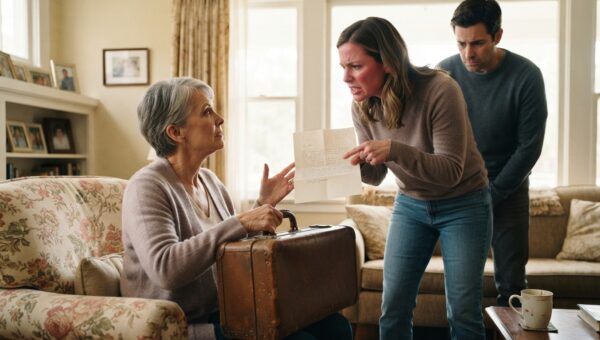
A few months ago, my children sat around my dining room table with folders and legal pads and worried expressions that looked entirely too rehearsed. They talked about asset protection and probate taxes and the heavy burden of a big house for a widow living alone.
Carlton was the loudest one, gesturing with a gold pen he bought with his first corporate bonus, telling me how much simpler my life would be if I just let them handle the transition. They took the house, they took the small nest egg my husband left behind in the metal lockbox, and they left me with a polite promise that I would always be taken care of.
Two weeks later, my phone number changed, and my calls went straight to voicemail. That was how I ended up at Silver’s, scrubbing syrup off vinyl booths and learning how to balance three plates of greasy eggs without dropping them.
In booth four, Arthur sat by himself, just like he did every single Tuesday and Thursday. He was an older man, seventy perhaps, with a frail frame and hands that shook so badly he needed two hands just to lift a mug of black coffee.
I always brought him extra napkins and slipped half my ham sandwich onto his plate when the kitchen wasn’t looking, because he looked like a man who forgot to eat unless someone reminded him. He never said much, just offered a small, tired nod and stared out the plate glass window at the gravel parking lot as if he were waiting for a train that had missed its station by twenty years.
I didn’t know who he was, and frankly, I didn’t care. In a place like this, everyone carried something heavy, and Arthur’s burden just happened to look like a pair of trembling fingers.
The bell above the diner door jingled with that sharp, brassy chime that always made my shoulders tense up. I didn’t look up right away because table two needed a refill on iced tea, but then the heavy click of expensive leather shoes hit the floor.
It was a specific sound, the kind that didn’t belong on old linoleum, crisp and deliberate and entirely out of place among the smell of scorched bacon and bleach. I kept my rag moving in circles over the laminate, pretending I hadn’t noticed the shadow falling across the counter.
“Well, look at this,” a voice said.
Carlton stood about two feet away, hands tucked neatly into the pockets of a charcoal suit that probably cost more than my rent for the entire year.
He looked around the diner with a slow, exaggerated squint, his nose twitching slightly as if the smell of fried onions offended his sensibilities.
He didn’t look like my son in that moment, or at least not the boy who used to scrape his knees on our back porch and ask me to kiss the dirt off. He looked like an executive inspecting a warehouse he was planning to bulldoze.
“Carlton,” I said. My voice came out flat, stripped of any motherly warmth because my throat had suddenly gone as dry as dust.
He took a step closer, leaning his hip against the counter with a lazy grin that didn’t reach his eyes. He glanced down at my faded red uniform shirt, the one with the grease stain near the pocket that never quite came out in the wash, and then looked back up at my face.
“I was driving through this godforsaken town for a client meeting and I told myself, there is no way that woman is actually working in a dump like this,” Carlton said, speaking loudly enough that the couple in booth three put down their forks. “And yet, here you are. You look miserable, Mom. Honestly.”
The word hung in the air between us, sharp and deliberate, meant to puncture whatever dignity I had managed to salvage out of the wreck of my old life.
I didn’t blink. I just looked at him, really looked at him, and realized how small he actually was beneath the expensive tailoring and the slicked-back hair.
“I’m working, Carlton,” I said softly, my fingers tightening around the cotton rag in my hand until my knuckles turned white. “Some of us still know how to do that without needing someone else’s signature.”
His smile faltered for a fraction of a second, just a brief twitch at the corner of his mouth, before he let out a dry, dismissive laugh. He opened his mouth to say something else, something worse probably about my clothes or my age or the pathetic size of my tips, but the heavy glass front door swung open again.
This time, the sound was different. Four men walked in almost in unison, dressed in dark suits that weren’t for show, moving with the quiet, practiced efficiency of people who cleared rooms before important people entered.
They didn’t look like cops, and they certainly didn’t look like diners. They fanned out silently, two near the door and two standing a few paces behind an elderly man who was slowly pushing himself up from booth four.
It was Arthur.
He didn’t look frail anymore. The trembling in his hands didn’t stop, but the way he carried himself changed the entire gravity of the room.
The diner went dead quiet, the kind of heavy, pressing silence where you could hear the hum of the old Coca-Cola cooler in the corner and nothing else. Arthur walked past table three without looking at anyone, his leather-soled shoes clicking softly against the floor until he stopped right beside Carlton’s shoulder.
Carlton didn’t notice him at first, still glaring at me with that superior sneer, waiting for me to look away.
Arthur reached out, his hand shaking slightly as he rested two fingers against the sleeve of Carlton’s expensive charcoal suit. Carlton jerked his arm away with an annoyed scowl, turning his head sharply to snap at whatever old man had dared touch his designer fabric.
“Watch it, old man,” Carlton muttered, his voice dropping into that grating corporate tone he used when he thought he was the smartest person in any room.
Arthur didn’t flinch. He looked up, his pale blue eyes remarkably sharp beneath heavy white brows, and stared straight into Carlton’s face with a cold, terrifying clarity.
“Carlton Vance,” Arthur said. It wasn’t a question. His voice was thin and dry like old paper, but it carried across the entire room with absolute authority.
Carlton blinked, his expression shifting from irritation to sudden confusion as he tried to place the face. “Do I know you?”
“You’ve been trying to get into my office for four months,” Arthur said quietly. “You sent three proposals, two letters of introduction, and a very aggressive acquisition pitch for Vance Industries. Your name is on my desk right now, right beneath the pile of fraudulent asset disclosures your firm slipped past my legal team last November.”
The color drained right out of Carlton’s face, leaving him looking pasty and small under the harsh diner lights. He took a half-step back, his mouth opening slightly as his brain scrambled to connect the old man in the rumpled sweater with the billionaire founder of one of the largest logistics conglomerates in the country.
“Mr… Mr. Vance,” Carlton stammered, his polished corporate confidence evaporating in less than three seconds. “I didn’t… we didn’t realize you were, “
“Quiet,” Arthur said, the single word cutting through the air like a butcher’s knife.
Arthur turned his head slowly, looking from Carlton to me, his gaze softening just a fraction before he looked back at the younger man with undisguised contempt.
“I come in here every Tuesday and Thursday because the coffee is hot and the people are real,” Arthur said, his voice rising slightly. “For three months, this woman has shared her lunch with me when she didn’t have to spare a crumb. She showed me kindness when everyone else in my life treats me like a balance sheet or an obstacle to an inheritance.”
Carlton opened his mouth to interrupt, but Arthur raised a shaking hand, and one of the bodyguard-sized men stepped two inches closer, his expression flat and unyielding.
“And you,” Arthur continued, his voice steady and biting, “walk into a diner and mock your own mother for earning an honest living. A man who preys on the woman who gave him life, who strips her home away under the guise of protection, and then struts around like a peacock in a cheap suit he bought with stolen equity.”
Arthur pulled a sleek black phone from his pocket with his trembling hand, tapping the screen twice without looking away from Carlton.
“As of thirty seconds ago, Vance Industries has officially terminated all preliminary discussions with your firm,” Arthur said, his tone dropping into a chilling calm. “Furthermore, my general counsel has been instructed to review every single financial document your department filed in the last five years, starting with the probate transfers executed in this state twelve months ago.”
Carlton’s phone buzzed in his hand. Then it buzzed again. Then it started vibrating continuously like a trapped insect in his palm.
He pulled it out with clumsy, trembling fingers, his eyes darting across the screen as notifications piled up in rapid succession. I watched his face go from pale to a sick, grayish white as he stared at the display, his lips moving silently as he read words that clearly spelled out his professional execution.
“No,” Carlton whispered, his voice cracking on the syllable. “Mr. Vance, please, that was a corporate oversight, that was just, “
“Get out of my sight,” Arthur said, turning his back on him completely and stepping up to the counter where I stood with my rag still clutched in my hand.
Carlton stood there for another second, looking around the diner as if hoping someone, anyone, would come to his rescue, but the waitress at the end of the counter was staring at him with her arms crossed, and the couple in booth three were openly watching him with cold disgust. He turned on his heel, his expensive shoes stumbling slightly on the uneven linoleum, and practically ran out the door, letting it slam shut behind him with a sharp, echoing rattle.
The diner remained silent for a long moment after he left.
Arthur let out a long, shaky breath, his shoulders sagging slightly as the adrenaline seemed to drain out of him. He looked up at me, the sharp executive edge vanishing instantly, leaving behind just the tired old man who liked black coffee and quiet corners.
“I hope you don’t mind the noise, Elena,” Arthur said softly, his voice trembling again. “I usually prefer a bit more peace with my afternoon coffee.”
I looked down at the laminate counter, then at the rag in my hand, and for the first time in six months, the knot in my chest didn’t feel heavy anymore. It felt like something had finally snapped clean in two, leaving open space where the air could actually reach.
“You didn’t have to do that, Arthur,” I said, though my voice wasn’t very convincing even to me.
“I didn’t do anything except state facts,” he replied, giving me a small, tired smile. “Now, are you going to finish drying that counter, or are we going to go outside and see what kind of car my driver brought around today?”
I looked past him toward the plate glass window. A sleek black town car was idling by the gravel edge of the parking lot, its engine purring so quietly I couldn’t even hear it through the glass.
I reached down, untied my faded red apron with both hands, and folded it into a neat, square stack right there on the counter beside an untouched cup of coffee. I left it behind without looking back once.