PART 1
The town hall in our part of Maine smelled of floor wax, wet wool, and old iron, a scent I had known since my father brought me there forty years ago to pull permits for our first lumber shed. I stood at the public counter on a rainy Tuesday morning, holding a yellow slip of paper that the municipal tax assessor’s office had mailed to my home address three days earlier.
It was a routine notification about a change in primary mailing address for the property tax parcel sitting at the edge of the harbor. Except I had never requested a mailing address change.
I am a structural engineer by trade, forty-four years old, and for most of my adult life I have lived by two rules: measure twice and clean up your own messes. For the past six months, though, my own messes had included a stubborn case of double vision and debilitating vertigo that kept me off job sites and forced me onto a mandatory medical leave. My doctor warned me that my inner ear inflammation required total rest, which meant I had to step back from running framing calculations and overseeing commercial builds.
During that exact period of enforced quiet, my younger brother Julian stepped in with a display of fraternal concern that now made the hair on the back of my neck stand up.
Julian is thirty-nine, charming in that fast-talking way that makes bank loan officers nod before they check the numbers, and perpetually three steps ahead of a bill collector. When I was laid up on the living room sofa with my head spinning, Julian drove me to my follow-up appointments, picked up my groceries, and told me not to worry about the workshop.
“Just rest, Marcus,” he had said, clapping a hand onto my shoulder with theatrical warmth. “You look after your health and raise Chloe. I’ve got the business side handled.”
Chloe is fourteen, steady-eyed, and possesses a quiet knack for sketching timber joints that reminds me of our mother. She spent those weeks sitting at the kitchen table doing her algebra homework while Julian bustled in and out of the house, carrying clipboards and muttering about insurance verifications and tax adjustments. A week before that tax notice arrived, Julian had stopped by asking for my driver’s license number.
“Just need it to update the commercial vehicle policy since you’re on medical leave,” he had said, flashing a quick, easy smile. I gave it to him without thinking. Why wouldn’t I? We were brothers, sharing a carpentry workshop and a coastal home left to us fifty-fifty by our parents.
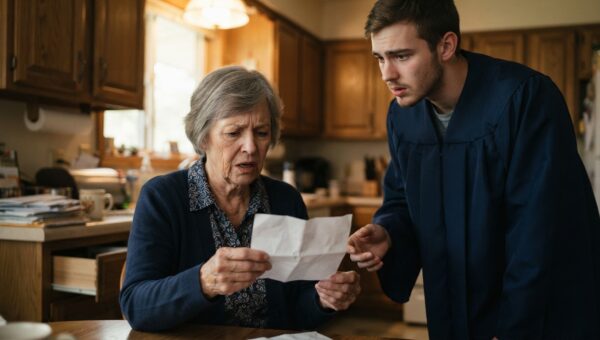
Standing at the counter, the clerk slid a printout across the laminate surface. I looked down at the entry for our property. My name was still there, but underneath it, compressed into a neat digital line, was a new notation referencing a quitclaim deed filed three weeks prior at the county courthouse down the street. It claimed a partial transfer of legal ownership. Total appraised property equity and professional equipment listed on the municipal assessment: three hundred fourteen thousand five hundred dollars.
My stomach dropped, but my mind stayed unnaturally clear. I did not panic. I did not shout at the clerk.
I simply thanked her, walked out the front doors into the salt air, and pulled out my phone to dial a local bank loan officer I had known through the building association for over a decade.
PART 2
The bank officer, a weathered man named Arthur who had financed our father’s first band saw back in nineteen-eighty-two, looked uncomfortable as he turned his computer monitor slightly toward me across his mahogany desk.
“Julian was in here last Thursday, Marcus,” Arthur said, keeping his voice low. “He applied for an emergency commercial liquidity loan against the workshop equipment and the rear parcel of the home. He claimed you were incapacitated indefinitely and that you had signed over sole managerial control to clear family medical debts.”
I stared at the screen. The loan amount Julian was attempting to secure matched the exact operating line we needed to survive the winter, but the application bore a signature that bore only a crude resemblance to my own hand. My hand shakes slightly when I am fatigued, but this signature was smooth, practiced, and entirely forged.
“Did he disburse the funds?” I asked. My voice sounded flat, stripped of all warmth.
“Not yet,” Arthur replied, shaking his head. “Our compliance protocol requires both signatures for any equity draw on a jointly deeded property. But Julian presented a recorded quitclaim deed stamped by the county clerk’s office. According to that paperwork filed in the public record, he holds the primary controlling share now.”
The betrayal did not hit me as a sudden wave of emotion; it settled into my bones like the cold damp of a Maine cellar. Julian had taken my temporary vulnerability, my medical leave, and my absolute trust, and he had weaponized them against me. He had used my driver’s license number to notarize a fraudulent transfer while I was sleeping off vertigo upstairs.
Instead of driving straight to the workshop to confront him—which is exactly what my anger told me to do—I remembered Chloe sitting at our kitchen table working on her homework. If I shouted, if I started a public brawl at the family property, Chloe would carry the fallout. More importantly, a screaming match at the door would solve nothing legally. I needed proof, and I needed to follow the paper trail.
I thanked Arthur, walked two blocks down to the county courthouse, and paid the fee for a complete title search record. The clerk handed me a thick packet of certified copies. Right there on the third page was the quitclaim deed, complete with a forged notary stamp that looked like it had been punched in a hurry. Julian had stripped me of my fifty percent legal ownership under the false, paternalistic pretext of protecting me from debt, while his real motive was sitting right in front of me: desperation caused by private gambling debts that were finally catching up with him.
As I sat on a wooden bench in the courthouse corridor reviewing the documents, I remembered something our mother had told us the year before she passed away. When she and our father updated the property deeds, they had anticipated friction between Julian’s loose financial habits and my steady approach. They had executed a secondary, unrecorded survivorship agreement explicitly stating that neither brother could mortgage or transfer the property without dual notarized signatures.
Mother had told us that copy was filed away for safekeeping. I just had to find it.
PART 3
I drove straight to the county probate archive located in the basement of the municipal annex. The archivist, a retired schoolteacher who had known our parents, peered over her glasses when I asked to inspect the restricted family file under our late parents’ names.
“Oh, yes, your mother insisted on that file being locked down with dual-key access,” she said, unlocking a heavy metal drawer. She pulled out a manila folder sealed with a red wax tab our father had pressed himself. Inside lay the original, unrecorded survivorship agreement, signed, witnessed, and stamped with a legal weight that completely nullified any hurried quitclaim deed Julian had pushed through the registry.
The document proved beyond a shadow of a doubt that Julian’s filing was an illegal, fraudulent conveyance.
I did not call my brother. I did not send him an angry text message. I went directly to a real estate litigation attorney whose office overlooked the harbor. We spent two hours drafting the formal challenge, attaching the certified title search record, Arthur’s statement from the bank regarding the unauthorized commercial loan application, and the original unrecorded survivorship agreement from the probate archive.
By Friday morning, formal legal notices were served.
The consequences were swift and unyielding. The county registry of deeds voided Julian’s fraudulent filing within twenty-four hours of receiving our injunction. The commercial lender immediately flagged Julian’s loan application as fraudulent and froze his attempts to secure liquidity against our machinery. When Julian realized his scheme had collapsed under the weight of actual law rather than emotional argument, he tried calling my phone four times in a row. I let every call go to voicemail.
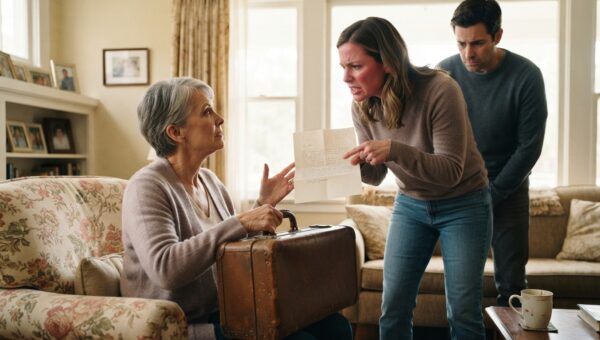
When he finally drove out to the house on Saturday afternoon and banged on the front door, demanding to speak to me, I opened it just an inch. I did not raise my voice. I handed him a copy of the court order and the restraining order prohibiting him from entering the workshop premises without formal legal supervision.
“The game is over, Julian,” I said quietly, looking past him at his car idling in the drive. “You don’t touch the property, you don’t touch the accounts, and you don’t come back here until you settle your own debts.”
He stammered something about family loyalty and misunderstanding, his face pale with panic, but the words sounded hollow even to him. He turned around and walked back to his car without another syllable.
ENDING
The workshop was quiet on Sunday afternoon as the wind swept gray clouds across the harbor. Chloe sat at my old oak workbench, sanding down a maple dovetail joint for a bookshelf she was building for her room. The rhythmic scrape of sandpaper against wood filled the space, steady and grounding.
I stood beside her, leaning against the drill press, watching the clean shavings curl away under her fingertips. My head was clear, my vision steady, and the legal notices sat locked in the file cabinet upstairs where they belonged. Total equity and equipment valued at three hundred fourteen thousand five hundred dollars remained secure, untouched by my brother’s panic. I reached down, picked up a smoothing block, and handed it to my daughter without a single shouted word.