The envelope arrived on a Tuesday morning, wedged right between the grocery circular and an electric bill that had gotten heavier over the winter. I didn’t think much of it until I carried the mail over to the kitchen counter and saw Martha Vance’s neat, sloping handwriting on the front. Martha and I had sat together in the bleachers at regional track meets back when our boys were running hurdles, though we hadn’t talked much since her husband Dale passed away three years ago.
I figured she was just sending a church note or maybe a recipe for her peach cobbler.
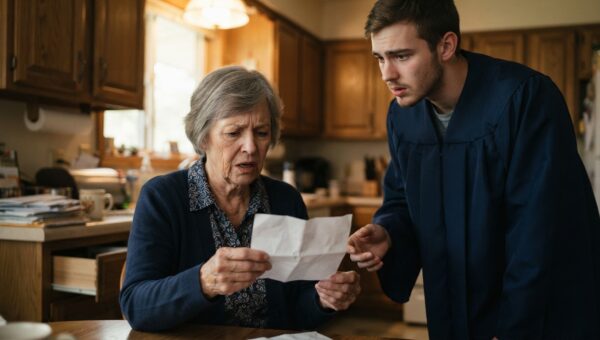
I tore the flap open with my thumbnail and pulled out a heavy card embossed with pale blue lilies. Inside, right beneath her signature, she had written three sentences that stopped the breath right in my throat. So sorry for the loss of your Tom, she wrote. I know how quiet the house gets after they’re gone. Hang in there.
I stood there by the sink for a long minute with the card trembling between my fingers. Down the hall in the den, the low, steady drone of the Golf Channel hummed through the open doorway. I walked past the spare room, pushed the den door open just enough to see, and there he was. Tom was sitting in his green corduroy recliner with his slippers kicked off, a cup of lukewarm black coffee on the side table, completely alive and complaining about a putt that rolled three inches past the cup.
“You want me to warm that up for you?” he asked, not even taking his eyes off the screen.
“No,” I managed to say, my voice sounding thin and small in my own ears. “I’m fine.”
I walked back to the kitchen, dropped the card on the linoleum, and picked up the wall phone. My hand was shaking so badly I missed the buttons twice before I got Martha’s number dialed. She picked up on the second ring, her voice raspy and familiar. When I told her who it was, there was a strange, heavy pause on the other end of the line, like she had swallowed her tongue.
“Martha, what is this about?” I asked, my chest tightening up the way it always did when a monitor started beeping wrong in the cardiac ward. “Tom is right here in the den. He’s watching the Masters.”
Martha went entirely quiet for a long second, and then she let out a soft, miserable sigh. “Honey, it was in the paper,” she whispered. “The Pratt County paper. Two hundred miles away.”
“We have never lived in Pratt County,” I said, and the words felt hard and heavy, like stones in my mouth.
“I know you haven’t,” Martha said, her voice dropping lower. “I saw his face, Clara. The whole obituary was right there online. Navy years, birthday, everything. Services were last Tuesday.”
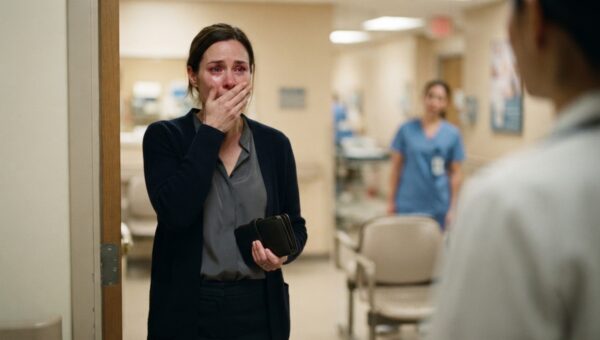
I didn’t say goodbye. I just set the receiver back on the cradle and sat down right there on the bottom step of the wooden staircase because my knees simply quit holding me up. Thirty-four years I spent working shifts at the county hospital. I watched patients slip away in the middle of quiet Tuesday nights, and I filled out enough white tags to know what death paperwork looked like. Somewhere out there in a filing cabinet two hundred miles away, somebody had my husband marked down as dead and buried.
I spent ten minutes on my old laptop in the spare room, watching the little blue circle spin around and around until the page finally loaded.
There he was. A photograph taken thirty years ago, younger and sharper-eyed than the man in the den, holding a baby with a tuft of dark hair I had never laid eyes on in my life. The text underneath listed his full name, his years of service on the USS Midway, and the date of the service at a modest brick funeral home in Pratt County.
Tom poked his head around the door frame, wiping his hands on a paper towel. “Clara, you’re going to be late for your teeth cleaning if you don’t leave in ten minutes. You know Dr. Henderson hates when people run behind.”
I looked up at him, at the faint scar across his left knuckle from an old engine block, at the slight hitch in his left shoulder that had been there since before I met him. “Must be some other Thomas,” I said, and my voice didn’t even shake. “That’s all. Just a mix-up with names.”
Tom nodded, looking relieved in that easy, shallow way he always did when a problem looked like it was going to solve itself without him having to lift a finger. “Bound to happen,” he said, turning back toward the kitchen. “Too many people named Thomas in this world.”
The dental office was twenty minutes north, but I turned my sedan south onto State Route 4 instead. The morning mist was burning off the asphalt, leaving the fields on either side of the highway a dull, watery green that stretched out forever under a gray sky. I drove for three hours with the radio off, listening to the hum of the tires against the pavement and the steady, rhythmic ticking of my own thoughts. Thirty-four years of shared coffee mugs, thirty-four years of folding his laundry and knowing which shirts he liked ironed light around the collar, all of it sitting on the passenger seat like an unread book.
The Pratt County funeral home looked smaller than I had imagined from the internet photographs. It was an old brick building with white pillars and a small manicured lawn that smelled faintly of damp fertilizer and cut grass. The brass plate on the front door read Miller and Son Funeral Directors, and the sign on the door said they opened at nine. It was a little past eleven when I walked in, the heels of my loafers clicking too loudly against the polished linoleum in the quiet lobby.
A man in a dark gray suit with tired eyes looked up from a heavy wooden desk stacked high with manila folders. He didn’t look surprised to see me, just worn down by the kind of grief that comes through the door every single day.
“Can I help you, ma’am?” he asked, his voice low and flat.
I laid my driver’s license on the edge of his desk right next to a glass paperweight shaped like a weeping willow. “I’m Clara Vance. My husband is Thomas Vance. I need to see the file from the service you held here last Tuesday.”
The man blinked once, looked down at my license, and then looked back up at my face. He didn’t reach for the folders immediately. Instead, he leaned back in his leather chair and let out a long breath through his nose. “We had a lot of folks through here last week, Mrs. Vance.”
“Not like this one, you didn’t,” I said, and I felt the nurse’s tone creeping back into my voice, steady and cold and impossible to argue with. “You buried a man under my husband’s name and birthday. I want to see the registry, I want to see the program, and I want to know who authorized it.”
He stared at me for three long seconds, weighing something in his head, and then he reached out, pulled a thick cardboard folder from the bottom of the stack, and slid it across the mahogany wood. “She’s not here anymore,” he said quietly. “Left right after the service.”
“Who left?”
“A woman who signed herself Eleanor Vance,” he said, tapping a finger against the bottom line of the sign-in sheet. “Said she was his sister-in-law. Handed over the discharge papers and the birth certificate herself. Paid for the whole thing in cash, three thousand four hundred dollars, right out of an old canvas envelope.”
I opened the folder. The service program was printed on heavy cream paper with a small blue anchor in the corner. Inside, beneath the dates and the hymn titles, was a photograph of the man who had been lowered into the ground six days ago. It wasn’t Tom. Not quite. It was an older man with the same high forehead and the same crooked nose, but his hair was entirely white and his face was carved deep with lines that my husband never had. But the baby in the old photograph tucked into the back pocket of the folder, the one with the dark hair and the round cheeks, had my own mouth. I knew it the way you know your own hands in the dark.
“She didn’t leave an address?” I asked, and my voice sounded like it belonged to someone else standing across the room.
“Post office box down in the valley,” the director said, sliding a yellow carbon receipt across the desk toward me. “And she left a small box for you, actually. Said if anybody ever came looking past Tuesday, I was supposed to hand it over.”
He reached into the bottom drawer and pulled out a small brown cardboard box tied with coarse twine. I took it, my fingers brushing against the rough surface, and tucked it into my large leather handbag right next to my car keys. I didn’t open it there in the lobby. I walked back out into the bright midday sun, got back into my sedan, and drove the two hundred miles home without stopping once for gas or coffee.
The sun was dipping low below the horizon by the time I pulled into our driveway. The house was dark except for the yellow light glowing through the living room window. I could hear the muted roar of a television announcer talking over a crowd through the open front door.
I didn’t take off my coat. I walked straight down the hallway and into the den.
Tom was still in his green recliner, his eyes fixed on a replay of an iron shot landing softly on a green. He didn’t look up right away as I walked into the light.
“You were gone a long time,” he said, his voice mild and distracted. “How was the dentist? Did Henderson say anything about that molar on the bottom left?”
I reached into my handbag, pulled out the thick brown folder and the framed photograph I had taken from the funeral director’s desk, and dropped them both right onto the coffee table on top of the remote control. The sharp slap of cardboard against wood made the coffee cup rattle in its saucer.
Tom finally turned his head. His eyes dropped to the photograph, and the easy, relaxed slump in his shoulders went rigid in half a second. The color drained out from under his skin until he looked like something carved out of old plaster.
“Clara,” he whispered, and the casual warmth in his voice was gone, replaced by a thin, jagged edge of panic. “Where did you get that?”
“Pratt County,” I said, and I didn’t raise my voice at all. “The man you buried last Tuesday wasn’t a stranger, and it wasn’t a clerical error. It was Leo, wasn’t it?”
Tom opened his mouth, but no sound came out. He just stared at the photograph of the baby with my mouth, the baby who had grown up somewhere two hundred miles away while I spent thirty-four years washing hospital sheets and coming home to a man who kept a second set of books in his head.
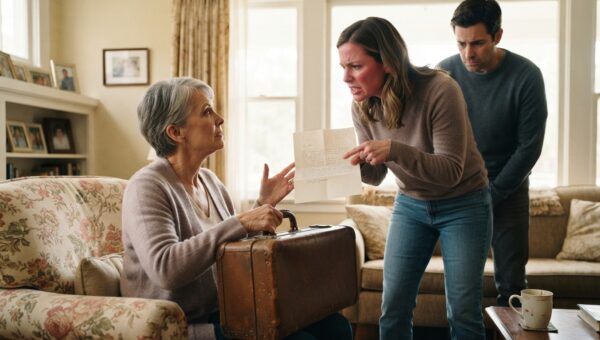
“Thirty-four years, Tom,” I said, and I pulled the wooden chair out from the corner of the den, sitting down right across from him so he couldn’t look away from my face. “I spent my whole life knowing how to read a chart when the numbers stopped adding up. Now you’re going to tell me every single thing about Eleanor, about the money you wired every month, and about why my husband’s name was on a gravestone two counties over.”
The television muttered softly to itself in the corner of the room, a distant crowd cheering for a putt that didn’t matter anymore. Tom didn’t answer for a long time. He just looked down at his hands, his knuckles white against the green corduroy armrests, while the house around us grew smaller and colder by the minute.