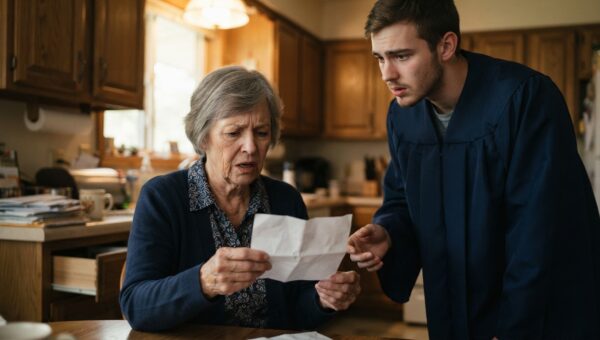
A condolence card came addressed to me. It sat right there on top of the Tuesday flyers, heavy white paper with embossed lilies on the flap. I opened it with a butter knife because my hands were still damp from rinsing the breakfast dishes. “So sorry for the loss of your Tom,” the inside said in a shaky hand that looked like it belonged to someone who hadn’t held a pen in a decade.
Tom was in the den watching the morning golf recap, alive as taxes and asking if we were out of oat milk. I nursed for thirty-four years at St. Jude’s. I know what death paperwork looks like, and somewhere, somebody has my husband marked dead.
I stood by the kitchen sink for a long minute watching the water drip from the faucet. The house was too quiet, just the faint drone of the television announcer and the refrigerator humming behind my shoulder. I didn’t want to show Tom the card yet because he gets a stubborn look on his face whenever paperwork gets tangled up with the county. Instead, I walked over to the landline and dialed Martha’s number. Martha is married to Bill, who fished with Tom every third weekend for twenty years out at the reservoir.
Martha picked up on the second ring before she even cleared her throat properly.
I told her about the card, keeping my voice steady the way I used to when telling a family bad news in the recovery ward. Martha went quiet on the other end, that long, heavy silence where you can hear someone swallowing hard. “Honey, it was in the paper,” she finally said, her voice dropping down to a whisper. “I thought you already knew, or I wouldn’t have sent the card.”
The Pratt County paper. Two hundred miles away across the state line. We have never lived in Pratt County, and neither of us has relatives down in that flat, dusty stretch of the valley. I told Martha I had to go and hung up before she could ask me any more questions. My knees felt hollow, so I sat right down on the bottom step of the stairs with my phone in my hand and typed the name into the search bar.
It popped right up on the county gazette site, complete with a digital guestbook that had four entries from people I had never heard of. There was his full name, his exact Navy years from the mid-seventies, his correct birthday, and a photograph of him young, holding a baby I have never seen in my life. The baby had a little knitted cap on its head, and Tom was smiling down at it with a look I didn’t recognize from any of our photo albums. Services were last Tuesday at eleven in the morning.
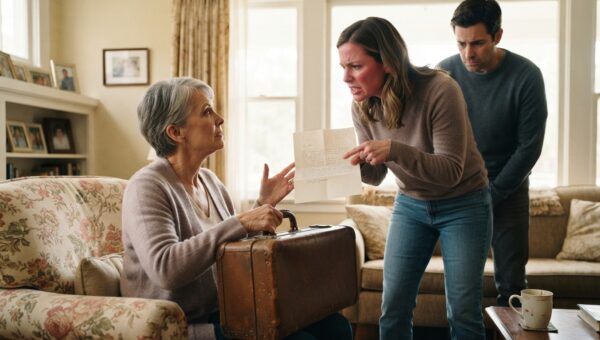
I walked back into the den holding the phone out like it was something that might bite me. Tom was leaning back in his recliner with a coffee mug resting on his stomach, watching a putt roll past the cup on the screen. I told him he was dead and buried in Pratt County last Tuesday.
He didn’t even drop his mug. He just squinted at the television, let out a short, dry laugh, and said it was probably some mix-up with a guy named Thomis or Thomas down the line. He told me county clerks are all idiots who can’t spell their own names half the time and went right back to watching the green.
Maybe so. But the funeral home opens at nine, and I have a dental appointment my husband believes I am driving to. I didn’t tell him I dropped my toothbrush in the trash and didn’t bother fishing it out. I grabbed my canvas purse off the hall tree, checked to make sure I had my driver’s license and three twenty-dollar bills in the zippered pocket, and let the front door click shut behind me.
The drive down to Pratt County took three hours and twelve minutes on the two-lane highway. The sky stayed the color of wet cement the whole way, low and heavy over the cornfields that hadn’t been planted yet this season. I kept the radio off because my head was ringing with the memory of that photograph on my phone screen. Every time I passed a green mileage sign counting down the distance, my foot pressed a little harder on the gas pedal. I had spent thirty-four years charting vitals and keeping track of heart rates that flatlined when the machines finally gave up, and I knew the difference between a clerical error and a ghost.
The Pratt County funeral home sits right on the corner of Main and Fourth in a brick building that used to be a bank before the town started drying up. A small brass plaque by the double doors said Miller and Sons, Est. 1946. I pulled my sedan into the gravel lot beside a white Ford Ranger and sat there with my hands gripped tight on the steering wheel until my knuckles turned the color of lard. My reflection in the rearview mirror looked tired, hair pulled back into a messy claw clip with two strands hanging loose by my ears. I told myself I could still turn around and be back before Tom finished his afternoon sandwich, but my hand was already on the door handle.
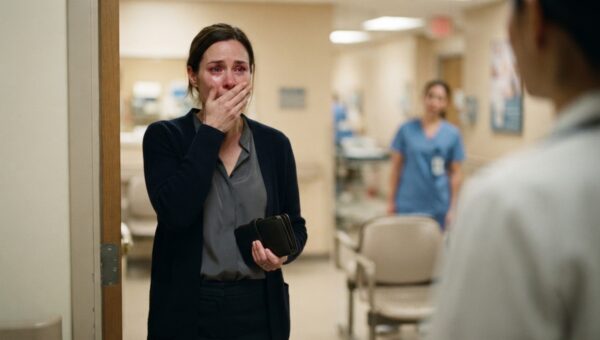
Inside, the building smelled like heavy lemon polish and carnations that had been sitting in warm water a day too long. A young man with a crooked tie and shiny shoes was standing behind a dark wood podium, shuffling papers into neat little piles. He looked up when the bell above the door chimed, smiling that practiced, soft-mouthed smile people in his line of work wear like a uniform. He asked if he could help me find someone, probably figuring I was looking for a cousin from the north side of the county.
“I need to see the file for Thomas Miller,” I said. My voice sounded flat and loud in the small lobby.
The young man’s fingers stopped moving over the papers. “I’m sorry, ma’am, but family records are confidential unless, “
“I am his wife,” I said, and the lie came out so smooth and natural it scared me a little bit. “I need to see the paperwork from last Tuesday’s service.”
He hesitated, looking down at the registry open on his desk, then over toward the heavy double doors leading back into the chapel. He was young enough that he probably hadn’t buried ten people in his life yet, and he didn’t know how to handle someone who wasn’t crying. He turned the leather-bound book around so the spine faced me and pointed his pen at a line near the bottom of the page.
There it was. Thomas Arthur Miller. Same birthdate, same Navy serial number Tom used to joke about when he cleaned out his footlocker in the garage years ago. But the signature on the bottom line wasn’t Tom’s round, hurried scrawl. It was cramped and spidery, written by someone whose hand was shaking so bad the ink had pooled at the end of every letter.
“The informant,” I said, pointing my finger right at the signature. “Who signed this?”
“His brother,” the director said quietly, clearing his throat like he had a piece of dust caught in it. “At least, that’s what he told us when he came in back in February. Mr. Thomas Miller Jr. He was staying down by the reservoir in one of those seasonal cabins. Said he wanted everything squared away before his ticker finally gave out.”
The room tilted just a fraction, the lemon polish smell suddenly turning sharp and sour in my nose. I gripped the edge of the dark wood podium until the grain bit into my palms. Tom never talked about a brother, not once in thirty-four years of shared coffee and Sunday newspapers, except to say once that his father had walked out before he was old enough to remember the sound of his boots on the porch.
“He had the discharge papers,” the director went on, misreading my silence as grief. “The old ones from the Great Lakes station. He kept them in a Ziploc bag right in his shirt pocket. Said he didn’t want any fuss, just a proper service with his name read out loud so he wouldn’t go into the ground like a stray dog. We had four people from the VFW post come out. It was a nice service, ma’am. Really it was.”
I didn’t ask about the baby in the photograph. I didn’t need to ask because I already knew what a dying man looks like when he wants to borrow someone else’s clean laundry to wear to the grave. Thomas Jr. had spent his whole life living in the rough edges of the state while Tom built a quiet house, a pension, and a respectable name with a nurse who checked his blood pressure every Sunday night. When the end came close enough for him to smell the damp earth, he didn’t want his own broken-down story. He wanted Tom’s uniform, Tom’s Navy record, and Tom’s face holding a child that probably belonged to some cousin who forgot him twenty years ago.
The drive back home took longer because the sun finally broke through the clouds, turning the wet asphalt into a blinding gray mirror that made me squint until my eyes watered. By the time I pulled into our driveway, the sun was sitting right on top of the neighbor’s roof, throwing long orange bars across the grass. Tom’s truck was still parked in the garage, and the kitchen window had that warm yellow glow from the overhead fixture where he always left the light on for me.
I walked through the back door and tossed my purse onto the kitchen island right next to the unopened mail. Tom was sitting at the small round table in the corner peeling an orange with his pocketknife, the bright citrus smell cutting right through the lingering scent of my car heater. He looked up when I dropped my keys, his forehead wrinkling into that familiar, easygoing fold that had gotten us through thirty-four years of mortgages, bad winters, and hospital shifts.
“How was the dentist?” he asked, tossing an orange peel into the small ceramic bowl we kept by the salt shaker. “Did you get that molar checked out or are you going to complain about it again by Friday?”
I didn’t answer right away. I reached into my canvas bag and pulled out the single sheet of paper I had folded twice and tucked into my pocket back at the funeral home, the copy of the death certificate with Thomas Junior’s spidery signature at the bottom and the address of the cabin by the reservoir. I laid it flat on the wood grain right between his orange peels and the salt cellar, smoothing out the creases with the flat of my thumb.
Tom stopped his knife. He looked down at the paper, his eyes moving slowly across the name, the birthdate, and the serial number that matched the one he kept in his old footlocker out in the garage. The orange piece slipped from his fingers and landed softly on the table, the bright skin contrasting against the dark wood.
“He used your Navy papers, Tom,” I said, my voice dropping down to a quiet hum that didn’t sound like me at all. “He had them in his pocket when he died down in Pratt County last Tuesday. They gave him a VFW firing squad and everything.”
Tom didn’t move. His hand stayed flat on the table beside the knife, his fingers twitching once against the wood before going completely still. He didn’t deny it, and he didn’t make another joke about a guy named Thomis. He just stared at the ink until his eyes looked watery under the kitchen light, like a man who had finally opened a door he bolted shut fifty years ago and found someone standing on the other side waiting in the dark.
We sat there in the quiet kitchen as the sun dropped all the way down behind the fences and the house cooled off for the evening. Nobody said anything for a long time, and honestly that felt worse than any argument we could have had. Later that night, long after Tom had gone down the hall to the bedroom, I stayed at the table by myself. I opened the bottom drawer of the old pine buffet where we keep the loose snapshots from forty years ago, the ones that never made it into the heavy magnetic albums.
I found the small, square black-and-white print from 1978, the one with the cracked border where Tom was standing in a backyard wearing his sailor’s whites, holding a baby with a crooked knit cap who didn’t look like either of us. I ran my thumb over the corner of the paper, feeling the little curl where it had stayed folded behind an old Christmas card for too many years.
I placed the photograph back down into the drawer right next to Tom’s living hands, closing the wood quietly as the morning shift began to turn over in my head.