Twenty-four years on that med-surg floor in Akron, Ohio, teaches a person how to listen to the quiet sounds of a hospital at three in the morning. I precepted a whole generation of nurses, caught the medication errors that would have made the local papers, and held hands nobody else had time to hold. Then a young unit director with a shiny MBA decided my seniority was a line item that needed slashing.
Her name was Danielle, and she had spent less time in actual patient rooms than I had spent dealing with charting software glitches on a single Tuesday. She didn’t even look up from her monitor when she called me into her cramped office on a Friday afternoon.
“Your salary’s a problem and your skills are, frankly, outdated,” Danielle said, tapping her acrylic nail against her mousepad. “We can hire two new grads for what you cost. I’d start job hunting quietly if I were you. Nobody’s fighting to keep a nurse who should’ve given up years ago.”
Outdated. Twenty-four years of code blues, of recognizing sepsis before the lab work even printed, and she figured I should have hung it up. My chest tightened, but I kept my breathing even. I had seen directors come and go like seasonal flu, but Danielle had a special kind of arrogant certainty that usually precedes a total structural collapse.
I didn’t melt down at the nurse’s station or make a scene in the breakroom. I just looked at her across that cluttered desk and said, “Thank you for being direct.” Then I walked back out onto the floor, finished my Friday night shift, and charted every last vital sign, dressing change, and patient comment with absolute, unyielding precision.
When I handed off my keys at 7:00 AM on Saturday morning, I walked out to my old sedan and drove home in the dark. The weekend stretched out before me with an odd, heavy quiet. My kitchen was too still, the coffee pot dripping with a steady, rhythmic chug that usually faded into the background of my exhausted thoughts.
I knew what Monday brought. Monday was the annual board and accreditation surveyors’ walk-through, the once-a-year institutional inspection that either made a unit director look like a visionary or exposed every hidden crack in their foundation.
Danielle had spent six months shuffling shift rosters, pushing overtime caps, and replacing experienced floor nurses with fresh-faced graduates who barely knew how to manage a central line without shaking.
By Sunday evening, I had made up my mind. I didn’t want revenge, and I certainly didn’t want to beg for my old job back. But twenty-four years of my life lived in those sterile hallways meant something, and I wanted to see how well a spreadsheet held up under real scrutiny.
Monday morning broke cold and gray, typical for northern Ohio in late autumn. I dressed in plain street clothes, a dark wool coat over a simple sweater, and drove back to the hospital. I didn’t badge in through the employee entrance. I walked through the main sliding glass doors just as the board members and the lead accreditation surveyor stepped off the elevators on the fourth floor.
The med-surg unit was buzzing with a frantic, synthetic energy that set my teeth on edge.
Danielle was standing near the main nurses’ station, her blazer crisp, her smile tight and rehearsed as she handed out laminated metric sheets to the visiting executives. She looked like someone who had practiced her leadership presentation in front of a mirror three times that morning.
“As you can see from our digital dashboard,” Danielle was telling the lead surveyor, a tall, gray-haired man named Arthur Vance who had a reputation for missing nothing, “we have successfully streamlined our nurse-to-patient ratios and reduced overhead by nearly eighteen percent while maintaining optimal clinical outcomes.”
Arthur Vance didn’t smile. He adjusted his half-moon glasses, flipped open a physical folder, and scanned the unit with eyes that had seen every administrative trick in the book. “Eighteen percent reduction in labor cost is significant, Director. Let’s look at the actual patient charts for rooms 412 through 418. I want to see the medication reconciliation logs and the post-op monitoring notes from the weekend.”
Danielle didn’t miss a beat, though a tiny muscle twitched near her jaw. “Of course. Our new charting protocol ensures everything is logged digitally in real time.” She reached into the station rack and pulled a tablet, tapping the screen with a finger that looked just a fraction too stiff.
She handed the device to Arthur. He scrolled for a moment, his brow furrowing deeper with every second. The silence at the nurses’ station grew heavy, the kind of quiet where you can hear the pneumatic tube system whistling down the hall.
“Director,” Arthur Vance said, his voice entirely flat. “According to this digital log, patient in 414 received their post-op anticoagulant at 2:00 AM on Sunday, but there is no corresponding nursing assessment signature for the preceding four hours. And the vitals recorded here are identical for three consecutive shifts.”
Danielle leaned over the counter, her polished composure cracking at the edges. “Ah, well, that’s just a minor administrative lag. The new graduates sometimes batch their entries at the end of the shift. It’s fully compliant with our internal efficiency guidelines.”
“Efficiency guidelines do not replace mandatory safety audits,” Arthur said sharply. He looked up from the tablet and scanned the cramped station. The two young nurses on duty looked like they were about to be sick, their shoulders hunched over their keyboards, avoiding eye contact completely.
Danielle stumbled over her next words, her voice losing its crisp corporate edge. “We have complete confidence in our team’s ability to, “
“Director,” Arthur interrupted, “this isn’t an efficiency review. This is a potential medication timing violation on a surgical recovery patient. Who was the primary nurse assigned to this wing over the weekend?”
The young nurse at the terminal swallowed hard, her voice trembling. “We… we were double-shifted. We didn’t have time to complete the secondary assessment logs before the shift change.”
Arthur’s expression hardened into something cold. He turned back to Danielle, who was rapidly losing the warm, confident color in her face. “You reduced your senior staffing tier by over forty percent on this floor in the last six months, did you not?”
“We modernized our staffing model,” Danielle stammered, the word modernization sounding thin and hollow in the sterile corridor.
I had been standing near the vending machines by the family waiting area, hands tucked deep into my coat pockets, watching the whole exchange unfold. I didn’t plan on stepping forward until Arthur asked a question that made the air in the hallway freeze solid.
“Does anyone on this floor actually know the baseline history for the complex wound care protocol in room 416?” Arthur asked, looking around the station with open frustration. “Because the notes indicate a severe allergic reaction to the standard antiseptic used yesterday afternoon, and there is no record of who authorized the override.”
Danielle opened her mouth, but no sound came out. She didn’t know. She had never spent five minutes talking to that patient, let alone read the physical chart history that predated her arrival by three weeks.
I stepped out from the shadow of the waiting area and walked across the linoleum, my boots making a quiet, steady click against the floor.
“I can answer that, Mr. Vance,” I said quietly.
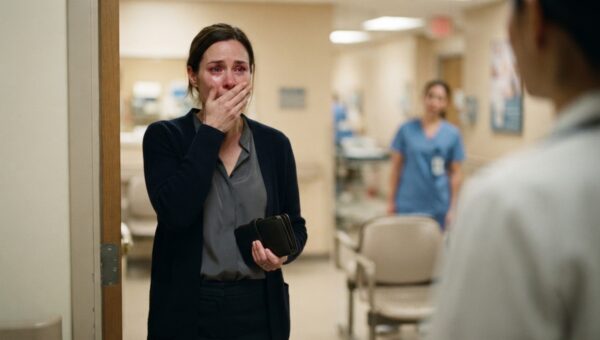
Every head in the hallway turned. Danielle spun around, her eyes widening in pure horror as she recognized me standing there in my street clothes on my scheduled day off.
“You aren’t even on the schedule,” Danielle hissed, taking a sharp step toward me before catching herself in front of the board members.
Arthur Vance looked at me with sharp, assessing interest. “And you are?”
“I’m the nurse who discharged that patient after their initial surgery three weeks ago, and I precepted the team that handled their baseline charting,” I said, keeping my voice even and calm. I stepped right up to the nurse’s station counter, resting my hand near the physical binder that Danielle had pushed aside. “The antiseptic override was authorized under protocol four-B because of a localized sulfa sensitivity that doesn’t show up on the digital drop-down menus unless you cross-reference the paper archives from two years ago.”
Arthur flipped open the heavy physical binder that sat beneath the digital monitor, his fingers tracing the exact handwritten entry I had signed off on before my departure on Friday night. “And the missing assessment signatures from Sunday morning?”
“They didn’t get logged because two nurses were trying to cover thirty-two beds after the weekend cutbacks,” I said plainly, looking right at the hospital board members standing behind Arthur. “When you remove the people who know where the physical safety nets are hidden, the digital system doesn’t save you. It just gives you a cleaner place to hide the mistakes.”
The board members exchanged a long, heavy look. One of them, an older physician with graying temples whom I had worked with back in nineteen-ninety-eight, gave me a slow, solemn nod of recognition.
Danielle opened her mouth to speak, to protest, to claim some kind of administrative override, but the words wouldn’t form. Her career-defining inspection had just turned into an administrative disaster, and she knew it.
Arthur Vance closed the binder with a sharp slap that echoed down the quiet hallway. He picked up his pen and pulled a formal citation pad from his briefcase. “Director, we are issuing an immediate compliance warning for this floor, accompanied by an executive review of all recent staffing reductions and documentation protocols.”
The inspection party moved down the hall toward the west wing, leaving Danielle standing alone behind the nurses’ station, staring blankly at a glowing monitor that suddenly didn’t mean anything at all.
I didn’t say another word to her. I turned around, walked back down the length of the med-surg floor, and pushed through the heavy double doors toward the elevators.
Stepping through the sliding glass doors of the hospital into the cool Akron morning air, I left the sterile fluorescent lights behind. I carried my jacket over my arm and felt the steady, unbroken rhythm of my own pulse, knowing exactly what twenty-four years of real nursing was worth.