Twenty-four years on that med-surg floor in Akron, Ohio, teaches a person how to listen to the quiet sounds of a hospital at three in the morning. You learn the particular rattle of the ice machine down in wing B, the distinct squeak of rubber soles on freshly waxed linoleum, and the way a patient breathes right before things turn south.
I knew every corner of that third floor. I knew which call lights stuck when you pressed them too hard, and I knew how to coax a frightened old man into taking his evening pills without making him feel small.
Then came Friday afternoon and a girl named Chloe with a shiny MBA and an oversized desk in the administrative wing. She had not spent a single night walking the floor with a medication cart, but she had a spreadsheet that made our veteran staffing costs look like a red stain on her quarterly projection. I was sitting across from her in a chair that leaned slightly to the left, listening to her talk about overhead ratios and market adjustments.
She didn’t even look up from her monitor. “Your salary’s a problem and your skills are, frankly, outdated. We can hire two new grads for what you cost. I’d start job hunting quietly if I were you, nobody’s fighting to nurse who should’ve hung it up years ago.”
Outdated. Twenty-four years of catching medication errors before they hit the patient, twenty-four years of holding hands through code blues, and she reduced my entire working life to a line item she could delete before lunch. I could have made a scene right there in her carpeted office. I could have reminded her about the time the central line monitor failed on room 312 and I kept that woman breathing with my bare hands until the team arrived.
Instead, I just looked at her across that shiny desk. “Thank you for being direct,” I said.
I didn’t argue. I went right back out to the med-surg floor, finished my shift down to the very last IV bag change, charted every single patient note with the careful precision I had used since nineteen-ninety-eight, and drove home in the dark. My kitchen was quiet when I walked in, just the low hum of the refrigerator and the ticking wall clock that my husband, Arthur, had put up before he passed.
I sat at the laminate table with a cup of instant coffee and looked at my work badge resting beside my car keys. Twenty-four years.
By Saturday morning, my phone was buzzing with frantic texts from nurses still on the schedule. Chloe had already started rearranging the weekend shifts, pulling senior nurses off day rotation and slotting in brand-new graduates straight out of nursing school with zero orientation on the floor’s quirks. She was trying to squeeze every drop of payroll margin she could before Monday morning.
Monday was the big day. Every year, the hospital board and the state accreditation surveyors descended on our floor for their annual walk-through. It was the single most important inspection of the twelve-month cycle, the kind of multi-hour audit that could grant a director a massive bonus or ruin her career in a single afternoon. Chloe had spent six months polishing her presentation folders, convinced that neat charts and clean spreadsheets would blind the inspectors to what was actually happening to patient care.
I didn’t go in to work a shift on Monday. I didn’t have to. I got dressed in my favorite gray slacks and a soft cream blouse, put on my sensible walking shoes, and drove back to the hospital just before nine in the morning. I walked right through the main entrance, nodded to the security guard at the front desk who had known me for two decades, and took the stairs up to the third floor.
The atmosphere at the nurse’s station was pure panic. Three rookie nurses were scrambling between clipboards and computer terminals, their faces pale and sweating under the fluorescent lights, trying to answer call buttons while sorting through electronic charts they barely understood. Chloe was darting from room to room, whispering sharp commands under her breath, her heels clicking a frantic rhythm against the floor.
“Move faster,” she hissed at a young girl standing by the medication cart. “The board is taking the elevator right now. If I see one incomplete sign-off, you’re looking for a new job by noon.”
I stayed back near the linen closet, leaning casually against the wall with my arms crossed, watching the machine buckle under its own weight. The elevator bell pinged down the hall. Out stepped Dr. Sterling, the board president, flanked by three senior accreditation surveyors carrying thick leather portfolios and looking thoroughly unimpressed by the fresh paint job in the hallway.
Dr. Sterling spotted me almost immediately. He stopped in his tracks, blinking behind his wire-rimmed glasses. “Margaret? I thought you were on day shift in wing A.”
“Not today, Arthur,” I said, using his first name because we had gone through nursing school expansions and budget crises together back when Akron General actually felt like a community. “Just observing the morning activity.”
Chloe hurried over, a tight, nervous smile plastered across her face as she tried to herd the board toward the newly painted chart storage room. “Good morning, everyone. Everything is running at peak efficiency here. We’ve streamlined our documentation protocols to eliminate redundant steps.”
The lead surveyor, a sharp-eyed woman named Dr. Vance who had been auditing hospitals since before Chloe was born, stopped right in front of the primary charting station. She flipped open the physical binder resting on the counter. Her finger traced down a column of mandatory dual-sign safety checks for high-potency drips.
“Who signed off on room 304’s potassium chloride drip at 2:00 AM on Saturday?” Dr. Vance asked, her voice entirely flat. “There’s no secondary verification nurse initialed here.”
Chloe stepped in smoothly, her voice pitched just a bit too high. “Ah, that would be one of our newer staff members. They are still learning the digital interface, but the protocol was strictly followed, I assure you.”
“Protocol requires two signatures,” Dr. Vance said, not looking up. “Not an assurance. A signature. Where is the second nurse?”
The young rookie standing beside the cart started to shake, her eyes welling with sudden tears. She looked at Chloe, desperate for a lifeline, but Chloe’s smile had frozen solid.
“I… I thought Dr. Chloe said we didn’t need the double-sign on weekends to save time on the logs,” the young girl whispered, her voice cracking so loud the whole hallway went dead silent.
That was when the real trouble started. Dr. Vance closed the binder with a sharp slap that echoed off the tile walls. She turned her gaze slowly from the terrified girl to Chloe, who had suddenly lost all the color in her cheeks.
“You bypassed mandatory safety verification to inflate your shift turnover metrics?” Dr. Vance asked.
Chloe stammered, holding up a manicured hand. “That’s a misunderstanding of our regional efficiency model. We were simply cutting administrative drag.”
“Administrative drag,” Dr. Sterling repeated, his voice dropping into that cold, quiet register that always meant someone was about to lose their job. He looked around the crowded station, taking in the frantic new grads and the empty desks where senior staff used to sit before Chloe started slashing salaries. “Margaret, step over here for a moment.”
I pushed off the linen closet wall and walked slowly to the center of the station. The floor was so quiet you could hear the hum of the ice machine all the way down in wing B.
“Margaret,” Dr. Sterling said, looking right at me. “As the charge nurse who managed this floor for over two decades, tell me what you see in these logs.”
I didn’t have to guess. I reached into my canvas handbag, pulled out a thick manila folder filled with printed shift summaries and certified copies of every single safety memo Chloe had issued over the past three months, and laid it neatly on the counter. I had spent my final Friday night backing up every electronic trail before she could wipe the server logs.
“Every safety cut ordered on this floor since October is documented right here,” I said plainly. “Including the email where Miss Chloe instructed staff to skip dual-sign checks on weekends to meet her quarterly payroll bonus targets.”
Chloe lunged forward, her voice cracking with fury. “You have no right to be here. You’re a terminated employee meddling in active hospital operations. You’re just a bitter, outdated nurse who couldn’t keep up with modern metrics!”
Dr. Vance didn’t even look at her. She was already reading through my printed copies, her finger tracing the exact dates and times where safety protocols had been traded for corporate bonuses. She looked up at Dr. Sterling with a look that told everybody the inspection was effectively over.
“Mr. Sterling,” Dr. Vance said quietly. “I am failing this floor’s compliance audit immediately. And I am recommending a full federal review of administrative negligence.”
Dr. Sterling didn’t blink. He turned to Chloe, his expression like granite. “Hand over your access badge and your office keys. Security is waiting downstairs to escort you out.”
The silence in that hallway was heavy, but it didn’t feel broken anymore. Chloe stood there for a second, her mouth opening and closing like a fish out of water, before she spun around and stormed down the corridor toward the elevators without looking back.
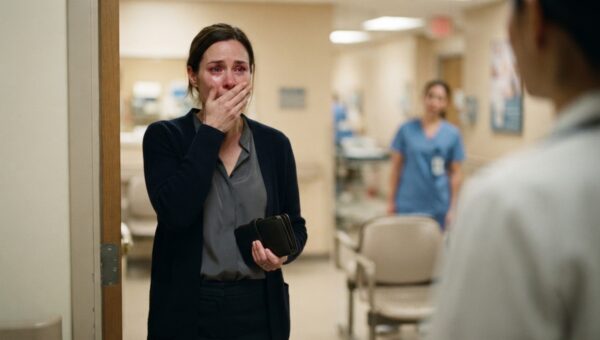
The young rookie nurse started crying openly, hiding her face in her hands, terrified she was going down with the ship. I walked over, put my hand gently on her shoulder, and handed her a tissue from my pocket.
“Hey now,” I told her softly, using the same tone I had used on a hundred scared girls before her. “Take a breath. You’re going to be fine. We’re going to sit down and teach you how to chart this right.”
By afternoon, the hospital board had suspended Chloe indefinitely pending a full investigation. The chief medical officer pulled me aside in the empty staff lounge, asking if I would be willing to return not as a floor nurse grinding out twelve-hour night shifts, but as a senior clinical auditor and mentorship advisor to help clean up the mess.
I told him I would think about it.
That evening, I drove home just as the sun was setting behind the Akron skyline, painting the clouds in deep shades of orange and purple. When I walked through my front door, the house was just as quiet as it had been on Friday night.
I set my keys down on the kitchen table right beside my old hospital badge. I poured myself a fresh cup of coffee, letting the steam rise against my face, and sat down in my favorite chair. I wasn’t an employee anymore. But as I looked out at the quiet street through the window, I knew that med-safe floor was still standing, and for the first time in months, it was safe.