The house still smelled like Mama when I unlocked the front door on a Tuesday afternoon. It smelled of boiled chamomile, wool, and the faint, dry dust that settles into corners when nobody has swept for a week. Dad was out in the garage, I knew, because I could hear the rhythmic *scrape-scrape* of his wire brush cleaning the old spark plugs from his lawnmower.
He liked things clean. He liked things ordered. He liked things pushed down deep into the dirt where they could never bother him again.
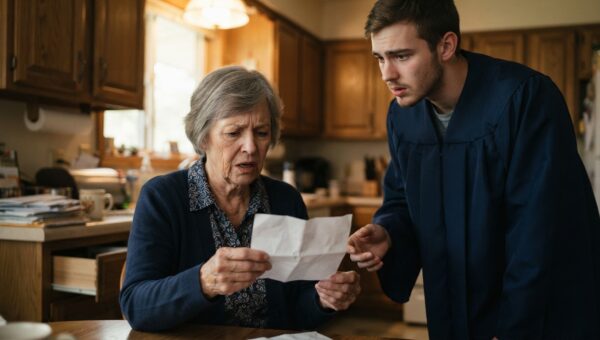
I sat down at the round oak kitchen table with Mama’s black leather handbag resting between my elbows. It was heavy, worn soft at the corners where her knuckles had rubbed against it for decades, and stuffed with the usual clutter of a woman who never threw anything away: crumpled tissue papers, a plastic coin purse with a broken clasp, half-used packets of peppermint drops, and a small stack of folded church bulletins from three different parishes.
Then I reached into the side pocket and pulled out the rubber band.
It wasn’t money. It wasn’t a spare key. It was a thick wedge of small, pale rectangular slips of paper, neatly banded together by year with yellowed rubber bands that snapped the second I pulled at them.
Thirty-eight bus transfers. I spread them out across the oilcloth table cover, my fingers brushing the faded purple ink stamps. Mama never learned to drive. Dad had tried to teach her back in seventy-two, but he lost his temper when she stalled the truck on the railroad tracks, and after that, he told her walking was good for her heart. She walked to the Piggly Wiggly. She walked to St. Jude’s. She walked everywhere.
Except I looked closer at the route numbers stamped on the tiny slips. Route 14. Every single one of them.
And then I sorted them by date, my hands starting to shake against the grain of the wood. January 1987. February 1987. March 1987. Every single slip was punched for the second Sunday of the month. Nineteen years of second Sundays, bundled and preserved like currency.
I didn’t want to think about what happened in nineteen eighty-five, but the date sat right there in my head like a rusted nail.
That was the year the house went dead quiet for the first time. That was the year Mama came home from the county hospital with pale cheeks and empty arms, and Dad took down the crib we had set up in the little back room and burned the pieces in the oil drum behind the barn.
“We don’t talk about that,” Dad had said at supper three days later, his voice flat and hard as a cast-iron skillet. “It’s done. It only upsets me to hear you carry on.”
Mama hadn’t cried. Not at the table. Not when he packed up the tiny knit booties and threw them in the trash bin by the road. She just stared down at her plate of mashed potatoes until the butter turned cold and gray.
I sat there at the kitchen table, moving the little paper slips around like puzzle pieces that didn’t fit.
Route 14 didn’t go to the grocery store. It didn’t go to the church. Route 14 ran straight across the county line, past the brickyards, and stopped at the rusted iron gates of Oak Hill Cemetery. The old part. The pauper’s field where they buried the people nobody claimed or the babies whose names were never put in the local paper because the county didn’t see the use in wasting ink on an empty cradle.
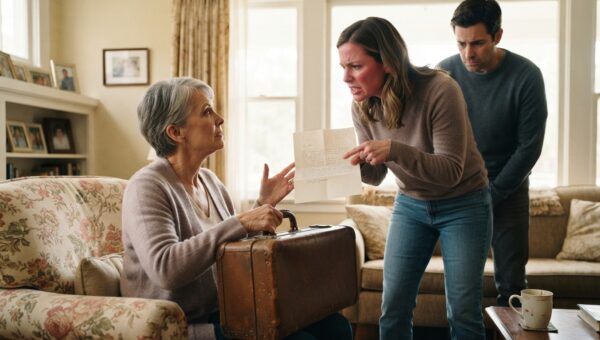
“What are you digging around in her things for?”
The voice hit me from the doorway so hard I dropped the bus transfer. Dad was standing there in his grease-stained gray work shirt, holding the wire brush in one hand. His knuckles were gray with carbon dust, and his lower jaw was set in that familiar, stubborn jut that meant he was ready for a fight he had already decided he won twenty years ago.
“I was just looking for her insurance papers, Dad,” I said, my voice sounding smaller than I wanted it to. I covered the stack of paper slips with my palm.
“Leave the junk alone,” he said, stepping into the kitchen and letting the screen door slam behind him with a sharp *bang*. “She was a packrat toward the end. Kept every scrap of paper she ever touched. Throw it in the trash can by the back door and let’s get some supper on. I’m hungry.”
He didn’t look at me. He walked right past the table toward the sink to wash his hands, scrubbing hard with the yellow bar of pumice soap.
“She took two buses,” I said to his broad back.
He kept scrubbing, the gray suds swirling down the porcelain drain. “What’s that?”
“Route 14,” I said, lifting my hand off the table so he could see the little rows of paper. “Every second Sunday of the month. For nineteen years. Two buses there, two buses back. In the dead of winter. In the July heat. She went out to Oak Hill.”
The scrubbing stopped. The bathroom silence in the kitchen got so thick you could hear the refrigerator compressor humming in the corner. Dad stood there with his hands dripping wet over the basin, his shoulders hunched inside the flannel shirt. He didn’t turn around.
“Your mother didn’t know what she was doing half the time in her later years,” he muttered, shaking the water off his knuckles onto the linoleum. “Getting mixed up in her own head. Imagining things.”
“She didn’t imagine thirty-eight bus transfers, Dad.”
“I told you I don’t want to hear about it,” he snapped, finally turning around, his face dark red and his eyes bulging slightly under his bushy gray eyebrows. “It was forty years ago. It was a bad business. The doctor said it happens, you pack it away, and you go on living your life. She had a roof over her head. She had food on the table. What more did she want?”
“She wanted her boy,” I said before I could stop myself.
Dad took two long steps toward the table, his hand coming down flat on the oilcloth with a loud *thwack* that rattled the sugar bowl. “We buried what there was to bury, and I said we weren’t talking about it. You hear me? Drop it.”
“You buried him in an unmarked strip of dirt by the drainage ditch because you didn’t want to pay for a stone,” I whispered, the words coming out hot and sharp. “And you told her if she mentioned his name again, she was breaking your heart. But she went anyway. Every single month, she took two damn buses out there while you sat here watching baseball.”
He didn’t hit me, but he looked like he wanted to. His chest was heaving under the gray shirt, his mouth working silently for a second before he pointed a grease-stained finger right in my face.
“You’re just like her,” he snarled. “Always dragging up things that are dead and gone. Go ahead then. Go look at the weeds. See what good it does you.”
He turned on his heel, his boots heavy on the floorboards, and slammed his way back out to the garage, locking the side door behind him with a loud click of the deadbolt.
I sat there in the fading afternoon light, my heart beating hard against my ribs. My eyes fell on the very last slip in the stack. The one dated just three days before Mama had the stroke in the hallway.
I picked it up and turned it over. The front had the usual purple ink punch from the driver. But the back was covered in her cramped, shaky handwriting, written in blue ballpoint pen where the ink had skipped and scratched against the cardboard.
*Told him today his mama is coming soon to… Continue Reading The bad part is when he doesn’t answer back yet.*
The breath went completely out of my chest. I didn’t cry. I just sat there holding that little square of paper until the kitchen grew dark enough that I couldn’t see the words anymore, only the white shape of the slip against my palm.
***
The next morning, I didn’t wait for Dad to come out of the back bedroom. I took the stack of bus transfers, put them in my coat pocket, and drove my car down the highway toward Oak Hill Cemetery.
It wasn’t a park like the new cemetery on the north side of town. Oak Hill was where the county dumped its history. The grass was mostly crabgrass and briars, and the old headstones leaned this way and that like broken teeth in an old man’s mouth. I walked past the rusted iron gates, following the faint gravel track that led down toward the damp hollow near the creek where the infant section was. There were no stones down there. Just small iron markers put in by the county welfare office long ago, most of them rusted over until the numbers were nothing more than orange bumps under the moss.
I didn’t have a map. I only had Mama’s nineteen years of footsteps.
I walked the rows until my boots were soaked with heavy autumn dew, looking for the spot where the ground dipped just a little bit lower than the rest. And there, near the base of an old weeping willow whose roots had busted through the shallow soil, I found it. A small, gray concrete block half-sunk into the mud, with two numbers scratched into the wet cement by someone using a pocket knife back in nineteen eighty-five: *B-12.*
No name. No dates. Just *B-12*.
I stood there for a long time, listening to the crows cawing in the bare branches above the creek. I thought about Mama getting off the number fourteen bus at the highway interchange, walking the three quarters of a mile down this gravel road in her sensible black shoes, carrying a paper bag with a peanut butter sandwich and a small apple just to sit on the damp grass beside a number she wasn’t allowed to say out loud.
I reached into my pocket and took out the final transfer. The one with her last words written on the back.
I knelt down in the wet crabgrass, ignoring the way the cold mud soaked through the knees of my slacks, and laid the little slip of paper right on top of the concrete marker. I pressed a flat river stone over it so the wind wouldn’t carry it down into the creek.
“She’s coming,” I said out loud to the empty hollow, my voice cracking in the cold morning air. “She’s right behind me.”
Dad was sitting in his usual armchair when I got back to the house around noon. The television was on, tuned to some cable news channel with the sound turned down low so it just flickered blue against the floral wallpaper. He didn’t look up when the front door opened. He didn’t ask where I’d been. He just kept staring straight ahead at the blank space between the floor lamp and the curtain rod, his hands folded over his stomach like he was holding himself together by sheer force of will.
I walked into the kitchen, picked up the old black leather handbag from the oilcloth table, and carried it out to the trash bin by the back door. Then I came back inside, walked past his chair without saying a word, and went down the hall to the small back room where the crib used to be.
The room smelled of old paint and dry cedar. I pulled the window open, letting the cold October air blow the stale smell right out into the yard. Then I sat down on the edge of the iron bed frame that Mama must sat on a thousand times while she waited for the house to go quiet enough for her to breathe.
I didn’t pack my bags. I didn’t yell at him. I just sat there in the drafty room, listening to the sound of his heavy breathing down the hall, knowing that the silence in this house was finally broken for good.