The linoleum in the administrative wing of Maple Creek Care Center always smelled like industrial bleach and damp carpet, a heavy, chemical sort of smell that stayed in the back of your throat long after you walked out the front doors. It was 2:15 on a Tuesday afternoon when Martha walked out of the breakroom carrying a small paper plate with a corner of chocolate sheet cake on it.
She had worked her last shift as the charge nurse on the second floor after twenty-three years of folding flannel blankets and passing out small white paper cups of evening pills. I was standing near the directory board waiting to sign out my visitor badge when she stopped right beside me and set the cake down on top of a metal filing cabinet.
“Don’t eat that,” she said, her voice dropping down to a rasp that barely carried over the hum of the hallway vending machine. “It’s been sitting out since the family council meeting this morning.”
I looked down at her face, noticing for the first time how deep the lines around her mouth were carved after two decades of double shifts. Martha had always been quiet, the kind of nurse who nodded politely in the hallway and never stayed in a room a second longer than she had to.
My mother, Helen, had been living down the hall in room 214 for nine years, ever since the mild memory lapses started back in the spring of 2017. I visited every Tuesday and Thursday like clockwork, bringing sugar-free peppermints and magazines she couldn’t read anymore.
“Thanks, Martha,” I said, shifting my canvas tote bag to my other shoulder. “You going to miss this place?”
She didn’t answer right away. She looked down both ends of the hallway, making sure the double doors leading to the nurse’s station were shut tight. Then she reached down behind the metal filing cabinet and pulled out a thick, bulging manila folder held together by a rusted brass clasp. The cardboard edges were yellowed and warped from years of humidity in the basement archive room.
“I’ve wanted to say this for nine years,” Martha whispered, her fingers gripping the edge of the folder so hard her knuckles turned the color of old paper. “Your mother didn’t belong here in 2017. She didn’t belong here last week either.”
I let out a short, confused breath that sounded almost like a laugh. “What are you talking about? Dr. Evans said her cognitive decline was too steep for a private home. Arthur handled all the intake paperwork because I was working out of state at the time.”
Martha shook her head, and the small silver cross on her necklace swung against her blue scrub top. “That doctor is your stepfather’s golf buddy. They played every single Wednesday morning at the country club. I was standing right at the nurses’ station the day Arthur brought her in. The initial triage assessment marked her with mild age-related memory impairment. Manageable. She could have lived at home for another ten years with a part-time aide.”
The hum of the vending machine seemed to get louder, pressing against my ears until the hallway felt narrow and airless. My fingers tightened around the strap of my tote bag.
“The chart was altered,” Martha said, her eyes boring straight into mine with a terrifying kind of clarity. “Mild cognitive impairment was crossed out in red ink and upgraded to advanced dementia. Arthur signed off on the restricted care rider twenty minutes later. They needed her locked down so you couldn’t take her back.”
The numbers started spinning in my head with a sickening, heavy rhythm. Nine years. Nine thousand two hundred dollars every single month, drawn straight from my mother’s remaining retirement funds and the escrow account after her house sold. I did the math in my sleep sometimes, but hearing Martha say it out loud made the total drop like a lead weight in my stomach. Nine hundred ninety-three thousand six hundred dollars in facility fees alone. Plus the three hundred eighty thousand dollars from the sale of my childhood home on Elm Street just three months after she was admitted. Arthur had told me the house sale was strictly necessary to cover the mounting care costs, showing me doctored ledger sheets over dinner while he cut another slice of roast beef.
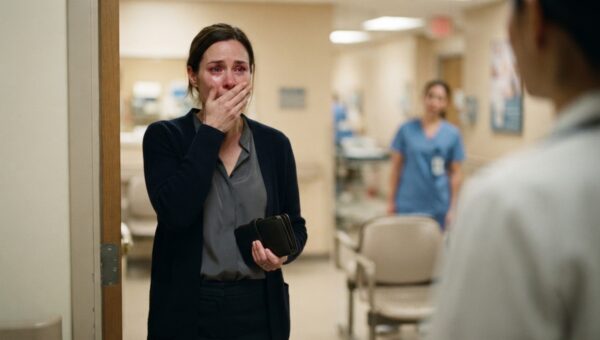
“Why are you telling me this now?” I asked, my voice dropping to a harsh whisper. “If this is true, you could have lost your license.”
“I am retired as of twelve minutes ago,” Martha said, pressing the heavy folder into my chest. “My pension cleared the state system this morning. Take it to your car. Don’t open it in the lobby.”
She turned around without another word and walked back down the hallway toward the staff exit, her rubber-soled shoes squeaking softly against the wax. I stood by the filing cabinet for a long moment, the manila folder burning against my palms like hot iron, before turning on my heel and walking out the front glass doors into the parking lot.
The afternoon sun was glaring off the hood of my sedan, casting blinding white reflections across the windshield. I climbed into the driver’s seat, locked the doors, and dropped the folder onto the passenger-seat cushion. The brass clasp was stiff, tarnished with age. I pried it open with my thumbnail, letting the rusted prongs spring apart with a dry click.
The first paper that slid out was the original 2017 intake assessment on crisp white letterhead. There it was in black ink, signed by the admitting nurse before Martha’s shift began: Patient exhibits mild cognitive slippage, oriented to person and place, fully capable of basic self-care with minimal cueing. Diagnosis: Mild Age-Related Memory Impairment.
Right beneath it was the second document. The altered chart. The same patient name, but someone had taken a red felt-tip pen and slashed a thick, angry line right through the original diagnosis, writing in heavy, block letters: Advanced Cortical Dementia. Restricted Mobility. Full Custodial Care Required. The signature at the bottom was Dr. Robert Evans, Arthur’s long-time partner on the back nine at the valley golf course.
I turned the page, my hands shaking so badly I dropped a paper clip onto the floor mat. Underneath the clinical paperwork was a thin, folded printout dated just two weeks ago. A routine neurological and metabolic blood panel ordered by an independent consulting physician who had recently rotated through the facility. I scanned down the columns of numbers until I hit the cognitive screening composite score. It was stable. Mildly reduced for an eighty-two-year-old, yes, but miles away from the vegetative state required for the locked-down memory ward where my mother had spent the last decade staring at a television that played game shows with the sound turned off.
For nine years, Arthur had visited twice a month, always wearing his pressed polo shirts and holding a box of sugar-free chocolates, playing the devoted husband while he systematically bled my mother’s entire life savings dry. He had taken her house, her independence, and her remaining years, turning her into a monthly invoice while he lived alone in a four-bedroom colonial paid for with the proceeds of her hard work.
I didn’t go back inside the building. I put the car in reverse, backed out of the parking stall with my tires spitting gravel against the curb, and drove straight toward Arthur’s house on Oak Ridge Lane.
The drive took twenty-two minutes. The sky over the valley was turning a bruised shade of purple, the kind of heavy, low-hanging dusk that usually meant a storm was rolling in off the mountains. When I pulled into Arthur’s driveway, his gray sedan was parked right behind the empty space where my mother’s station wagon used to sit before he sold it in the summer of 2017.
I didn’t knock. I grabbed the manila folder from the passenger seat, pushed open the front screen door, and walked straight into the kitchen without bothering to take off my coat.
Arthur was standing by the kitchen island, pouring a glass of tap water from a plastic pitcher. He was wearing a navy blue sweater over an open-collared shirt, his silver hair neatly combed the way it always was when he wanted to look like an honest man. He looked up, and for a split second, his expression was completely blank before a practiced, grandfatherly smile settled onto his face.
“Well, look who’s early,” Arthur said, setting the pitcher down with a dull plastic thud. “I thought you were visiting Helen today. Everything all right with her?”
I didn’t answer him. I walked across the linoleum, opened the folder, and dumped the entire stack of papers right into the center of the kitchen island, scattering the medical charts across the granite surface beside his water glass.
Arthur looked down at the red ink on the second page, and the color drained out of his cheeks so fast his face looked like chalk. The smile didn’t just fade; it cracked right down the middle.
“What is this?” he asked, his voice dropping into a tight, defensive register. “Where did you get these files?”
“Martha retired today,” I said, my voice shaking with a cold, steady fury I didn’t even recognize as my own. “Twenty-three years at Maple Creek. She handed me the original before she walked out the door.”
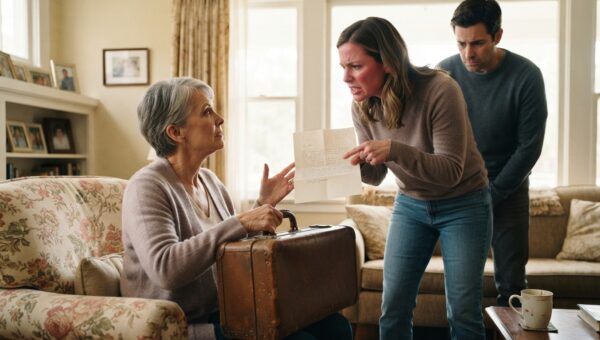
Arthur reached out a hand, his fingers hovering over Dr. Evans’ signature like he wanted to push the papers off the counter. “Martha is an old woman. People get confused after that many years in a facility. Memory gets fuzzy. You can’t just come in here waving stolen paperwork around.”
“It’s not fuzzy, Arthur,” I said, stepping closer until the kitchen island was the only thing between us. “Mild cognitive impairment. That’s what the real doctor wrote in 2017. You and Evans upgraded it to advanced dementia three months before you sold Elm Street for three hundred and eighty thousand dollars.”
“That’s a lie,” Arthur snapped, his voice rising sharply as his composure finally gave way. “The care costs were astronomical. You weren’t paying the bills. I was carrying the weight of that place month after month while you were across the state living your life.”
“You were paying it with her money,” I said, slamming my palm down on the granite counter right beside his water glass. “Nine hundred ninety-three thousand dollars in facility fees, plus the house, plus her CDs. You turned her into a monthly paycheck.”
Arthur stared at me, his chest rising and falling beneath his navy sweater in short, ragged breaths. He looked smaller suddenly, an old man caught in a web of his own small-minded greed, stripped of the country club membership and the respectable neighborhood facade.
“What do you want?” he muttered, finally dropping his gaze to the linoleum floor. “You want to ruin me over some old paperwork?”
“I want her out of that room tonight,” I said. “I’m calling an ambulance to move her to a private room at the county hospital for an independent evaluation first thing in the morning. And every single cent you pulled out of her accounts is going back into an escrow account under my name by the end of the week, or I am walking this exact folder down to the district attorney’s office before the sun comes up.”
Arthur didn’t say another word. He just turned around, his shoulders sagging, and reached out to grip the edge of the kitchen sink like he needed something to hold him up.
Three days later, the transfer was complete. We moved my mother out of the sterile, locked unit at Maple Creek and into a bright, sunlit ground-floor apartment just six blocks from my own house, where the windows look out over a small courtyard filled with white hydrangeas and bird feeders.
The first afternoon she spent there, the sunlight was coming through the living room curtains in long, warm bars across the hardwood floor. I sat beside her on the floral-print sofa, holding her hand while she turned the pages of a large-print garden catalog with her thumb. She wasn’t completely well, and the years of heavy sedatives had left their mark on her pace and her quietness, but as she pointed down at a picture of a yellow rosebush and looked up at me with clear, recognizing eyes, I knew we had finally made it back to the other side of the nine-year wall.