I was completely wrong about the math of a family. I thought love was something built into the walls of a house, something that stayed put even when things got tight or quiet. I figured that when a kid turns eighteen, parents are supposed to look back at the work and feel proud, or at least relieved. I didn’t know that for my mom and dad, my birthday was just an expiration date circled on a calendar in red grease pencil.
The house had felt narrow for months before the summer I turned eighteen. My dad worked down at the bolt factory on the west side of town, and my mom kept books for a local lumber yard, so money was always something we talked about like a weather report we couldn’t change. I was used to hearing them count pennies at the kitchen table after dinner. What I wasn’t used to was hearing them talk about me as an item on a spreadsheet that needed to be balanced out.
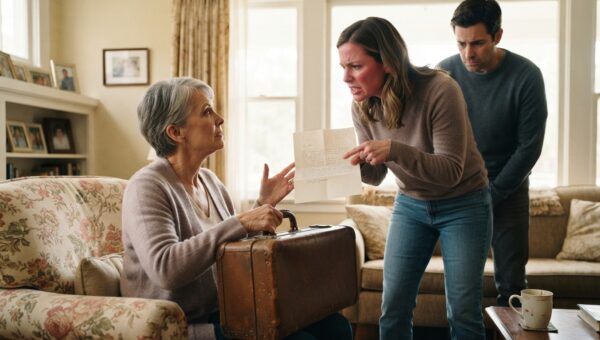
The first time I caught it, I was walking down the hall with a load of laundry and stopped because my dad’s voice dropped into that low, flat register he used when he was talking about getting rid of an old truck. My mom was leaning against the counter, her coffee cup held in both hands, nodding.
“She’s legally an adult on the tenth, so we give her the two weeks after to get her things sorted,” my dad said, his voice carrying right through the thin drywall of the hallway. “I’m not having an idle eighteen-year-old sitting around eating groceries we have to pay tax on. We told her the terms.”
“She knows,” my mom said, and she didn’t sound mean, which honestly felt worse. She just sounded tired of me. “She’ll figure it out. Kids always do.”
I didn’t drop the laundry basket. I just stood there in the carpeted hallway with three pairs of socks and a faded gray sweatshirt pressed against my chest, watching dust motes drift in the yellow light from the ceiling fixture. My chest felt hollow, like somebody had scooped out everything inside with a soup spoon. They hadn’t told me any terms. They hadn’t sat me down and explained that my time in their house had a hard stop. They were just waiting out the clock so they could set me out on the curb like old lumber.
The second time I heard it, three nights later, they were sitting on the back porch with the screen door half-latched.
I was in the kitchen getting a glass of water, and the murmur of their voices drifted in through the mesh. My dad was talking about the spare bedroom and how they could turn it into a sewing room for my aunt or just use it for storage once I was gone. He sounded so light about it. Like he was planning a weekend fishing trip.
“She’s got that boyfriend, Cole,” my mom said, taking a sip from her glass. “Maybe he can take her in. Not our problem anymore once she’s legal.”
That was the moment the illusion cracked all the way down the middle. I had spent my whole life thinking my parents were this unshakable shelter, but they were just landlords waiting for my lease to expire. I didn’t cry. I didn’t storm out onto the porch and scream at them. I just set my glass down on the counter very carefully, made sure it didn’t clink, and walked back to my room.
The next afternoon, I didn’t go straight home after the bell rang at school. I walked three blocks down to the diner where Riley worked the counter on Thursdays, my backpack feeling heavier than usual. Riley was seventeen, sharp-tongued, and didn’t take grief from anybody, which made her the only person I wanted to talk to. We sat in the corner booth by the jukebox while she wiped down the sticky faux-wood table with a yellow rag.
“They’re actually going to do it?” Riley asked, her hand stopping mid-wipe, her eyes going wide behind her wire-rimmed glasses.
“My dad was talking about the spare room for storage,” I said, staring down at my fingernails. “They’ve got a timeline. They’re just waiting for the cake and candles to clear out.”
Riley dropped the rag right onto the table and shook her head. “That’s sick. My folks have a guest room that’s just collecting dust anyway. You’re staying with us. We’ll talk to them tonight.”
Her parents weren’t rich, but they had a house that felt warm even when the furnace was rattling. When we sat at their kitchen table that evening, Riley’s mom poured me a mug of hot tea with a heavy splash of cream and listened without interrupting once. Her dad sat across from her, his arms crossed over his flannel shirt, his jaw tight.
“Nobody’s putting you out on the street,” Riley’s mom said, her voice steady and kind in a way that made my throat tighten up. “You finish high school under our roof. After that, you figure out your next step. But you aren’t going anywhere homeless.”
Cole didn’t hesitate either when I told him behind the bleachers during track practice the next morning. Cole was eighteen, steady-handed, and drove an old rusted-out Ford pickup that sounded like a threshing machine when it started up. He didn’t offer grand speeches or movie lines. He just reached out, took my hand, and said one thing.
“I’ve got the truck,” Cole told me, his thumb rubbing across my knuckles. “We’ll do it right under their noses.”
We planned it for a Tuesday night, exactly four days before my birthday, because my dad worked the midnight shift at the bolt factory on Tuesdays and slept like a log until noon on Wednesdays. My mom took a sleeping aid every night around ten because of her restless legs, which meant the house would be dead quiet by midnight. I spent the weekend packing my life into dark green heavy-duty trash bags and three cardboard boxes from the grocery store. I kept my winter coats hanging in the closet and my dresser looking full so nobody would notice the drawers getting light.
The clock on my nightstand read 12:14 a.m. when the soft crunch of tires rolled into the gravel drive outside my window. I didn’t turn on a lamp. I sat on the edge of my mattress in the dark, listening to the floorboards groan down the hall where my parents were sleeping. The air smelled of stale carpet and old cedar, the exact smell of every room I had ever known.
A light tap hit the glass of my bedroom window. Two short ticks, then one long one. That was Cole’s signal.
I pushed the window upward. It made a sharp, screeching scrape that sounded like a cannon shot in the quiet house. I froze, my breath caught in my throat, staring at the crack under my bedroom door for any sign of light or footsteps. Nothing moved. The house stayed dark and heavy.
Cole’s face appeared in the window frame, his eyes dark in the moonlight, his hands reaching up to take the first box. “Come on,” he whispered, his voice barely louder than the night wind in the maple tree.
Riley and her parents were waiting by the Ford truck parked down by the edge of the road with the lights off. We didn’t talk. We moved like thieves in our own lives, carrying boxes down the stairs one by one, our sneakers making almost no sound on the old carpet. I carried my guitar case, my box of school notebooks, and three garbage bags of clothes out through the front door while Riley’s dad took the heavier plastic bins.
Every time a floorboard creaked under my boots, my stomach dropped into my shoes. I kept waiting for my dad’s bedroom door to swing open, for that heavy, annoyed voice to demand what I thought I was doing. But the door stayed shut. My parents were sleeping soundly through the dismantling of their relationship with their only kid.
By 1:05 a.m., the truck bed was stacked high and covered with a blue tarp. I stood on the edge of the gravel driveway for one last look at the house with its dark windows and peeling white paint. The porch light was off. The screen door hung slightly crooked on its rusted hinge. It didn’t look like a home anymore. It looked like an office building after everyone had gone home for the weekend.
“Get in,” Cole whispered, opening the passenger door for me.
We drove away without turning on the headlights until we hit the highway past the grain elevators. The truck heater rattled and smelled like warm oil, but the cabin was warm. When we pulled up to Riley’s house, her mom was standing by the back door with a plate of leftover cinnamon rolls and a pot of coffee, waiting in her bathrobe.
The next morning, the sun came up hard and bright over the valley, but I didn’t have to listen to my dad talk about the utility bills at the kitchen table. Around 9:30 a.m., my phone buzzed against the bedside table in the guest room. It was my mom. Then another text from my dad. Then three missed calls in a row before noon.
I didn’t answer them. I left the phone face down on the nightstand and walked down the hall to where Riley’s mom was ironing pillowcases in the laundry room.
“You want to help me fold these?” she asked, looking up with a small, knowing smile.
“Yeah,” I said, stepping into the warm room. “I’d like that.”
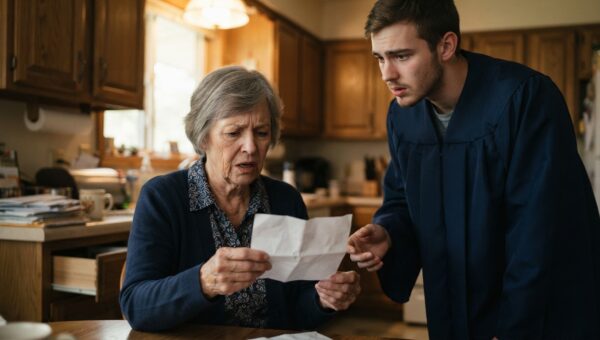
My parents spent that Wednesday morning pacing through an empty bedroom with green trash bag ties on the floor and a simple note propped up on the bare mattress telling them I had moved out to finish school in peace. I heard later from an aunt that my dad threw a coffee mug against the kitchen wall when he found it, furious not because I was gone, but because I had ruined the timing of his plan. They didn’t get to hand down their eviction notice. I had taken the option right out of their hands.
The transition wasn’t smooth, and the phone calls didn’t stop for weeks, but I never went back to sleep under that roof. I finished my senior year sitting at Riley’s kitchen table, graduated with honors, and got a part-time job at the pharmacy down on Main Street to save up for my own textbooks. The distance gave me something better than safety; it gave me the quiet realization that my life belonged to me, not to a ledger kept by people who viewed my growing up as an inconvenience.