The blue binder sat right underneath a stack of cancelled electric bills from nineteen ninety-eight, heavy and navy-colored with a cheap plastic spine that had cracked down the middle. I didn’t even open it with my hands at first. I just pushed the corner of it with the tip of a wooden spoon I had been using to stir a pot of canned soup, like if I touched it with my bare fingers it might bite me.
Back in two thousand and five, houses in our neighborhood still smelled like coal smoke in the late autumn because half the old folks refused to switch over to forced-air gas furnaces. Chloe was sixteen then, going on thirty in that way teenage girls do when they think the whole world is a conspiracy against their private thoughts. I was working forty hours a week down at the county records office, sorting through property deeds that smelled like mildew and dry glue, and I came home at five past five with my feet throbbing in my sensible walking shoes.
The kitchen was quiet. Too quiet, honestly. Chloe wasn’t upstairs blasting that orange portable CD player she bought with her allowance money, and her old red bicycle wasn’t leaning against the side of the porch where she always dropped it.
I found the journal tucked down behind the bottom shelf of the pantry, shoved in next to a bag of dusty pinto beans we never cooked.
It wasn’t even a real diary with a lock on it. Just a spiral notebook with blue lines and a picture of a golden retriever puppy on the cover that she must have had since middle school.
I only meant to check if she was writing down grocery lists or chores she forgot. But then I saw the name. Arthur. He was twenty-eight, and he worked down at the municipal water plant where my brother-in-law used to have a desk before his hip went bad. The pages were full of talk about running off to West Virginia, renting some cabin near the river, leaving school before she even finished her junior year.
My stomach didn’t drop or do any of those fancy things people talk about in books. It just went completely cold, like I had swallowed a handful of ice cubes all at once.
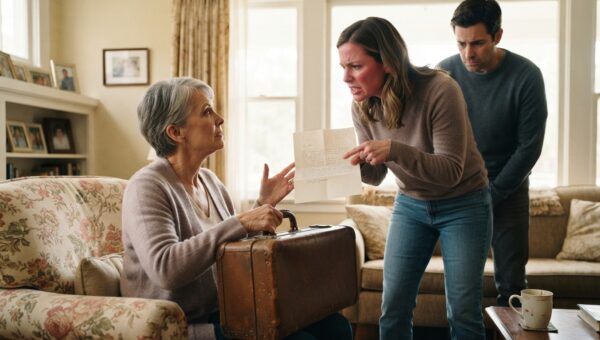
I didn’t talk to her first. That was my first mistake, though it took me years to admit it out loud.
I got scared. Not regular scared, but that sick, blind panic that makes you pick up the telephone before your brain has even finished forming a sentence. I called Arthur’s boss directly from the kitchen landline while the soup was boiling over on the burner.
“He’s twenty-eight years old and messing with a minor who still has to ask permission to go to the movies,” I told the man on the other end. I gave him names. I gave him dates.
Then I called the sheriff’s office because I knew deputy Miller from church suppers and thought he’d handle it quiet. Except nothing about small towns is ever quiet. Within three days, Arthur was gone. The water plant fired him for conduct unbecoming or some such nonsense, and he packed his old blue pickup truck and drove south before the weekend even hit.
Chloe didn’t cry when she found out. That would have been easier to deal with.
Instead, she sat at the kitchen table on a Tuesday evening while the rain was beating hard against the back porch windows, and she looked right through me like I was made of clear glass.
“You didn’t protect me,” she said. Her voice didn’t even shake. “You humiliated me.”
Those words stayed in that kitchen long after the furniture was sold off. She didn’t talk to me for the rest of that year, or the next one. On the morning she turned eighteen in two thousand and seven, she packed every single thing she owned into a green nylon duffel bag, took three hundred dollars she had saved from working at the Dairy Queen, and walked out the front door without looking back once.
Eighteen Christmases. I kept her old room exactly the way she left it for the first five years, dusting the top of the dresser every Saturday morning until the sight of that empty twin bed made me so sick to my stomach I finally packed her clothes into cardboard boxes and shoved them out into the garage.
My husband passed away quietly in the winter of sixteen, and after that, the house just got big. I stayed busy with the garden and the Ladies Auxiliary down at the Methodist church, keeping my head down and telling myself I did the right thing. You save your child from a predator, you take whatever punishment they hand you. That was the rule I lived by.
Then came last night.
The local news comes on at six while I am usually wiping down the counters and listening to the refrigerator hum its steady, tired tune. The anchorwoman had that serious face they use when something big happens in the county. They were running a segment on a new safe house for runaway girls that had just opened up over on the east side of town, funded by some state grant and private donations.
The camera panned across the front steps, past a row of newly planted boxwood shrubs, and then it landed on the woman standing behind the wooden podium.
She had my mother’s chin. She had the same way of standing with her weight shifted slightly to the left, like her hip always bothered her after a long day. Chloe. She looked older, of course, with her hair cut short and practical, wearing a dark blue blazer that looked like she bought it off the rack at Sears. But there was no mistaking her.
The founder of the whole place. A sanctuary built specifically for girls who needed a place to land when the world got too heavy to carry alone.
I sat down hard on the yellow vinyl kitchen chair because my knees just gave out under me. The news segment kept playing, showing the inside of the house with its clean white walls and the rows of tidy little beds with handmade quilts folded at the foot of each one. It hit me right then, with a force that knocked the wind clean out of my lungs. She didn’t just survive what happened. She built an entire life out of the exact thing I tried to lock her away from.
I didn’t wait. I didn’t think about what to say. I just picked up the cordless phone off the wall mount, dialed the station number that flashed across the bottom of the screen during the credits, and waited through three rings until a woman with a tired voice answered.
“News desk,” she said.
“I need to reach the founder of the safe house,” I said, and my voice sounded thin and old, nothing like I wanted it to sound. “The woman who was just on TV. Her name is Chloe.”
“We don’t give out personal numbers for the staff,” the woman said, starting to sound like she wanted to hang up. “If this is about a donation, you need to call the administrative office during business hours.”
“Listen to me,” I said, and I felt my hand shaking so hard the plastic of the phone case rattled against my ear. “I’m her mother. I haven’t seen her in nineteen years. Just tell her I called.”
The line went quiet for a long, heavy second. I could hear papers rustling in the background, someone talking softly on another phone down the hall.
“What did you say your name was?” the woman asked, her voice changing just a fraction, losing that sharp edge of dismissal.
I told her, and then I hung up before she could tell me no.
The rest of the night was just hours of staring at the dark kitchen window, watching my own reflection stare back at me from the glass. I didn’t sleep. Every time I closed my eyes, I heard that red bicycle hitting the concrete porch and saw the way she looked at me across the table when she walked out with her three hundred dollars.
The next morning, I didn’t wait for business hours. I drove my old Buick right down to the television station office on the corner of 4th and Main, holding a white envelope in my purse that had taken me three hours to write. My hand was so stiff from arthritis that the ink looked like spiders walking across the page, but I didn’t care. I didn’t make excuses in the letter. I didn’t talk about Arthur or the sheriff or how scared I was back in two thousand and five. I just wrote about the safe house, and how proud I was to see what she had made of herself, and that I would be sitting at home on the front porch every Tuesday afternoon if she ever wanted to walk up the steps.
It took four days of silence. Four days where I checked the mailbox every twenty minutes like a crazy person, jumping every time a car drove past the house.
On Friday morning, an email popped up on the old desktop computer in the den. It wasn’t from Chloe directly. It came from the administrative address of the safe house, signed by an office coordinator named Brenda.
The note was short. Professional. It said that Ms. Miller had received the letter and read it. It said that while an immediate visit or family reunion wasn’t on the table right now, the safe house always needed volunteers for Saturday morning intakes, and if I wanted to come down as a regular visitor and a donor, the front desk would log my name in the visitor book like anyone else.
I printed out the email and folded it into four neat squares, tucking it right into the pocket of my cardigan.
It wasn’t forgiveness. Not yet, anyway. But it was an open door, and after eighteen years of staring at an empty chair, an open door was more than I deserved.
I drove over to the east side of town forty minutes before they opened. The building was older than I thought, a big brick house with a wide front porch and white railings that needed a fresh coat of paint. I parked the Buick in the gravel lot out back, right next to a battered station wagon with a bumper sticker about rescue dogs.
The front door was heavy wood with a brass handle that felt cool under my palm. Inside, the hallway smelled like fresh coffee and lemon polish, clean and bright and entirely different from the dark, quiet house I had left behind that morning.
A young girl with long brown hair tied back in a messy ponytail was sitting behind a scarred oak reception desk, sorting through a stack of intake forms with a red pen. She looked up as the floorboards creaked under my boots.
“Can I help you?” she asked, her voice polite and careful.
I reached into my bag and pulled out my driver’s license and a folded check for fifty dollars, laying them down on the wood surface alongside the heavy visitor’s logbook that was already open to today’s date.
“I’m here to sign in,” I said.
The girl nodded, not smiling yet, but not turning me away either. She slid the ledger toward me and handed me a pen with a chewed-up blue cap.
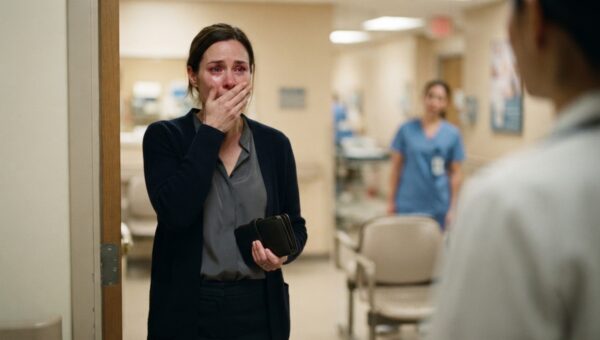
I picked up the pen and wrote my name on the lines provided, right there beside the date, feeling the quiet weight of the room settle around my shoulders. A moment later, footsteps echoed down the back hallway, and Chloe stepped out through the doorway with a steaming paper cup of black coffee in her hand. She stopped dead when she saw me standing by the desk, her eyes locking onto mine with a steady, unyielding gaze that didn’t flinch. She didn’t say a word, and neither did I. She just walked over, set the paper cup down on the corner of the reception desk right beside my hand, and turned back toward the inner office without looking back.