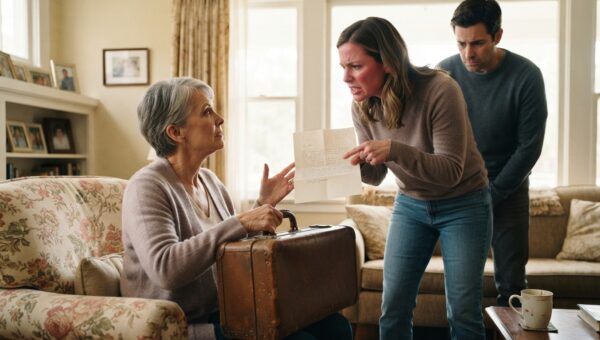
We got the whole thing wrong about why Ray fought so hard for that place. For twenty years, my uncle Ray pitched a fit anytime somebody brought up selling my grandfather’s house out here in Casper. He would turn red in the face, talk about hiring lawyers, and one Thanksgiving he even flipped the card table right over into the mashed potatoes.
We all took it for plain sentimentality, figuring it was just Grandpa’s old place, Ray being the oldest of the bunch, and an aging bachelor clinging to memories he couldn’t bear to let go of. We were wrong. Lord, were we wrong.
Ray passed away last winter from a sudden chest cold that turned into pneumonia, and the clapboard house came down to me. It is a little place sitting out on two acres of dry Wyoming scrub, empty going on a year now while I tried to work up the energy to deal with the probate mess. Last Saturday, I finally put on my old boots and climbed up the pull-down stairs into the attic. It was a hundred and ten degrees up under that tin roof, with dust so thick it just hung heavy in the flashlight beam and bat droppings piled high in the dark corners.
Back under the lowest part of the rafters, tucked away where a grown man had to crawl on his hands and knees just to reach it, there was a heavy metal trunk.
It was wrapped tight in a thick steel chain. A padlocked chain, sitting in an attic where nothing had lived or breathed for twenty years except for bats and field mice. I crawled backward through the dust, hauled a pair of heavy bolt cutters out of my truck, and lugged them back up those rickety wooden stairs. I knelt down in all that filth, hooked the jaws of the cutters around the iron link, and squeezed until my hands shook. The chain snapped with a loud ping that echoed off the roof boards. I threw the heavy lid back and put my flashlight beam down inside. And I went cold, not from the heat, because I knew that face. Everybody in my family knew that face, because it was plastered all over local newspapers and police bulletins from way before I was even born.
The photographs inside were yellowed at the edges, curled up from the dry attic heat, but the features were unmistakable.
It was Arthur Vance. He was a county surveyor who had simply vanished off the face of the earth back in 1964, leaving behind a baffled town and a grieving young family. My grandfather and a teenage Ray had been the last ones to speak to him, or so the old police reports always said. They had told the sheriff back then that Arthur packed up his transit and walked off the south ridge toward the timberline before dusk, never to be seen again. Everyone assumed he got turned around in a blizzard or fell down an old coyote den. But here his face was, staring up at me from a stack of rotting paper inside a locked trunk in our own roof.
I sat back on my heels in the suffocating heat, the dust stinging my throat, and started pulling the layers apart. Beneath the photographs sat a worn leather wallet, the leather stiff as a board, containing a driver’s license with Arthur’s picture and a few faded grocery receipts dated November 1964.
Next to the wallet was a rusted brass surveyor transit, the kind with heavy folding legs and glass lenses cracked from decades of temperature swings. And underneath that sat a thick, black-bound ledger book filled with my grandfather’s cramped, jagged handwriting.
I opened the ledger to the middle pages, where the ink was dark and smeared by what looked like sweat or grease. It didn’t take long to figure out what happened on that ridge sixty years ago. Grandpa and young Ray had been out near the southern property boundary working on an illegal moonshine still they kept hidden down in the natural limestone cavities. Arthur Vance had stumbled right onto it while mapping the new county drainage lines. There was no grand conspiracy or violent murder, just a terrible accident when a rotten timber shoring gave way in the exploratory shaft and collapsed the earth right on top of him. Grandpa and Ray had pulled him out, but he was already gone. Terrified of losing their land, facing prison time, and having the county strip every acre they owned to pay fines for their illegal operations, they made a desperate pact. They hid the body deep down in the sealed foundation cavity below the house and hauled his personal gear up into the rafters.
That was the whole secret. Ray hadn’t defended the house for sweet memories or family pride all those years. He defended it because the clapboard house sat directly over that hidden cavity, and selling it would mean a mandatory structural survey, a foundation inspection, and a buyer walking the property lines with modern equipment that would unearth the grim secret Ray had spent his entire adult life guarding. Every time someone made an offer on the place, Ray saw a wrecking ball coming for his family’s freedom.
I didn’t move for a long time. The dust motes danced slowly in the beam of my flashlight while my mind raced through the implications. I thought about all those family dinners where Ray had yelled about the property lines, his knuckles white against the wood of the table. He had carried that suffocating burden for over half a century, protecting a pile of rotting lumber just to keep a six-decade-old ghost from tumbling out into the light. I looked back down at the transit and the wallet resting on the dirty floorboards. My chest felt tight, not just from the heat of the attic, but from the sudden realization of what I had inherited. This wasn’t just an old house and two acres of dry Wyoming grass. It was a holding cell for a dead man who deserved to go home.
I backed out of the crawlspace, sliding the heavy trunk ahead of me across the floorboards until I reached the attic stairs. I carried the bolt cutters down first, setting them heavily on the second-floor landing with a dull thud that seemed to echo through the empty rooms below. Then I dragged the trunk down, step by step, letting it bump and scrape against the wood until it rested right in the middle of the empty living room. The afternoon sun was beginning to angle through the dirty front windows, casting long, dusty fingers across the worn floor.
I walked over to the landline phone sitting on the scarred wooden side table, the cord coiled up like a sleeping snake. My hand hovered over the plastic buttons for a minute while I thought about the local gossip. The county sheriff’s office was about ten miles down the highway, and once I dialed those numbers, there was no calling them back. The probate review would halt instantly, the real estate listing would vanish into the ether, and the family name would take a severe, permanent hit in the local papers. People in Casper had long memories, and they wouldn’t look kindly on a foundation built on a secret grave.
I picked up the receiver and listened to the low, steady hum of the dial tone. It sounded remarkably calm compared to the storm raging inside my head. I punched in the local numbers, my fingers moving slowly and deliberately. When the dispatcher’s voice came on the line, sounding tired and professional, I didn’t hesitate or try to soften the edges.
“My name is Thomas Miller,” I said, my voice sounding flat and dry in the quiet room. “I’m calling from the old property out on the south ridge. I need to report a historical recovery. I have Arthur Vance’s belongings up in my living room, and I think we need to look beneath the foundation.”
The dispatcher paused for a second, and honestly, that short silence felt heavier than anything else that day. “Did you say Arthur Vance, sir?” she asked, her tone shifting from routine to sharp attention.
“I did,” I said. “He’s been here since nineteen sixty-four.”
The investigation moved fast once the deputies arrived. Within an hour, the gravel driveway was crowded with black-and-white cruisers, their lights turned off but their engines ticking softly in the cooling air. Yellow police tape went up across the porch posts, fluttering in the rising evening breeze from the prairie. The deputies were quiet, respectful men who didn’t ask many questions once they saw the contents of the trunk spread out across the dining room table. By Sunday morning, county equipment was out on the southern edge of the property, tearing into the dry earth near the old limestone sinkhole where Grandpa and Ray had buried their terror all those years ago.
I sat out on the front porch while the heavy machinery worked in the distance, kicking up clouds of white dust against the pale Wyoming sky. My hands were still smudged with attic soot, and my back ached from crawling through the rafters. But for the first time since Ray passed away, the air didn’t feel quite so heavy to breathe. The secret was out in the open, exposed to the harsh sunlight and the county investigators. The family name would take its lumps, and the property would likely be tied up in litigation for months, but the debt was finally being paid.
I stood up from the wooden rocking chair and walked down the steps into the yard. The heavy rusted bolt cutters lay abandoned right where I had dropped them on the porch step, their iron jaws stained with old dust and my own sweat. Across the two empty acres, the sun was sinking fast below the western ridge, painting the sky in deep shades of orange and bruised purple. The front door of the little clapboard house stood wide open behind me, letting the cool evening wind sweep straight through the empty rooms at last.