The steam was rising from the small stainless steel kettle on my stove, the water just beginning to rattle the tin lid. I always stood right there in the quiet kitchen before six in the morning, holding my favorite ceramic mug with the chipped handle, listening to the old refrigerator hum its familiar two-note tune. It was a domestic rhythm I had trusted for thirty years, a tiny island of predictability before the sun cleared the horizon.
Then my phone buzzed against the laminate counter, a sharp, buzzing rattle that broke the quiet and pulled me straight into a Tuesday morning that changed everything.
The restaurant was supposed to be Julian’s fresh start. After years of dead-end jobs and failed ventures, my only child finally decided to settle down and open a proper bistro downtown, right in the old brick building next to the hardware store. I liquidated my certificates of deposit, tapped the small insurance payout from my late husband, and wired eighty-one thousand dollars to cover the kitchen build-out, the liquor license, and the first three months of commercial rent. I was the silent partner, the backer who kept the lights on and the suppliers paid every single Monday morning without fail. I never asked for a plaque on the wall or a seat of honor. I just wanted my son to have something he could be proud of, something that would give him a steady trade and a respectable name in this town.
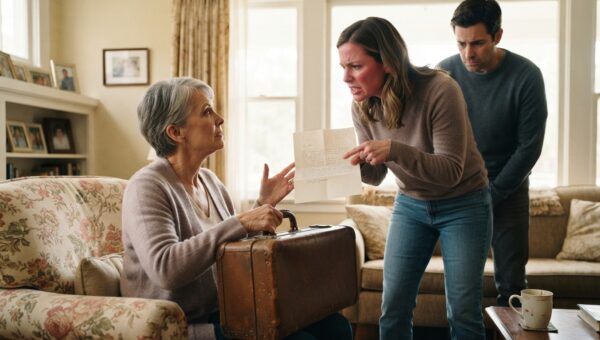
The grand opening night was supposed to be our celebration, but Clara, his wife of two years, had different plans for how the room should look. The dining room was packed with local merchants, politicians, and twenty-three nervous employees scurrying between tables with heavy trays. I walked over to the corner table reserved for family, pulling out my chair with a quiet smile as the room hummed with chatter and clinking silverware. Clara didn’t even look up from her clipboard. She reached down, grabbed the back of my wooden chair, and jerked it violently backward before my weight could settle.
I crashed hard onto the polished concrete floor, my hip taking the brunt of the impact before my right hand came down on the stem of a dropped wineglass. The thin crystal snapped instantly, sinking deep into the fleshy part of my palm. Nobody stopped talking. The ambient noise of the room swallowed my gasp, but I heard Julian laugh from the head of the table, a short, nervous sound meant to appease his wife.
I looked up from the floor, my palm leaking thick red drops onto the gray concrete, and saw Clara looking down at me with cold, flat eyes.
“Backers don’t belong at the family table,” she said, her voice sharp and low enough that only the people right beside us could hear.
I tried to push myself up, my knees shaking against the cold floor. I reached out toward Julian, hoping for a hand, hoping for a shred of the boy I had raised alone after his father passed. He wouldn’t even meet my eyes. He just shifted his weight from one foot to the other and whispered, “Mom, please don’t ruin tonight.” That was all he gave me. Not a hand, not an apology, just a plea to get out of the way so his important guests wouldn’t notice the mess.
I didn’t make a scene. I stood up on my own, clutching my bleeding right hand in my left apron pocket as warm blood soaked through the cotton fabric.
I walked out the heavy glass front doors alone into the cool night air, my hip throbbing with every step. The drive home was a blur of blurred taillights and burning pain in my palm. When I walked into my kitchen, the first thing I did was wash the cut under cold tap water and wrap it tight with a clean roll of gauze from my bathroom cabinet. Then I sat down at my old oak desk, opened my laptop, logged into the commercial banking portal, and stopped the weekly operating transfer that required my signature.
By sunrise, the consequences were already unfolding outside my front window. I watched through the sheer curtains as two large supplier trucks pulled up and idled by the curb, their diesel engines rumbling a deep, heavy vibration through the floorboards. The drivers sat in their cabs, staring out at the locked delivery entrance of Julian’s restaurant across town, waiting for the electronic wire confirmation that never arrived. My phone rang at exactly 7:03 in the morning, right as the kettle was beginning to whistle again on the back burner.
I picked up the landline receiver because my right hand was still stiff and clumsy from the bandage. It was Elena Vance, the senior commercial account manager at First National downtown, a woman I had known since she joined the bank back in ninety-eight. Her voice had that careful, measured tone that bankers use when they are about to tell you something very expensive.
“Trudy,” she said without her usual morning greeting. “I am looking at an emergency filing submitted late last night, requesting an immediate removal of your name as the primary reserve signer due to alleged medical incapacity. Did you authorize this?”
My fingers tightened around the plastic receiver. “No,” I said, my voice dropping an octave. “I didn’t authorize anything of the kind. I was downtown last night at the grand opening.”
Elena paused on the other end of the line, the faint sound of keyboard clicking rustling through the receiver. “I thought as much. The signature on the medical affidavit looks rushed, and the notary stamp is from a county three hours away. But Trudy, there is something else in the file.”
The silence in my kitchen felt heavy, pressing against my ears like wet wool. “What else, Elena?”
“They didn’t just try to take you off the operating account,” she said softly, her professional armor slipping for just a second. “There is a secondary commercial loan application attached to this filing, pledging your residential property as collateral for a ninety-thousand-dollar line of credit. The papers were processed through a digital portal at eleven o’clock last night, right after the opening event ended.”
I didn’t cry. You don’t cry when you spend thirty years keeping a roof over your head and working double shifts at the laundry plant just to find out your own flesh and blood forged your signature in a back booth. My brain just clicked into a cold, hard gear, the kind of focus I learned long ago when things went sideways and there was nobody else to fix them.
“Elena,” I said, staring out at the idling diesel trucks through the frost on the glass. “Can you freeze the entire corporate ledger right now?”
“Under commercial fraud protocols,” she answered immediately, “I can lock every operating line, reverse the emergency removal, and flag the collateral pledge for immediate investigation by our legal department.”
“Do it,” I told her. “And tell your fraud investigator we have high-definition security footage of the dining room from last night that shows exactly how incapacitated I was when my daughter-in-law threw me to the floor.”
I didn’t wait for her reply. I hung up the phone, grabbed my heavy canvas coat from the peg by the door, and walked out to my truck. The morning air bit at my face, sharp and smelling of damp cedar and exhaust fumes. The drive downtown took less than eight minutes, the old truck engine humming a steady, angry pitch all the way down Main Street.
When I pulled up to the restaurant, the scene on the sidewalk was already starting to unravel. Julian was standing outside the front glass doors in his crisp chef’s apron, waving his arms at the driver of the first supplier truck while Clara stood behind him with her phone pressed tightly to her ear, her face pale under her makeup. The twenty-three employees were gathered just inside the glass, huddled together like a flock of nervous sheep, watching the front steps with wide eyes.
I stepped out of my truck, my boots crunching on the gravel by the curb. I didn’t rush. I walked straight up the concrete steps toward the front doors, my right hand tucked safely inside my coat pocket, wrapped securely in clean white gauze. Julian saw me coming and tried to block the entrance, his face flushed red with a mixture of panic and old childish fury.
“Mom, you can’t be here right now,” he shouted over the rumble of the diesel engines. “We have a crisis with the accounts, the system is locked, and the distributors are walking away!”
I stopped two feet from him, looking right into the eyes of the boy I had raised, and realized for the first time that he was a stranger who shared my blood.
“I know the system is locked, Julian,” I said, my voice steady and carrying easily in the cold morning air. “Elena Vance called me at 7:03 this morning to talk about your little paperwork problem.”
Clara pushed past him, her phone still clutched in her hand like a weapon. “You had no right to interfere with our business,” she snapped, her voice trembling despite her anger. “We are the ones running this place now. You were just the backer. You served your purpose.”
Just then, a dark sedan pulled up behind the supplier trucks, and two men in dark wool coats stepped out, carrying heavy leather portfolios under their arms. It was Elena’s chief fraud investigator and a local constable I had known since he was a boy playing Little League behind the library. They walked past the idling trucks and straight up the steps toward us.
“Mrs. Miller,” the investigator said, nodding respectfully in my direction as he pulled a thick manila folder from his case. “We have the preliminary report from the bank’s legal division regarding the forged incapacity filing and the unauthorized collateral transfer.” He turned his gaze toward Julian, his expression completely blank. “Mr. Miller, you and your wife need to step inside and unlock the office. We have a federal commercial default and a fraud inquiry to process before noon.”
Julian looked from the investigator to me, his mouth opening and closing without a sound. He reached out a hand toward my sleeve, a pathetic, trembling gesture that used to work when he was ten years old and caught lying about his chores. “Mom,” he whispered, his voice cracking. “Tell them it’s a mistake. Tell them we can work this out inside.”
I stepped back, pulling my arm out of his reach. I didn’t say another word to him. I turned around, walked back down the steps, and climbed into the cab of my truck. Through the windshield, I watched as the two officers escorted Julian and Clara back inside the glass doors while the supplier trucks threw their gears into reverse and backed out of the lot one by one.
I drove home in silence, the truck heater blowing lukewarm air against my shins. When I walked back into my kitchen, the kettle had boiled dry and clicked off by itself on the burner. A clean, white roll of medical gauze was sitting untouched on the kitchen table beside my locked checkbook, as the front door closed firmly behind a quiet, unbroken dignity.