PART 1
The smell of raw pine sawdust and old lime mortar is still stuck in the grain of my thumbs, no matter how many times I scrub them with pumice. For four solid years, while the rest of the town watched from a safe distance, I lived inside the hollow shell of the old Miller Warehouse down by the river.
It was a rotting hulk of 19th-century brick and sagging timber when I bought it, all choked with sumac and pigeon droppings, but I saw what it could be. I saw a place where my drafting table could sit right by a bank of tall, north-facing factory windows, looking out over the water where the barges crawl past in the grey Ohio dawn.
I am an architectural draftsman, not a developer with deep pockets or a smooth talker who knows how to work a room full of bank lenders. What I have are calluses, a steady hand with a scale rule, and an immense amount of stubborn patience. Every Saturday and most weeknights, after I finished drafting commercial floor plans for local contractors, I drove down to Front Street. I hoisted ceiling joists with a chainfall I rigged myself. I scraped four layers of lead paint off the iron window sashes until my shoulders burned.
My daughter, Lily, would bring me a thermos of coffee on her way home from high school track practice, sitting on an overturned drywall bucket while we talked about how my independent design office was finally going to give us some breathing room.
Back then, my brother-in-law Gregory wouldn’t even walk past the front threshold of the warehouse. He said the place smelled like damp earth and bad financial decisions. Gregory married my younger sister, Sarah, twelve years ago, and he has spent every day since treating life like a corporate ladder he is determined to climb by stepping on whoever happens to be standing underneath him. He runs a commercial real estate brokerage over across the county line, trading in strip malls and franchise parking lots, and he has a way of smiling while he insults you that makes you feel like you are just slow-witted for not seeing the joke.
The trouble started the moment the city council finally approved the historic district zoning overlay for our riverfront. Almost overnight, property values along Front Street stopped creeping and started jumping. Developers from Columbus and Cincinnati began sniffing around, offering quick cash to old owners who had let their properties rot for decades.
That was when Gregory suddenly developed a deep, brotherly interest in my warehouse.
It happened at my parents’ house during a Sunday potluck. I was sitting at the kitchen table nursing a cup of weak coffee when Gregory slid into the chair next to me, smelling of expensive cologne and damp wool. He slapped a glossy brochure for a boutique hotel chain onto the Formica tabletop right next to my napkin.
“Marcus, my friend, you are sitting on a gold mine and you do not even have the pickaxe to dig it out,” Gregory said, flashing those straight, white teeth that always looked like they had been polished by an accountant. “The municipal redevelopment board is throwing historic tax credits at this corridor.
But you are just a draftsman working out of a damp corner. You need a real broker to structure the flip before the market corrects.”
“I am not flipping it, Gregory,” I said, keeping my voice low because my mother was standing nearby slicing pie. “I spent four years restoring the structural core. My office is going on the second floor, and I have two local artisan shops lined up for the ground level.”
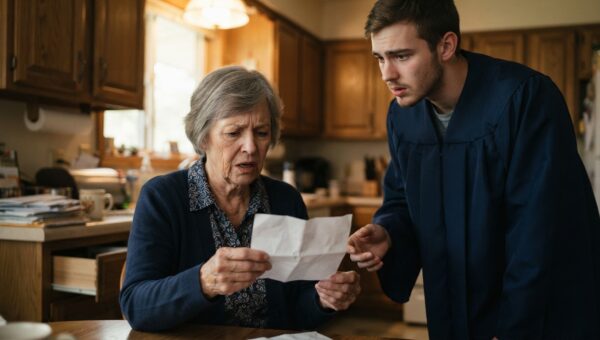
Gregory laughed, a short, dismissive bark that turned the heads of everyone at the counter. “Your office? Marcus, let us be entirely realistic for once in your life. You do not even hold the primary title in your own name. We both know you used the family trust structure through Aunt Clara to secure the initial parcel back when you were practically insolvent. Clara is eighty-four and her memory is slipping like a wet bar of soap. Without a clean, corporate-backed deed of assignment, you are just a tenant with a very expensive hammer.”
A cold knot formed in my stomach, though I tried not to let it show on my face. It was true that when I bought the ruined shell four years prior, I had used Aunt Clara’s signature to help clear a municipal nuisance lien because my credit score was still recovering from my divorce and Lily’s medical bills. But Clara had promised, in front of the whole family over Christmas dinner, that the property was held in trust exclusively for me as my sweat-equity project. We had shaken hands on it. In our family, a handshake was supposed to mean something.
“Clara knows what we agreed,” I said, my jaw tightening.
“Clara thinks today is Tuesday and she is waiting for her sister to bring her church shoes,” Gregory said smoothly, leaning in close. “The point is, a corporate entity backed by my brokerage just appraised that warehouse at four hundred seventeen thousand dollars as a turnkey commercial shell. I have a buyer ready to sign on the dotted line by Friday. I took the liberty of having Sarah help Clara execute a minor administrative deed correction this morning to streamline the title transfer. It is all in the family, Marcus. You will get a nice little consultation fee for your trouble, and the adults can handle the actual business.”
I stared at him across the table, the sound of the kitchen fan humming in my ears. For a second, the room seemed to tilt. Four hundred seventeen thousand dollars. Four years of scraped knuckles, frozen pipes, and aching joints boiled down to a consultation fee by a man who had never lifted anything heavier than a golf club in his life.
“You had Clara sign what?” I asked, my voice dropping an octave.
Gregory just smiled, tapped the brochure twice with his signet ring, and stood up to grab a piece of cherry pie.
PART 2
I did not yell at him at the table. Yelling is what Gregory expects because it makes him look like the calm, rational businessman dealing with an unstable relative. Instead, I stood up slowly, left my coffee untouched, and walked out the back door without saying goodbye to anyone.
By Monday morning, my hands were shaking as I sat at my drafting desk, but the panic had already hardened into something cold and sharp. I knew how Gregory operated. He liked to move fast before people could check the paperwork. If Sarah had taken Clara to sign a deed correction, it meant they had gone down to the county records office or used an online registry portal. But Aunt Clara did not own the warehouse outright, and that was the detail Gregory was banking on me being too disorganized to prove.
I spent the entire morning pulling every file folder from the metal filing cabinet in the corner of my temporary workspace. I went through four years of receipts, municipal permits, structural engineering sign-offs, and certified mail receipts. Most people think property ownership is just a name on a yellowed piece of parchment called a deed. But when you restore a historic commercial building in an Ohio river town, ownership is built out of paper trails as thick as a phone book.
And then I found the unreturned certified mail receipt from the county auditor’s office dated three years ago, clipped to a carbon copy of an architectural amendment.
It was the receipt showing that the primary commercial lien, the structural restoration bond, and the historical tax credit assignment were filed directly under my legal corporation name: Vance Heritage Design LLC. Furthermore, the foundational labor contracts I had signed with the city’s historic preservation officer explicitly stated that any transfer of title without my corporate sign-off constituted an automatic breach of the municipal revitalization grant, reverting full control back to the primary contractor of record.
Me.
Gregory had assumed I was just a naive draftsman who let family sentimentality cloud legal reality. He had looked at the surface deed held in Clara’s name, drafted a quick quitclaim transfer through his brokerage, and ignored the deep municipal filings underneath.
I did not call Sarah. I did not call Gregory. I put my coat back on, gathered my files into a waterproof leather portfolio, and drove straight down to the county administration building on Main Street.
The clerk at the records counter was an older woman named Brenda who had known my father. When I slid my corporate formation documents and the municipal tax credit filings across her counter, she adjusted her glasses and frowned at the computer screen.
“Well, Mr. Vance,” Brenda said, her fingers clicking methodically on her keyboard. “It looks like your brother-in-law filed an expedited warranty deed transfer late Friday afternoon, listing your uncle’s brokerage as the managing entity for a four hundred seventeen thousand dollar commercial sale to an out-of-state holding company. But he didn’t attach the historical preservation lien release from the municipal planning board. He can’t clear title without your corporate release signature. It’s locked in the registry queue pending your counter-signature as the primary contractor.”
“How long before that queue clears automatically?” I asked.
“Normally forty-eight hours if no objection is logged,” Brenda said, looking up with a sharp glint in her eye. “Unless you file a formal stop-work injunction and a notice of fraudulent conveyance based on the active municipal lien.”
“File it,” I said. “File all of it right now.”
PART 3
By Wednesday afternoon, the shockwaves hit.
I was up on the scaffolding on the second floor of the warehouse, scraping old varnish off an exposed yellow-pine beam, when I heard the crunch of gravel outside the double loading doors. Gregory’s black SUV pulled right up onto the apron, blocking my truck. He didn’t bother waiting for me to come down; he stormed right up the temporary plywood staircase, his face flushed red under his designer haircut.
“What in God’s name have you done, Marcus?” Gregory shouted, his voice echoing off the bare brick walls. He waved a printed legal notice in my face. “The county auditor just slapped a stop-work order on the entire commercial transfer. The buyer from Columbus is threatening to walk away from the four hundred seventeen thousand dollar contract by five o’clock today. Do you have any idea what kind of financial penalty that incurs for our firm?”
I didn’t put down my scraper. I stayed on the top rung of the scaffolding, looking down at him with a calm I didn’t entirely feel.
“Your firm, Gregory?” I asked quietly. “Which firm is that? Because according to the county zoning board and the municipal preservation audit I filed on Monday, the title transfer you pushed through with Clara is legally void. You tried to sell a building whose primary commercial lien and tax credit assignment belong entirely to Vance Heritage Design LLC.”
Gregory stopped dead. The bluster drained out of his face in stages, replaced by a sudden, ugly realization. “You… you don’t even have a commercial lawyer. You can’t just block a real estate transaction over some old municipal paperwork.”
“It’s not old paperwork, Gregory. It’s the foundation of this building,” I said, stepping down from the scaffolding and wiping my hands on a rag. “Every structural beam in this place was logged under my corporate tax ID. You thought you could bully an old woman into signing a quick claim deed and push me out of my own life’s work because you needed a quick payout to cover your brokerage’s speculative debt. Everyone in town knows you’re over-leveraged on those strip mall developments.”
“Sarah is going to be devastated when she hears you’re trying to ruin our family over a business dispute,” Gregory snarled, his voice dropping into a dangerous, low hiss.
“Sarah already knows,” a voice said from the doorway.
We both turned. Sarah was standing at the bottom of the plywood stairs, holding a manila folder against her chest. Her eyes were red-rimmed, and she looked smaller than she usually did in her nice winter coat. She had driven down after stopping by Aunt Clara’s house and finding out the truth about what Gregory had made Clara sign under false pretenses.
“He told me you agreed to the buyout, Marcus,” Sarah whispered, looking between the two of us. “He told me you wanted out and just needed us to handle the paperwork.”
“He lied to you, Sarah,” I said gently.
Gregory turned on his wife, his professional charm completely gone. “Shut up, Sarah. Don’t listen to him, we can still fix this if you just—”
“No, Gregory,” Sarah said, her voice shaking but firm as she stepped up onto the first landing. “I went to the county office this morning after Brenda called me. You used our family name to pull a stunt behind my back. I am done covering for your debts.”
The silence in the old warehouse was absolute, broken only by the distant whistle of a river tugboat out on the water. Gregory looked from his wife to me, realized the ground had completely shifted under his feet, and realized that his quick-flip contract was dead in the water. Under municipal zoning law, filing a fraudulent title transfer while a primary commercial lien was active carried severe civil penalties and a mandatory review by the state real estate commission.
“You want the building, Marcus?” Gregory spat out, his voice shaking with humiliation as he backed toward the stairs. “Fine. Let’s see how you pay the municipal lien penalties when the bank calls your operating loan.”
“I won’t have to,” I said. “Because your buyer’s holding company is already withdrawing due to your title fraud. But if you want to settle the cloud on this title without a full state audit of your brokerage, you’re going to sign a formal quitclaim relinquishing any and all future claims to this property by sundown today. In writing. With a notary present.”
ENDING
It took three hours at a local notary’s office on Main Street. Gregory didn’t look at me once while he signed his name to the release document, his hands trembling slightly as he handed the pen back. The four hundred seventeen thousand dollar corporate flip he had dreamed of was gone, dissolved by the very paperwork he had tried to bypass.
By Friday evening, the stop-work order was lifted, replaced by a clean, unencumbered municipal title issued entirely in the name of Vance Heritage Design LLC.
I stayed late at the warehouse that night, long after the sun had dipped below the Ohio River and the streetlamps outside began to hum. The space was quiet again, just the way I liked it. No brokers, no brochures, no smooth-talking promises about quick money.
I walked over to the tall factory windows on the second floor, resting my palm against the cool, thick glass of the restored iron sash. Down below, the river kept moving, dark and steady, carrying the barges toward whatever came next. I picked up my scale rule from the drafting table, turned off the halogen work light, and locked the front door behind me with my own key.