The steam was rising from the commercial soup kettle in the back of the parish hall, and I was busy wiping down the stainless steel prep table with a damp rag when the bell above my front door at home had rung three hours earlier. Patricia did not knock. She never knocked, not in the eight years since my father married her, and certainly not after he passed away from his lungs giving out in November.
She just shoved her way through my front screen door with her designer handbag swinging against her hip, carrying the sort of sharp, manufactured energy that always made my shoulders tighten up.
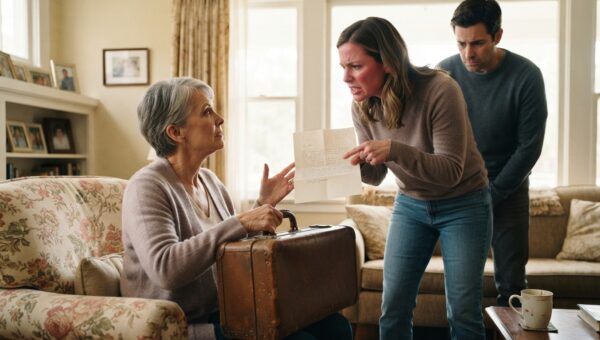
She slammed a stiff, expensive envelope right down on my laminate kitchen counter, right beside the half-empty jar of instant coffee I had left out. I remember the sound it made, dry and heavy against the wood. It wasn’t even mail delivered through the postal service. It was a hand-delivered letter on heavy cream stationery from a high-priced firm downtown, complete with raised gold lettering at the top that I didn’t need to squint to read.
“Sign it, Emily,” Patricia had said, her voice clipped and thin like dry winter grass. “Kevin is twenty-six now, and he needs a real place with a proper yard, not this cramped little cottage you refuse to update. Your father would have wanted his grandson settled properly.”
I looked down at the paper without touching it. It was a quitclaim deed, drafted to transfer the title of my father’s house over to Kevin for the grand total of ten dollars. My father had lived in that house for forty-two years, planting the rhododendrons by the side porch and fixing the sagging front steps with his own arthritic hands. I looked back up at Patricia, noting the tiny, impatient twitch at the corner of her left eye.
“I’m not signing anything,” I told her, my voice quieter than I intended.
Patricia gave a sharp, brittle laugh that sounded like dry leaves scraping across concrete. “You think you can fight a legal team on a soup kitchen salary? Don’t be a fool, Emily. Hand it over, or I’ll drag your name through every family gathering until nobody speaks to you again.”
She turned on her heel and marched right back out, letting the screen door slam hard enough to rattle the cheap glass pane.
I stood there by the counter for a long time, listening to the hum of the refrigerator and watching the dust motes drift in the narrow shaft of sunlight coming through the window. I didn’t panic. My father had spent the last two years of his life sitting at that very same kitchen table with me, coughing softly into his handkerchief and telling me things about Patricia that I had tried desperately not to believe.
“She thinks she’s clever,” my father had wheezed one evening, his fingers wrapped tight around a warm mug of tea. “She thinks because she handles the filing cabinets and the corporate bookkeeping for the family accounts that she owns the foundation. But a house built on borrowed paper always collapses when the wind changes direction.”
He had made me promise two things before the cancer took him. First, that I would keep volunteering down at the community kitchen where my mother had spent her Saturdays helping out before she passed.
Second, that I would keep a specific manila folder locked in the bottom of my cedar chest, untouched and unread until the exact day Patricia made her move.
The week that followed was an exercise in slow, suffocating pressure. Patricia didn’t wait for Grandma’s milestone celebration to start turning the extended family against me. By Wednesday, my phone was buzzing with frantic, accusatory texts from aunts and cousins I hadn’t spoken to since Thanksgiving. They called me selfish. They called me ungrateful. They asked how I could possibly deny Kevin a roof over his head when poor Patricia was just trying to keep the family legacy intact. I didn’t answer a single one of them. I just kept showing up at six every morning to chop onions and stir giant pots of beef stew for the regulars who lined up outside the shelter doors.
Saturday arrived overcast and cold, the kind of damp Tennessee morning that gets right down into your joints. Grandma’s eightieth birthday party was being held in the large assembly room of the community center, which happened to share a building wall with our soup kitchen. The room was already loud with the sound of clinking porcelain cups and loud family chatter when I walked in through the side entrance carrying a cardboard box filled with homemade lemon bars.
Patricia was holding court near the dessert table, dressed in an emerald green wool coat that probably cost more than my monthly grocery budget. Kevin stood right beside her, tall and broad-shouldered with his father’s blank, easy grin, accepting compliments from my great-aunt Martha about his new car. The moment I stepped through the double doors, the room’s temperature seemed to drop ten degrees. Patricia spotted me instantly, her eyes narrowing behind her gold-rimmed glasses. She didn’t wait for me to cross the room. She intercepted me right by the punch bowl, her face contorted in an ugly, performative mask of hurt.
“Look who finally decided to show up,” Patricia announced loudly enough to cut through the chatter of thirty relatives. “Just couldn’t stay away from the free food, could you, Emily? After everything you’ve done to freeze your own brother out of his rightful inheritance.”
The room went dead silent. Dozens of eyes turned toward us, shifting between Patricia’s trembling lower lip and my own steady expression. Aunt Martha gasped audibly, pressing a napkin to her chest.
“You’re tearing this family apart over a house you didn’t even earn,” Patricia cried, stepping in close so only I could hear the venom in her real tone. “Give me the folder, Emily. Hand it over right now, or I swear I’ll make sure nobody in this county ever speaks to you again.”
Before I could even open my mouth to answer, Kevin lunged forward with a sudden, greedy motion. He snatched the brown leather portfolio right out from under my arm, his fingers tearing slightly at the cardboard sleeve. “Just give it here, you selfish witch,” Kevin sneered, pulling the deed out of the pouch with a triumphant grin. “It’s mine anyway.”
The heavy double doors of the community hall swung open behind him, letting in a sharp gust of wind from the street outside. A man stood in the threshold, leaning slightly against the doorframe. He wore a faded, oversized canvas jacket that had seen better decades, and his boots were scuffed and gray with road dust. But his hair was freshly cut, his face was cleanly shaved, and his eyes were sharp and clear in a way that made the room freeze.
Patricia turned around, her triumphant sneer still half-formed on her lips. She took one step toward the doorway, squinting against the bright fluorescent glare overhead.
The man pushed himself off the doorframe and walked straight down the center aisle, his boots clicking rhythmically against the linoleum floor. The entire room held its breath, watching the stranger approach the family tables. He didn’t look at Grandma, and he didn’t look at Kevin. He walked right up until he was standing three feet away from Patricia.
Patricia’s face went completely blank, the color draining from her cheeks until she looked like she had seen a ghost in broad daylight. She opened her mouth, but no sound came out.
“Patricia,” the man said, his voice deep and steady, carrying easily across the silent hall. “Remember me? I’m Robert Hart. Emily’s uncle. The man you framed for stealing when I caught you embezzling.”
A collective intake of breath echoed through the room. Aunt Martha dropped her teacup, the porcelain shattering against the linoleum with a sharp crack that made everyone jump. Kevin froze mid-motion, the stolen property deed clutched loosely in his stiffened fingers.
“That’s a lie,” Patricia finally choked out, her voice rising an octave in sheer panic. “He’s a vagrant! He’s out of his mind! Security, get him out of here!”
“No need for security, Patricia,” I said softly, stepping past her frozen form and reaching into my bag. I pulled out the thick, ribbon-bound stack of legal documents my father’s attorney had prepared and notarized three months before he passed away. I laid the topmost document flat on the punch bowl table, right under the nose of the stunned relatives.
“Dad knew all about the missing funds from nineteen-ninety-six,” I told the room, looking straight at Patricia as she began to tremble. “He knew you framed Uncle Robert to take the fall and protect your own skin. That’s why he never let you near his personal accounts again.”
I tapped the second paper in the stack. “This isn’t just the deed to the house. This is the five-million-dollar irrevocable trust my father set up the week before he died. It leaves the property to me, and it leaves your name off every single cent of his estate, Patricia. The lawyer delivered your little fake quitclaim letter because Dad wanted you to expose your hand publicly before we filed the fraud charges.”
Kevin stared down at the paper in his hand as if it had suddenly turned into a snake. The bold red seals and the official court stamps were unmistakable. His fingers went limp, and the deed slipped from his grip, fluttering down onto the floor near his shoes. Patricia looked down at the paper on the floor, then up at Robert, and finally at me. In less than ten seconds, her entire carefully constructed world of lies, intimidation, and stolen wealth simply dissolved into nothing. Her social standing, her leverage, and her future vanished right there beside the punch bowl.
The silence in the hall stretched out, thick and heavy, until Uncle Robert stepped closer and looked down at me with a soft, tired smile that reached his eyes for the first time in twenty years.
“You look just like your mother when you stand your ground like that,” Robert whispered, his voice cracking slightly.
I reached out and took his calloused hand in mine, feeling the familiar warmth of family that no amount of greed could ever take away. I bent down, picked up the stray papers from the floor, and slid them securely back into my leather folder.
“Come on, Uncle Robert,” I said, turning my back on Patricia as she sank slowly into a folding chair with her head in her hands. “Let’s go home.”