I got the math wrong for six whole weeks. I sat in that rehabilitation ward thinking Emory was just tired of the smell of antiseptic, or that hospitals made his bad knee ache the way they always did when the weather turned damp.
The truth was sitting three rows down in the gravel lot, parked under a rusted tailgate and a hunting coat that smelled faintly of pipe tobacco and motor oil.
After my hip surgery they kept me in rehab for six weeks.
Emory visited every day until four, then left. I told the nurses my husband couldn’t stand hospitals. Fifty-one years, and he’d leave right when the dinner trays came. It stung more than the hip.
The first three weeks were just a gray blur of physical therapy and pain pills that tasted like chalk. Emory would sit in the vinyl armchair by my bed, hold my hand with his heavy, calloused palm, and tell me about the feed store in town or how the stray cat had gotten into the kindling again. He always smelled like laundry detergent and old wool. At four o’clock sharp, he would stand up, kiss my forehead, and say he needed to beat the sunset on Route 9.
I never questioned it because Emory was never a man for small talk in hallways. He didn’t like waiting around while nurses took vitals or doctors muttered about calcium intake.
I figured he went home to feed the chickens and watch the evening news in his own recliner.
By week five, the pain had dulled into a steady ache, but the quiet of the night ward had started eating at me. One night I couldn’t sleep and rolled my chair to the window. The lot was near empty. But there was old Ford, third row, engine off. He was reclined in the driver’s seat under his hunting coat.
The window glass was ice-cold against my forehead. I stared down at the blue hood of that truck until my eyes watered. The parking lot lights cast long, orange shadows across the asphalt, and the cab of the Ford was pitch black except for the faint outline of his shoulder pressed against the window frame.
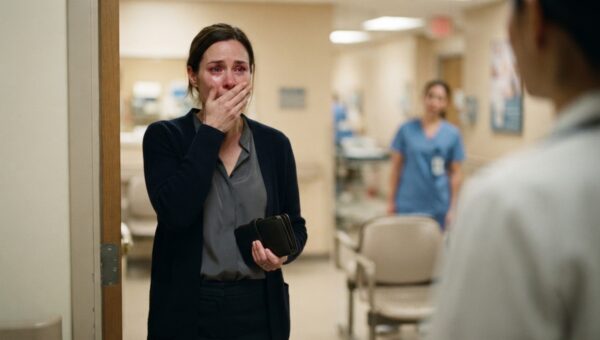
Nurse Clara found me there around two in the morning. She didn’t turn on the overhead lights, just walked over with a cup of crushed ice and set it on the sill.
She looked down through the glass too, her fingers resting lightly on the aluminum frame of my wheelchair.
“He’s out there every night, ma’am,” she said quietly. “Says the motel’s $80 and he’d rather be close.”
I pressed my hand flat to the cold glass. He’d told me he was going home so I wouldn’t worry about the distance or the gas, but the town was thirty-five miles away, and he had been sleeping in a nine-year-old pickup truck with a leaky door seal while I complained about the firmness of the hospital mattress.
The rest of that night didn’t have any dramatic lightning or grand epiphanies. It was just me and the hum of the ice machine down the hall and the realization that my husband was seventy-four years old and freezing his joints off in a parking lot because we didn’t have enough money for an eighty-dollar-a-night Super 8 off the interstate.
We had lived on a fixed income for nine years since the plant closed down. Every dollar was counted twice, written down in a black ledger by the toaster in the kitchen. When the surgical deductible came in the mail before I even woke up from the operating table, it had two zeros on the end that made my breath catch.
I remembered Emory sitting at the kitchen table with his reading glasses down on his nose, staring at that bill for twenty minutes without saying a word. Then he had looked up and told me not to fret about it, that we had reserves for things like this.
Those reserves were supposed to be Chloe’s college money. We had tucked away fifty dollars from every paycheck since she was born, keeping it in a separate savings account at the credit union. Emory wouldn’t touch a penny of it for himself, not for his bad teeth, not for new boots, and certainly not for an eighty-dollar motel room near the medical center.
By dawn, my shoulders were tight and my teeth felt gritty. I didn’t wait for the morning nurse to help me with my slippers. I grabbed the metal walker from the corner of the room, my left hip pulling with a sharp, hot sting, and made my way down the linoleum hallway toward the elevators before the sun had even cleared the brick wall of the laundry annex.
The elevator took forever, its little red floor numbers dragging downward like drops of heavy syrup. When the doors slid open to the ground floor, the smell of floor wax and stale coffee hit me all at once.
The morning air outside was damp and smelled like frozen weeds. The frost was still thick on the grass near the dumpster, and my flannel robe billowed out around my knees as I pushed the walker across the white lines of the parking spaces.
The Ford looked smaller in the daylight, its rear quarter panel dented from where Emory had backed into the cedar fence post back in November. I reached the driver’s side door and banged my knuckles against the cold glass.
The hunting coat shifted inside. Emory’s face appeared behind the frosted window, blinking hard against the morning glare, his beard stubble gray and thick on his jaw. He looked ten years older than he had at four o’clock yesterday afternoon.
He pushed the door open with a dry screech of the hinges. “What are you doing down here, Martha? You shouldn’t be out in this damp without your heavy coat.”
I didn’t answer him right away. I looked down at the floorboard of the truck, where a rolled-up flannel shirt served as a pillow and two empty Styrofoam coffee cups sat wedged between the seat and the handbrake.
“Eighty dollars,” I said, and my voice cracked like dry pine. “You stayed out here in this rust bucket for six weeks to save eighty dollars a day?”
Emory rubbed his hands over his face, his skin red from the cold. ” motel’s a rip-off, Martha. You know that. They charge thirty dollars just to park a vehicle overnight downtown. That money’s for Chloe. You said it yourself before you went under the knife.”
“Chloe doesn’t need us freezing to death in a truck, Emory,” I said, and I felt the first hot tear run down my cheek, catching in the corner of my mouth. “Fifty-one years and you still think you have to carry every load by yourself.”
He looked down at his steering wheel, his fingers tracing the split in the plastic grip where the sun had baked it back in ninety-four. “I couldn’t leave you across town by yourself. Not with how pale you were looking after that second round of stitches.”
“Then you should have told me,” I whispered. “We could have shared the blankets.”
He looked up then, and the stubbornness in his eyes just sort of crumpled, leaving behind the tired old man I had married in the basement of the Methodist church when we were barely twenty. He reached out and caught my hand, his skin rough like sandpaper against my knuckles.
“Get in the truck, Martha. It’s freezing out here,” he said softly, even though we were both standing in the open air.
“No,” I told him, tightening my grip on the aluminum rails of the walker. “You’re coming inside. Clara says there’s an extra recliner in the sunroom they don’t use, and I’ve already decided I’m not letting you sleep another night among the oil cans.”
He tried to argue, opening his mouth to mention the parking rules and the hospital staff, but he saw the look on my face and closed it again. A slow, tired kind of smile touched the corners of his mouth, the one I had known since we were kids sharing a bottle of pop behind the grain elevator.
“Well,” he muttered, grabbing his thermos from the dash. “I suppose they got coffee up there that doesn’t taste like swamp water.”
We walked back across that asphalt together, him carrying my sweater and me pushing the metal frame one unsteady click at a time, neither of us moving very fast, but both of us heading toward the same warm door.
The last three days of rehab passed differently. Emory didn’t go back to the truck at four o’clock; he stayed right in that vinyl chair until the night shift brought around the evening broth, and Clara brought up a folded army blanket from the basement supply closet without asking anybody’s permission.
When the discharge day finally came, we didn’t talk about the bills or the savings account on the ride home down Route 9. We just sat side by side in the cab of that old Ford, the heater rattling against our shins, watching the bare fence posts blur past in the gray afternoon light.
Back home, the house was cold and smelled like dust and old newspapers, but the kitchen counter was clean. Emory set my small suitcase by the radiator and immediately started the burner for the kettle.
By evening, we had placed two pairs of worn walking shoes side by side beneath the front window, bathed in the pale light of the yard lamp as Emory poured two cups of tea from a single stainless steel thermos.