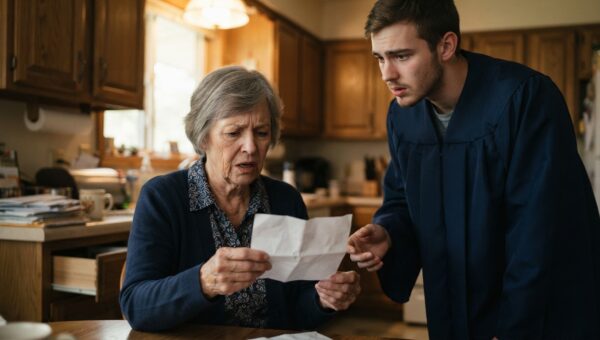
The breaker box for that place on Mill Street was located out in the back porch behind a stack of empty peach baskets and a folded canvas cot. I flipped the toggle marked back bedroom and the house went quiet except for the hum of the refrigerator in the kitchen. Martha had set a ceramic mug of instant coffee on the laminate table while I was unloading my canvas bag from the truck bed.
It had a spoon sticking straight up out of the brown water and a little skin forming on top because I took my time getting the gear together.
“He never used that room much after the roof leaked back in eighty-four,” Martha said from the doorway, wiping her hands on a small hand towel she kept tucked into her apron band. “Julian liked his privacy. Even when he was working down at the county courthouse, he kept his door locked with a heavy brass deadbolt he screwed in himself.”
I told her I could swap out the receptacle in twenty minutes flat and be out of her hair before the noon whistle blew down at the rail yards. A dead outlet is usually nothing more than a loose screw or an old copper wire that snapped off behind the box after forty winters of expansion and contraction. You take the brass-framed cover plate off, back out the two long machine screws, and pull the plastic body forward to check the lines with your neon tester.
Only this box didn’t give me any resistance when I yanked it.
The whole plastic assembly slid out of the wall like a drawer pulled from a bureau. There was no armored cable coming through the back knockout, no yellow Romex tucked up between the studs, and no copper tail at all. Both brass terminal screws were entirely bare, shiny as new dimes, and screwed into plastic that had never seen a foot of live wire since the day the timber was cut.
“That’s funny,” I said, mostly to myself, setting the plastic faceplate down on the floral rug.
“What is it, Arthur?” Martha asked, her voice dropping down an octave as she stepped closer to the baseboard.
“Nothing yet,” I lied, because I didn’t want to tell an old woman her brother had put up fake electrical work just to trick whoever looked at the wall.
The hole left behind by the box wasn’t a standard single-gang pocket backed by wood.
I shoved my little four-cell flashlight into the opening and clicked the thumb switch. The beam cut through twenty-six years of gray insulation dust and hit bare brick that sat six inches behind the lath. It was an old chimney chase, sealed off when they converted the coal furnace to gas back in the fifties, but someone had knocked a square hole through the masonry big enough to slide a man’s forearm into.
I reached two fingers in past the sharp edge of the lath and felt cold metal right away. It didn’t rattle. It had some real weight to it, the kind of heavy-gauge steel that doesn’t bend when you drop it on concrete.
“Arthur?” she said again, and this time she sounded smaller.
I pulled it out into the daylight coming through the lace curtains. It was a black metal cash box with a brass latch that had green corrosion blooming around the keyhole like moss on a north-facing shingle.
I set it down right there on the rug between my boots, and the wool flattened out under the corners like it was carrying an anvil.
“Julian had a lot of keys,” Martha murmured, staring down at the lid. “He kept a whole ring of ’em on his belt when he went out to tend the garden. Always said they were for the tool shed and the fruit cellar.”
I didn’t touch the latch right away. I looked up at Martha’s face, and her mouth was slightly open, just enough for me to see the small gold filling on her left bicuspid. She looked less like a homeowner now and more like someone standing by the side of the road waiting for a tow truck that wasn’t ever going to show up.
“You want me to take this out to my truck and pry it open with a cold chisel?” I asked.
“No,” she said, and her voice didn’t shake even a little bit. “You open it right here. In this room.”
I used the flathead screwdriver from my back pocket, wedging the steel tip into the seam beside the brass latch and giving it a sharp tap with the palm of my hand. The lock didn’t put up much of a fight after forty years of damp basement air. The tongue snapped off inside with a dry ping that sounded like a pocket watch hitting a hardwood floor.
Inside the box were three thick leather-bound bank ledgers with the years gold-stamped on the spines in black ink: 1968, 1974, 1982. On top of those sat a neat stack of folded warranty deeds and quitclaim papers, all of them yellowed around the edges where the rubber bands had melted into the paper and turned into black tar.
Martha didn’t reach for them. She kept her hands folded together in front of her apron like she was standing in church waiting for the collection plate to pass.
“Take one out,” she whispered.
I picked up the top deed, the one with the blue county clerk seal stamped in the lower right corner, and unfolded it against my knee. The address was two blocks over on Pine Street, a two-story white house with a wraparound porch that belonged to the Miller family until the middle seventies when old man Miller went into the county home after his stroke.
“Read the name,” Martha said.
“It says Julian Vance,” I told her, my voice sounding flat in the small room. “Purchased for the sum of one dollar and other valuable considerations.”
“Arthur, the Millers didn’t sell that house,” she said, and for the first time her hands unclasped and she reached out to touch the corner of the blue paper. “They lived there until the girls were grown. Their boy Bobby went to school with me. Julian was just the deputy county recorder back then. He did their paperwork when the old man died so they wouldn’t have to pay a lawyer.”
I turned the page of the 1974 ledger. Julian’s handwriting was neat, sharp-angled, and small, the kind of writing you get from a man who spent forty years filling out tax rolls without ever making a smudge. Down the margin of page twelve, he had listed names and dates next to figures that didn’t look like grocery money. $4,200 against the acreage by the creek. $6,500 against the timber lot behind the creamery.
“He had the seal,” Martha said softly, as if she were figuring out a puzzle she should have solved forty years ago. “He kept the heavy iron press in the bottom drawer of his walnut desk in the parlor. He told me it was just for township records. He said the state required him to keep duplicates at home in case the courthouse basement flooded.”
I looked from the ledgers up to the empty hole in the wall where the fake outlet hung by its plaster dust. Julian had built that little vault himself, probably while Martha was down at the market buying flour, sliding the plastic box into the brickwork and then screwing the dead face back over the hole so nobody would ever look twice at a five-minute electrical fix.
“What do you want to do with these, Martha?” I asked.
She reached down and picked up the heavy steel box by its wire handle, her knuckles white under the thin skin of her hands. She didn’t look at the ledgers again. She walked over to the small window that looked out over the tomato stakes in the back garden, where the vines were heavy with green fruit that would never get red before the first October frost.
“We need to call Sheriff Miller,” she said, her voice steady and hard as a paving stone. “That’s Bobby’s house now. Or it should have been.”
We sat in the kitchen for twenty minutes waiting for the cruiser to pull up the gravel drive. I didn’t pack my tools. My drill was still sitting on the floor by the porch door with the battery charger blinking its green light against the baseboard, but I didn’t care about getting home for supper anymore.
When Sheriff Miller came up the back steps and knocked on the screen, Martha was sitting at the laminate table with the black box between her elbows and the three ledgers spread out like church hymnals.
“Morning, Martha,” the sheriff said, pulling his straw hat off as he stepped through the door. “Artie called and said you had something down here that belonged in the office.”
“Julian left me the house, Ray,” Martha said, looking straight up into the man’s tired gray eyes. “And I think he left me about twenty other houses that weren’t his to give.”
The sheriff looked down at the open page of the 1968 ledger, right where Julian had written out the transfer of the Miller family farm in that sharp, careful hand of his. Nobody said anything for a second, and honestly that felt worse than the silence in the back bedroom.
By three o’clock that afternoon, two deputies had the rest of the drywall cut away from the old chimney chase, leaving the rough red brick exposed all the way down to the baseboard. The house looked different with that hole opened up, like a tooth pulled out from the front of a smile so you could see the dark behind it.
I helped them load the ledgers into a cardboard carton marked with grocery store stamps while Martha stood on the front porch with her apron still tied around her waist. She watched the cruiser back down the drive and turn toward the highway without waving goodbye to the dust it kicked up against the mailbox.
When I carried my canvas bag out to the truck bed, she was still standing there by the screen door, looking down at the bare wooden studs where the back bedroom wall used to be.
“You don’t owe me for the outlet, Artie,” she said without turning around when I started the engine.
“Don’t worry about the outlet, Martha,” I said, dropping the shift into first gear and pulling away down the gravel road while the sun went down behind the Kingsport water tower.