The tiny blue alarm clock on my nightstand had ticked away four years of my life at 6:14 every single morning while I figured out how to keep my head above water. My room was little more than a converted linen closet at the end of the narrow upstairs hallway in our house just outside Amarillo, barely big enough for a twin mattress, a battered dresser I painted myself, and a small metal desk where I balanced my ledger.
I kept my head down, worked my shifts at the clinic, paid my sixty dollars every Monday without fail, and tried my best to stay out from underfoot.
For years, that sixty dollars felt fair enough. Dad had always been quiet about the arrangement, mostly because he let Mom run the household ledger like a drill sergeant with a grudge. I bought my own groceries, kept my own shelf in the pantry, washed my own clothes, and spent most of my waking hours either working or studying at the public library just to avoid the heavy air in the living room. Whenever I offered to help with heavier bills, Mom waved her hand and told me to save my pennies for a rainy day.
The trouble started the Tuesday afternoon I finally signed the paperwork for the permanent administrative coordinator position at the medical center. It came with a real salary, decent benefits, and a wage bump that actually let me breathe for the first time since community college.
I came home that evening carrying a box of bakery donuts, feeling lighter than I had in a decade, and told them the good news right there over the kitchen linoleum while Dad drank his black coffee from a chipped mug.
Mom didn’t smile. She just wiped the counter with a yellow sponge, rinsed it out in the basin, and looked me dead in the eye. “Well, it’s about time you started pulling your real weight around here,” she said, her voice flat as an old board. I figured she was just being her usual prickly self, so I let it slide and went upstairs to my little room to celebrate quietly with a phone call to my best friend.
Seven days later, right in the middle of a busy morning rush at the front desk, my phone buzzed against the wooden reception counter with a notification that made my stomach drop.
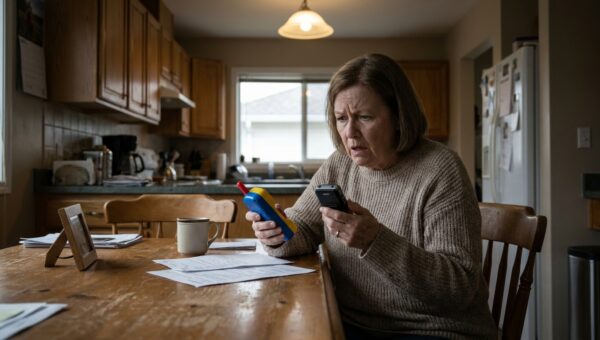
I picked it up during a lull, my thumb swiping across the screen to reveal a message from Mom that changed the entire landscape of my life. “Rent starts again,” the text read, followed immediately by the second line. “$150 a week starting next Monday.”
I stared at the glowing letters until the white background blurred behind my tears. One hundred and fifty dollars a week meant six hundred dollars a month, not counting my own groceries, my own car insurance, my own phone bill, and the gas I burned getting back and forth across town. It was more than double what I had been paying, demanded instantly upon hearing that I had finally managed to secure a stable income and a modest raise.
I didn’t answer right away because the sheer audacity of it jammed my brain up completely, so I spent my lunch break sitting in my parked Honda Civic crunching numbers on the back of an old deposit slip.
A clean, quiet studio apartment down on 4th Street went for seven hundred a month total, utilities included, and I wouldn’t have to walk on eggshells every time I stepped out of my bedroom. Even splitting a larger two-bedroom place with a coworker would cost less than what my own mother was suddenly trying to squeeze out of me under her roof.
The realization hit me hard and fast, washing away years of quiet guilt and obligation in one cold wave. Mom didn’t see my new job as an achievement or a step toward adulthood; she saw it as an expanded resource pool, a little extra cash for her to control while keeping me right where she wanted me. The sixty dollars a week had never been about actual upkeep costs, but about keeping a leash on me so I stayed dependent and small.
By 4:15 in the afternoon, my fingers were practically shaking as I pulled up the message thread on my phone again, staring at those numbers like they were printed in fire. I didn’t call her to argue or negotiate because I knew how those arguments went, ending always with me apologizing for being ungrateful and handing over whatever they asked for to keep the peace. This time, I didn’t want the peace anymore, because that kind of peace cost too much.
So I typed out five words that felt like striking a match in a dry barn, hit send before I could lose my nerve, and watched the little read receipt pop up instantly. “Then I’ll move out instead.”
The silence that followed was so loud you could hear the refrigerator compressor humming from three rooms away when I finally walked through the front door that evening. Mom was sitting at the kitchen table with her ledger open in front of her, her ballpoint pen held tightly in her fingers like a weapon. Dad wasn’t even in the room, hiding out in the garage where he always went when a storm was brewing between the two of us.
Nobody said anything for a second, and honestly that felt worse than shouting, the air thick with the kind of stubborn pride that had kept our household locked in quiet misery for as long as I could remember. Mom finally looked up from her paperwork, her face tight and pinched with absolute disbelief that I had dared to talk back to her financial decree. “You think you can just pack up and leave over a few dollars?” she asked, her voice dropping into that low, dangerous register she used when she wanted to make you feel two inches tall.
I didn’t yell, and I didn’t look down at my shoes the way I used to when I was sixteen and terrified of making her mad. “It’s not about the dollars, Mom,” I said, my voice steadier than my hands. “It’s about the fact that the second I start doing better, you treat me like a bank instead of your kid.”
She slammed her pen down on the table so hard the ink cartridge skipped across the page, leaving a jagged black smear right across the column of household expenses. “After everything we’ve done for you, keeping you under this roof, giving you a place to land when you couldn’t find your own footing, this is how you pay us back?” she snapped, the familiar guilt trip rolling out like a well-rehearsed script.
That was the exact moment the last bit of fog cleared from my head, leaving behind a sharp, cold determination that made my chest ache. “You didn’t give me a place to land,” I told her quietly, the words slipping out before I could stop them. “You built a cage and charged me rent to stay in it.”
She didn’t have an answer for that, her mouth opening and closing once before she turned her face away and stared out the kitchen window at the darkening backyard. Dad must have heard us through the wall because the garage door handle jiggled, but he didn’t come in, choosing his usual cowardice over standing up for anything resembling fairness. I walked right past the kitchen table, went straight up the narrow stairs to my little room, and closed the door behind me with a soft, final click.
The next three days were a blur of cardboard boxes, packing tape, and heavy, suffocating silence that hung over the hallway like wet wool. I spent my evenings off driving down to the studio apartment on 4th Street, signing the lease with the elderly landlord who didn’t ask any questions and just handed over a shiny brass key on a heavy metal ring. Each time I brought another box down the stairs and loaded it into the back of my Honda, Mom stayed in the living room with the television turned down low, pretending I didn’t exist while Dad watched from the armchair with a look of helpless, miserable resignation.
By Saturday morning, the tiny upstairs room was completely empty, the bare mattress stripped down to its plastic cover and the walls stripped of every poster and photograph I had pinned up over the years. I stood in the middle of the empty floorboards for one last minute, noticing the faint rectangle of lighter blue paint where my desk had blocked the sun for four long years. My throat felt tight, not because I was going to miss the place, but because I finally understood how much of my life I had spent trying to appease people who would never be satisfied.
I carried the very last cardboard box down the stairs, setting it down by the front door while Mom sat rigidly on the sofa without turning her head to watch me go. I didn’t say goodbye, and she didn’t offer one, the distance between us wider than any highway in Texas. I opened the front door, the morning sunlight spilling across the porch and warming my face with a crisp, clean promise of something entirely my own.
I loaded the final box into the trunk, slammed the lid shut with a solid, satisfying thud, and pulled out of the gravel driveway without looking in the rearview mirror once. Ten minutes later, I unlocked the heavy wooden door of my new studio apartment, stepping inside onto clean floors where no one was waiting to hand me a bill for breathing their air. I set a single cardboard box down in the middle of the quiet room, watching the morning sun stream through the uncurtained window onto a street I could finally call my own.