The green glow of the alarm clock on my nightstand read 5:45 in the morning when the phone on the wooden floor buzzed against the baseboard. I remember that exact timestamp because I had just finished ironing my work shirt for the first day of my new permanent position at the county records office. For three years, since my dad’s knee surgery put him out of the grain elevator, I had been paying my parents sixty dollars every single Friday.
It was not a huge amount, but on an hourly wage with no benefits, sixty dollars took a serious bite out of my check. I bought my own groceries, I scrubbed the bathroom down every Sunday night, and I kept my mouth shut whenever Elena, my mother, complained about the electric bill going up because I stayed up late studying for civil service exams. I figured I was helping keep the lights on. I figured that was what family did when things got tight.
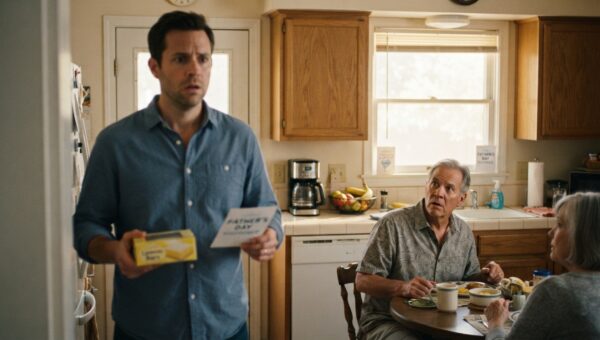
The text message arrived at 6:12 a.m. while I was pouring my second cup of instant coffee in the kitchen. My mother was already sitting at the oilcloth table with her crossword puzzle book and a black mug, her reading glasses dangling from one ear by a beaded cord. She did not look up when I walked in, which was her usual morning routine, but my phone let out that sharp double chime that meant a direct message.
I glanced down at the screen while the kettle hissed on the burner. The words were short and typed without any punctuation at the end, which always meant she had made up her mind about something before the sun even came up. Rent starts again… one hundred and fifty dollars a week starting next Friday. I stopped pouring. The coffee missed the rim of my mug for a second and pooled dark and hot across the white laminate counter.
I set the kettle down with a dull clank. One hundred and fifty dollars a week meant six hundred dollars a month, plus my own groceries, plus my car insurance, plus the gas to drive twenty-four miles each way to the courthouse. That was more than a quarter of my new take-home pay for a tiny upstairs bedroom with a slanted ceiling and a drafty window that rattled whenever a gravel truck went down 4th Street.
I looked across the table at Elena. Her pencil was moving steadily across the puzzle grid, scratching out a four-letter word for a tropical fruit. She looked entirely too calm for someone who had just dropped a financial anchor around my neck the very morning I finally got my foot in the door of a real career.
“Did you mean to send this to me?” I asked, holding the phone out toward her so the screen was right in her line of sight.
Elena didn’t look up right away. She finished writing an ‘A’ in her booklet, licked the tip of her wooden pencil, and finally raised her chin just enough to peer over the top of her wire-rimmed glasses. “You got the permanent job yesterday, didn’t you? Dale saw your supervisor shaking your hand in the parking lot when he dropped off the tailgate parts. You’re making real money now, Clara.
Sixty dollars was fine when you were just doing data entry by the hour. Things cost more now. The property tax assessment came in yesterday morning and it went up another two hundred dollars for the half-year.”
“My salary went up, Mom, but I’m not running a charity for the county tax board,” I said, and my voice sounded sharper than I intended. “Sixty dollars was what we agreed on when I was making minimum wage. One hundred and fifty is more than a room in a boarding house.”
Dale, my father, walked into the kitchen right then carrying a bundle of kindling under his arm. He dropped it into the woodbox by the stove with a loud clatter that made the cast-iron skillets rattle on their hooks. He looked between the two of us, saw the phone in my hand, and immediately found something fascinating to look at on the linoleum floor near the back door. He had a way of shrinking three inches whenever an argument started in the kitchen, his shoulders rounding under his plaid flannel shirt like he could make himself invisible if he stayed very still. He never interfered with Elena’s rulings. If she said the sky was green, Dale would squint at the clouds and talk about how the light was playing tricks on the horizon.
“Your mother handles the household ledger,” Dale muttered, reaching for the handle of the coffee pot without looking at either of us. “You know how things are getting with the heat.”
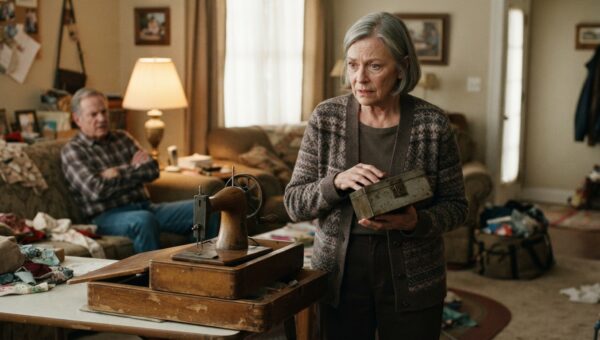
I stood there by the counter with the coffee dripping slowly off the edge onto my sneaker. I didn’t say anything else to them. I went back upstairs to my little room, shut the thin hollow-core door behind me, and sat down on the edge of the twin mattress that had been mine since I was fourteen years old. The wallpaper had faded blue cornflowers on it that my grandmother had pasted up back when she could still climb an aluminum ladder. I looked at the water stain near the closet door shaped vaguely like a boot. For years I had treated this room like a temporary waiting area, a place where I was just pausing before my real life started. Now I realized they didn’t see a waiting area. They saw a permanent fixture on their balance sheet.
I pulled out my phone and opened the local rental app I had downloaded out of idle curiosity a month ago when I first applied for the county job. Within twenty minutes of scrolling through listings, I found a clean, sunlit studio apartment over a former dry cleaner’s on Main Street. The rent was six hundred and fifty dollars a month total, utilities included, with a small kitchenette and a window that actually stayed shut when the wind blew from the north. It was only forty dollars more a month than what Elena was suddenly demanding for her drafty spare bedroom, and nobody was going to charge me rent for doing their dishes or mowing the back forty. I did the math twice on the back of a deposit slip. The numbers were clear, cold, and entirely in my favor.
I typed out five words and hit send before I could lose my nerve. Then I’ll move out instead.
The silence that followed downstairs lasted for nearly an hour. No footsteps on the stairs, no sharp knock on the door, no voice calling up to ask if I had lost my mind. Around seven o’clock, I heard the back screen door slam as Dale went out to the garage to tinker with his lawnmower parts, which was his favorite way of hiding from anything harder than a dead battery. I didn’t wait for them to come up and negotiate. I spent my lunch break at the courthouse walking three blocks down to Main Street, meeting a retired schoolteacher named Mrs. Gable who smelled faintly of peppermint and floor wax, and signing my name to a six-month lease with a deposit that cleaned out three-quarters of my meager savings account. It felt terrifying and completely necessary, like cutting off a cast that had been on so long the skin underneath was raw and tender to the touch.
The next twelve days passed in a strange, thick fog of avoidance. Elena didn’t mention the text message, and I didn’t bring it up, but the air in the house had turned brittle and cold, like thin ice over a pond in late November. She made pot roast on Thursday night, and nobody spoke through the entire meal except to ask for the salt. Dale cleared his throat three times during dessert, looking like he wanted to say something about the weather or the high school basketball team, but Elena gave him one sharp look across the gravy boat and he went back to chewing his carrots in silence. I spent my evenings boxing up my belongings in three brown liquor boxes I had begged off the stock boy at the grocery store down the road. Every book, every sweater, every framed photograph of my college graduation went into those boxes, and with every piece I packed, the house felt less and less like home and more like a boarding house where I had outstayed my welcome.
On the thirteenth day, the moving truck I rented, a dented red Ford with a squeaking fan belt, pulled up into the gravel driveway at precisely 2:00 in the afternoon. The sound of the engine idling outside the kitchen window brought Elena out onto the back porch instantly, her dish towel clutched in both hands like she was holding off an intruder. She stood by the screen door, her jaw set tight, watching me carry the first box of kitchenware down the wooden steps. Dale appeared behind her, wiping his grease-stained hands on a yellow shop rag, his forehead creased with genuine bewilderment. They genuinely had not believed I would pull the trigger. They thought the threat of leaving was just a child’s tantrum, something to be weathered until I came back around and accepted the new rate.
“You’re really doing this over a little adjustment?” Elena called out, her voice sharp enough to cut glass as I hoisted the box into the back of the truck. “Over eighty dollars a week? After everything we’ve done to keep a roof over your head while you figured out what you wanted to do with your life?”
I didn’t stop moving. I set the box down between the wheel wells and turned around to look at her from the tailgate. “It wasn’t eighty dollars, Mom. And it was never about the roof.”
She stepped off the porch then, walking right down the gravel path with her slippers crunching on the small stones, stopping just three feet from the bumper of the truck. The anger in her eyes was starting to give way to something else, something harder to watch: sheer, unadulterated panic as she calculated the loss of the guaranteed income and the unpaid evening labor that kept their household running smoothly. “Look,” she said, her voice dropping an octave into a tone she hadn’t used since I was twelve years old, softer now, almost bargaining. “Your father’s knee has been acting up with the damp weather. We can talk about the number. Maybe we keep it at eighty for the rest of the year. We didn’t mean to push you out over a ledger sheet, Clara.”
I looked past her shoulder at Dale standing by the screen door, looking smaller than he ever had, his hands still wiping that same dirty rag over and over again in a hopeless rhythm. I thought about all the years I had walked on eggshells in that kitchen, worried about setting off an argument or failing to meet some invisible standard of gratitude. I realized then that their love had always been pegged to my utility. As long as I was cheap, quiet, and handy, I had a place at their table. The moment I became inconvenient or asked for a boundary, the price went up.
“No, Mom,” I said quietly, climbing back down to the gravel and reaching for my second box. “Keep the room. I hear it’s getting expensive.”
She didn’t say anything else. She stood by the side of the truck while I loaded the last of my things, her arms crossed tightly over her chest against the crisp afternoon wind coming off the fields. Dale didn’t come down the steps at all. He just watched from the doorway like a man seeing a stranger pack up a car on the wrong street. I got into the cab of the Ford, turned the key until the starter caught with a familiar shudder, and shifted the gear into reverse. The gravel crunched under the tires as I backed out into the road, and I didn’t look in the rearview mirror once until I had cleared the top of the hill.
An hour later, the sun was dipping low behind the grain silos as I finished carrying the last box up the narrow wooden stairs of the building on Main Street. The studio apartment was small, just one large room with a strip of linoleum near the sink and a narrow window looking out over the brick facade of the hardware store across the street. The air smelled of old cedar and floor wax, clean and entirely my own. I set my keys down on the laminate counter near the hot plate, walked over to the heavy wooden door, and turned the deadbolt from the inside until the metal latch clicked home with a solid, final sound. For the first time in my life, the silence in the room didn’t feel like a punishment or an absence. I pulled out a folding chair, sat down by the window watching the streetlights flicker on one by one in the gathering dusk, and breathed out a long, slow breath that had been trapped in my chest for thirty years.