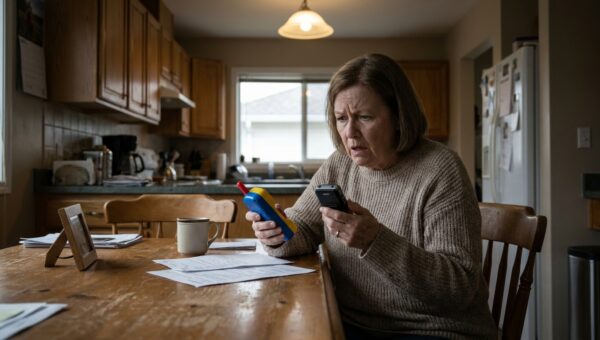
The last normal thing David said to me was that I bought the wrong brand of yellow mustard. He stood right there by the stove with the plastic bottle in his fist, shaking it like it was a live wire, and told me I did it on purpose just to wear him down. I remember staring at the white speck of grease on his gray sweatshirt sleeve and thinking that if I just wiped the counter one more time, the air in the kitchen would stop feeling so thick.
We had lived out here past the county line for six years, down a long dirt lane where the county trucks only dropped a load of loose stone twice a decade. Most days you could hear a car coming half a mile off because the tires would start singing against the sharp gray rocks before the headlights even hit the cottonwoods. David liked the isolation. He used to say it kept the world honest, but after the baby came and the truck payments started getting late, I figured out what the quiet was really for. It was for keeping things inside where nobody else could hear them rattle.
My ribs didn’t break all at once. It was a shove that sent me sideways into the corner of the laminate table, right where the chrome molding was already peeling off. There was a dry, snapping sound like a dry pine twig breaking under a boot, and then the breath just left my lungs all at once.
I remember sliding down the cabinet door until my shoulder blades hit the cold linoleum, staring at David’s work boots. He stood there for a second with his jaw working back and forth, breathing hard through his nose like a bull before it charges, and then he grabbed his jacket off the back of the chair.
When my husband cracked my ribs and walked out the door, my five-year-old son did not cry first.
He listened.
He listened to the truck tires spit gravel in the driveway. He listened to the front door slam hard enough to make the kitchen light flicker. He listened to the thin, wet sound of my breathing against the cold tile while my ribs screamed and the taste of copper sat heavy on my tongue.
Then Noah crawled beside me, pulled my phone from under the fallen chair, and held it with both hands like it was something sharper than a knife.
“This is what Grandpa is for,” he whispered.
His thumb found the name under the speed dial, right where my father had set it up three summers ago when David first took the spare keys to the truck away from me.
Noah didn’t hesitate. He pressed the screen against his small cheek and held it there until the ringing started through the tiny speaker.
I couldn’t talk. Every time I tried to draw enough air to form a word, my chest felt like it was full of broken glass. I just lay there on the kitchen floor with my forehead pressed against the toe of my sneaker, watching Noah’s little bare heels twitch back and forth against the baseboard.
“Grandpa?” Noah said into the glass. His voice didn’t shake once. “Mom’s on the floor.”
That was all he said. He didn’t cry. He didn’t scream. He just gave the address the way my father had taught him to do when we played the safety game on the front porch during the long afternoons when David was away at the yard.
I don’t remember much about the twenty minutes between that call and the sound of my father’s old blue sedan tearing down the lane.
Time gets real stretchy when you are trying very hard not to pass out on a kitchen floor. I remember Noah pulling the plaid dish towel off the stove handle and laying it gently across my knees because he said my shins looked cold. I remember the red light of the smoke detector blinking on and off in the hall, slow and stupid, like it didn’t know anything was wrong.
When the sedan door slammed outside, it didn’t sound like David’s truck. David slammed things to make a hole in the air, but my father stepped out with that heavy, flat-footed tread of a man who spent forty years putting cedar fence posts into hard ground.
The back door pushed open without knocking. My father didn’t call out. He just walked into the kitchen, and for a second the big man filled up the whole room, blocking the fluorescent light above the sink.
“Get your coat, Noah,” my father said, and his voice was so low and steady it made my throat ache.
Arthur didn’t panic. He had the kind of calm that comes from sixty years of dealing with livestock that won’t lead and weather that won’t turn. He knelt down beside me on the linoleum, his knees popping twice against the floorboards, and slid his thick, calloused hand under my neck without touching my ribs.
“Can you stand if I take the weight, honey?” he asked.
“My side,” I managed to get out, the words coming out small and flat.
“I know,” he said. “I see it.”
He didn’t ask what happened. He didn’t start shouting about David or making threats. He just scooped me up with a kind of careful strength that reminded me of when I was seven years old and had fallen out of the old apple tree behind the barn. He carried me right past the table where the mustard bottle was still sitting crooked on the burner and out into the cool night air.
Noah walked right behind us holding the spare set of house keys in his fist, his little sneakers crunching loud in the lane.
We didn’t go straight to the hospital. My father drove us out to the old gravel turnout by the river first, the one where the state used to store road salt before they moved the depot into town. He stopped the car under the dark shadow of the cottonwoods, turned off the headlights, and reached into the glove box for a crumpled pack of peppermints. He unwrapped one with his thumb and gave it to Noah, then reached over and touched my forehead with the back of his hand.
“He’s not coming back tonight,” my father said, looking straight through the windshield at the dark water. “And he’s not coming back tomorrow either, long as I have breath in my chest.”
“He took the spare title,” I said, my teeth starting to chatter from the shock settling into my bones.
“Let him take the paper,” my father answered. “Paper doesn’t keep you warm and it won’t help him pay the back taxes on that yard.”
By the time we got to the county hospital in town, the pain had turned into a hot, heavy band of iron around my chest that wouldn’t let me draw a full breath. The intake nurse looked at Noah sitting quietly in the plastic chair with his coloring book while Arthur filled out the clipboard with his slow, deliberate handwriting. The questions were the same ones they always ask in places like that, but my father stayed right beside the tall metal desk and answered them when I couldn’t get the air past my teeth.
“Domestic,” Arthur told the woman behind the desk, and he didn’t lower his voice even though three people were sitting twenty feet away by the vending machines. “My daughter fell against a table because her husband don’t know how to act like a grown man.”
The doctor on duty was a young woman with silver wire-rimmed glasses who smelled faintly of spearmint gum and rubbing alcohol. She didn’t make me look her in the eye while she felt along my side with cold fingers.
“You’ve got two clean breaks on the seventh and eighth ribs,” she said, looking down at the gray light of the X-ray screen mounted on the wall. “And enough bruising underneath to keep you flat on your back for three weeks minimum. Did he use a closed fist?”
“No,” I said, staring at the little paper rolls on the examination table. “He shoved me.”
“A shove,” she repeated, and she wrote something down with a yellow wooden pencil that made a sharp scratching sound. “I’m required to call the sheriff’s office for any fracture resulting from a domestic altercation. That’s not optional.”
“Call whoever you need to,” my father said from the corner of the room where he was cleaning his fingernails with a small pocketknife. “We’ve got nothing to hide.”
We didn’t get back to the house until nearly three in the morning. The lane was as dark as a coal mine, except for the high beams of David’s truck parked right across the middle of the drive so nobody could get up to the barn without scraping the fenders. He was sitting on the front porch steps with a can of beer between his knees, waiting for us.
He stood up when my father’s sedan came rolling up the grade, his shoulders hunched inside that same gray sweatshirt. I could see the white flash of his teeth in the dark as he took two steps toward the headlights, ready to start yelling before the dust even settled.
Arthur didn’t wait for the engine to die. He pushed his door open with a heavy thud, stepped out onto the gravel, and didn’t say a single word until he was standing six feet from the bottom step.
“You’re trespassing, Arthur,” David said, his voice greasy and loud in the quiet yard. “This is my place now. She signed the papers last winter.”
“She signed a piece of paper you printed out at the library,” my father said, and he walked right up the steps until David had to back up a half-step to keep from hitting him. “And you’re going to get your tools out of the shed by sunrise or I’ll have the county haul them off for scrap.”
“She started it,” David muttered, his chin coming down into his chest the way it always did when he realized the person standing across from him wasn’t going to back down. “She runs her mouth and then she plays the victim. Look at her. She’s fine.”
I stayed sitting in the passenger seat with the window rolled down two inches so the night air could cool my face. Noah was asleep in the back with his head pillowed on his rolled-up sweater, his breathing coming slow and deep.
“Get in the truck, David,” my father said.
“I live here,” David snarled, though his voice lacked that sharp, cracking edge it had when he was standing over me in the kitchen.
“You used to live here,” Arthur corrected him, and he didn’t raise his voice an inch. “Now you live wherever your pickup happens to be pointing when you turn the key.”
About that time, the low amber lights of the sheriff’s cruiser came creeping up the lane without the siren going, throwing long, wobbly shadows across the old cedar fence posts. Deputy Vance stepped out before the car even stopped moving, his hand resting casually on the black leather strap of his holster. He looked at David, then at my father, and then down the lane toward my side of the car.
“Everything peaceful here, Arthur?” Vance asked, shining his heavy metal flashlight down at the gravel.
“Just clearing out some garbage before the morning dew sets in,” my father said.
It took forty minutes. David didn’t yell anymore after the deputy walked up the steps and asked him for his driver’s license. He went inside and packed two plastic milk crates full of his wrenches and his extra boots while my father stood by the screen door with his arms crossed over his chest like a church deacon waiting for latecomers to take their seats.
When David came out the last time, carrying his heavy tool bag by the canvas straps, he didn’t look at me once. He climbed up into the cab of his truck, ground the starter twice because the battery was weak in the cold air, and backed down the lane with his tires spitting gravel against the side of the ditch until the red tail-lights disappeared behind the line of wild plum bushes.
The house stayed quiet for a long time after they left. My father helped me inside, set a glass of water on the nightstand, and told me he’d sleep out on the porch glider just in case the wind came up.
By the next afternoon, the sun had burned the last of the mist off the fields, and the only sound coming from outside was the steady, dry clicking of the cicadas in the high grass.
Noah sat by himself on the edge of the front porch steps where David had been sitting the night before. He didn’t have his toys or his picture books. He had a handful of grey stones he’d picked out of the tire ruts in the lane, smooth little river pebbles that the road grader had pushed up during the spring thaw.
I stood just inside the screen door with my hand pressed flat against the wooden frame to keep my ribs from shifting, watching him through the rusted wire mesh.
He took a small grey pebble between his thumb and finger, pulled his arm back, and tossed it out into the middle of the driveway. It made a sharp, dry *tink* against another stone, and then rolled until it stopped in the dust. He waited a second, listening to the afternoon birds singing down by the creek, then reached down into the grass for another one.