The smell of pot roast and heavy gravy always hung around my uncle’s house on Sundays, thick enough to coat the back of your throat before you even took your coat off. That house sat on a quiet corner in Kingston, right where the old brick streets started turning into gravel lanes running down toward the river. It was a good house once.
Back when my aunt was still alive, the place smelled like lemon polish and boiled coffee instead of whatever cheap cleaner Melissa had started using to wipe down the countertops.
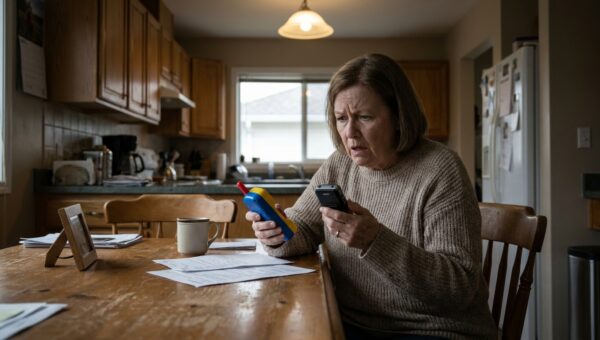
Grandpa stopped driving back in November when his eyesight started giving him trouble on the evening runs. At first nobody thought much of it because he lived right down the block from the pharmacy and the small community bank where he had kept his checking account since the Carter administration. Then Melissa stepped in. She was married to my cousin Todd, though nobody ever quite figured out what she saw in him besides an excuse to insert herself into everybody else’s business. She made it her full-time job to take Grandpa to his appointments, his grocery runs, and most importantly, the bank.
At first it looked like family kindness. Melissa would pick him up every Tuesday morning at 9:00 sharp, her purse slung over her shoulder like she was heading into a corporate board meeting instead of a small-town credit union.
But within two months, every family conversation about Grandpa’s finances started going through her. She was the one who told my mother which utility bills had cleared. She was the one who announced when the property taxes had been paid. If anyone asked Grandpa directly about how he was managing his accounts since he gave up the Buick, Melissa would jump in before he could even clear his throat.
She would pat his hand right there on the table and smile that thin, tight smile she always used when she was lying. “You know how Grandpa gets with numbers now,” she would say, her voice dripping with artificial sweetness. “He just gets so mixed up trying to balance the checkbook.”
After a while, everybody just let her answer for him. It was easier that way. People get tired of fighting over details when someone else is willing to do the driving and the paperwork.
Todd would just nod into his beer bottle and talk about how lucky we were to have Melissa handling things. I watched it happen week after week, and every time she spoke for him, Grandpa would just look down at his coffee cup and keep his mouth shut. I thought he was getting tired. I thought age was finally wearing him down the way it wears down everyone else in our family.
Then came the second Sunday in May. The spring air was warm enough that we had the back screen door propped open with an old brick, letting the damp river breeze drift into the dining room. Melissa had made a lemon meringue pie, though the crust was tough as cardboard and the filling tasted mostly of cornstarch. She cleared away the dinner plates with a great deal of noisy clattering, making sure everyone knew how hard she had been working in the kitchen.
Then she sat back down at the head of the table, right next to Grandpa, and pulled a small leather-bound notebook out from under her purse.
It had a brass clasp that she snapped open with a sharp little click. It was the sound of an audit.
“I figured the family deserved an update on where things stand,” Melissa said, smoothing down the blank page with her thumb like she was about to read the quarterly report for a Fortune 500 company.
My cousin Todd nodded immediately, scooping up the last bit of meringue on his fork. “Melissa’s the only one actually helping him,” he said, talking around a mouthful of crust. “The rest of us are too busy with work.”
Melissa sighed, a long, theatrical breath that seemed designed to make herself look like a martyr carrying the weight of the entire family on her shoulders. “At the rate he spends, there won’t be much left if somebody responsible doesn’t stay involved.”
Grandpa didn’t argue. He didn’t ask for the notebook. He didn’t even look embarrassed the way a normal person would when their finances are being discussed like they’re a child in a custody hearing. He just sat there quietly while Melissa explained his own bank balance to the table like he wasn’t even sitting three feet away from her. I sat across the table, watching the way his thumb kept rhythm against the edge of his dessert plate. I leaned in close enough that my shoulder brushed his flannel shirt.
“You don’t have to sit through any of this,” I whispered, my voice low enough that only he could catch it. “Say the word and we can go sit out on the porch.”
Grandpa just smiled. It wasn’t his usual tired smile either. It was the slow, deliberate grin he used to get back when he ran the lumber yard and some smart-aleck supplier tried to short-weight a delivery of pine boards. He reached down, picked up a dry biscuit left over from dinner, and started breaking it apart piece by piece, dropping the crumbs into a neat little circle on his napkin.
Melissa didn’t notice. She was too busy flipping to page three of her little book. “Account ending in 4102,” she announced, clearing her throat. “There was an unexplained withdrawal of $1,400 on the third of last month. Grandpa couldn’t remember what he did with it. I had to spend three hours on the phone with customer service sorting it out.”
I felt the blood start to hum in my ears. I opened my mouth to tell her to drop it, but Grandpa raised one finger without even looking up from his biscuit crumbs. The movement was so calm, so completely devoid of panic, that the whole table went quiet. Even Todd stopped chewing.
Grandpa folded his cloth napkin very deliberately, smoothing the creases with his palm before placing it down beside his plate. He didn’t raise his voice. He didn’t lean forward to look at Melissa’s ledger. He just turned his head slowly and looked right into her eyes.
“I didn’t forget that fourteen hundred dollars, Melissa,” Grandpa said, his voice as dry and steady as winter oak. “And neither did Mr. Henderson down at the branch.”
Melissa’s smile flickered for a fraction of a second, the corners of her mouth twitching before she forced the performance back onto her face. “Now, Grandpa, we talked about this. Your memory just isn’t what it used to be with the bank runs, “
“Mr. Henderson is forty-four years old,” Grandpa interrupted, his tone not rising a single decibel. “He’s lived down the road from us since he was ten. His father worked the mill with my brother. When I stopped driving back in November, the very first thing I did was walk down there with Mr. Henderson and set up a secondary notification flag on every single account I hold.”
The room felt like it had dropped twenty degrees. Todd dropped his fork onto his plate with a sharp clatter that made the water glasses ring.
“Grandpa, you’re getting confused,” Melissa said, her voice climbing half an octave higher than normal, the sweetness entirely gone now. “You don’t need to worry about bank flags. That’s why I’m keeping the ledger.”
“You’re keeping a ledger all right,” Grandpa said. He reached inside the breast pocket of his wool vest and pulled out a heavy manila folder, thick with official bank letterhead and stapled receipt slips. He didn’t slam it down. He just laid it flat on the table, right over the corner of Melissa’s little leather notebook. “You’re keeping track of every time you used my debit card at the gas station mini-mart for groceries that never made it into this house. You’re keeping track of those wire transfers you initiated from the ATM behind the diner using withdrawal slips I never signed.”
Melissa went completely rigid. All the color drained out of her face until she looked like she had been carved out of skim milk. “That’s, that’s a lie. You gave me those permissions. You said I could manage the household incidentals.”
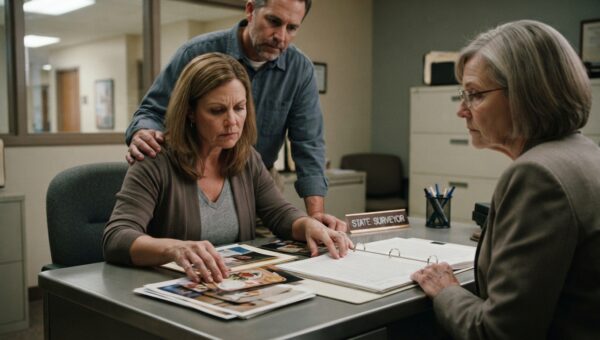
“I never signed a single authorization form for your personal account,” Grandpa said quietly. He opened the manila folder just enough to show the blue ink of his signature compared against the shaky, forged scrawl on the bottom of a withdrawal slip dated three weeks ago. “Mr. Henderson pulled the security camera stills from the drive-thru window on April twelfth. Shows you sitting in the driver’s seat of my Buick while I was sitting at home eating toast, signing my name to a slip for nine hundred dollars that went straight into your credit union balance.”
Todd stared at his wife, his mouth slightly open. “Melissa? What’s he talking about?”
“He’s confused!” Melissa shrieked, finally dropping the calm aunt routine as she slammed her leather notebook shut. “He’s an old man! He doesn’t know what he’s looking at! He gave me those cards!”
“I haven’t been confused about a single number since I left the fourth grade,” Grandpa said. He picked up his coffee cup, found it was cold, and set it down without drinking. “I let you drive me. I let you think you were pulling the wool over everybody’s eyes because I wanted to see just how far greedy people will go when they think nobody is watching the ledger.”
My mother looked like she was going to be sick, her hand pressed flat against her chest as she stared at the manila folder. “Daddy… is this real?”
“Every last cent of it is documented,” Grandpa said, looking around the table at the rest of us. “Mr. Henderson has the whole file locked in the branch manager’s safe. We already filed the fraud affidavit on Friday morning. The police report is being processed tomorrow once the district attorney’s office reviews the camera logs.”
Melissa stood up so fast her chair screeched against the hardwood floor, almost tipping over backward. “You set me up! You set me up, you old fraud!”
“Sit down, Melissa,” Todd said, his voice dropping into a dangerous, unfamiliar register as he finally looked at his wife with real eyes. “Sit down right now.”
“I am not staying here to listen to this senile, ” she started, grabbing her purse by the strap.
“You’re leaving without the notebook,” Grandpa said, his voice cutting through her shouting like a dry saw through pine. “And you’re leaving the car keys on the sideboard by the door. You won’t be needing either of them anymore.”
Nobody moved. Melissa stood there for three long seconds, her chest heaving under her blouse, her face mottled red and white, looking around the table for an ally. But my mother wouldn’t look at her. Todd had his head in his hands, staring down at the crumbs of lemon pie. Even the cousins who had spent the last six months praising her helpfulness were staring at their coffee cups, suddenly finding the wood grain fascinating.
She grabbed the keys out of her pocket, dropped them onto the sideboard with a sharp clink of metal against wood, and didn’t say another word. The front screen door banged shut behind her, the old spring squeaking twice before the latch caught with a solid click.
For a long minute, nobody in the dining room breathed. The hum of the refrigerator in the kitchen sounded louder than it had all evening.
Grandpa reached down, picked up the manila folder, and slid it back into the inside pocket of his wool vest. He picked up his unfinished piece of biscuit, turned it over in his fingers once, and laid it back down on his napkin.
“Anybody want some more coffee?” he asked into the quiet room. “I think there’s still half a pot left on the stove.”