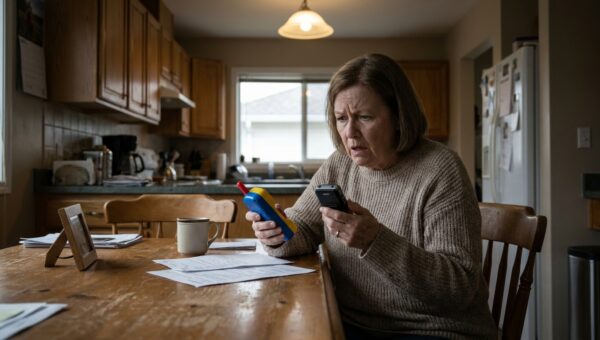
The seventh Saturday in a row started with the familiar scrape of Arthur’s work boots across the back porch. Fifty-one years together teaches you a person’s weight on the floorboards, the exact register of a screen door latching, the rhythm of a life built one quiet morning at a time. I was sitting at the oak kitchen table with my second cup of coffee when I saw the white bank envelope tucked underneath the fruit bowl.
It wasn’t our usual stationery. It was thick, stiff, and addressed in Arthur’s neat, stubborn handwriting to an address on Elm Street across town.
When I pulled the flap open, three crisp twenty-dollar bills fell out onto the oilcloth. That made fifty-six hundred dollars missing from our joint savings account in just two months. Arthur was never a man for gambling, and he didn’t drink anything stronger than weak tea on Sundays. I sat there holding those bills, my coffee growing cold, wondering when my husband had learned to lie with money. Then his phone buzzed against the butter dish, lighting up the dim kitchen with an incoming message from a number I didn’t recognize.
The screen lit up with words that made my breath catch in my throat. How’s our girl doing? Can’t wait to meet her. I didn’t drop the phone. I just set it facedown on the wood, the way you handle something hot from the oven.
Fifty-one years of marriage means you think you own the map of a man’s heart, but sitting there in the quiet kitchen, I realized the map had blank spaces I’d never even known were there.
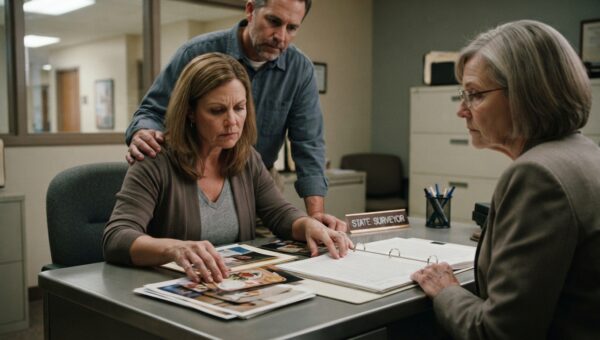
I didn’t yell when Arthur came home that evening with his empty hands and his tired eyes. I didn’t throw plates or demand an accounting of the ledger. I simply waited until Monday morning when the bank opened, checked the withdrawal slips, and found every single missing date stamped by the teller downtown. The address on Elm Street kept pulling at the back of my mind like a loose thread on a winter sweater. I didn’t call him out at the supper table. I just put my coat on, picked up the envelope with the remaining cash still inside, and drove my old Buick across the river toward the north side of town.
The address was a small brick apartment building with overgrown boxwood bushes out front.
My hands were steady on the steering wheel, though my chest felt tight and hollow. I parked three doors down and walked up the concrete steps with the envelope clutched in my palm like a weapon. The bell didn’t work, so I knocked twice, hard and short, the way my father used to knock on doors when he meant business.
A young woman opened the door with a basket of wet laundry clutched against her hip. She couldn’t have been more than twenty-six, with dark hair pulled back in a messy clip and a loose cotton shirt that didn’t hide the heavy roundness of her belly. She looked at me, blinked twice, and her whole face softened into a strange, welcoming grin. You must be Grandma, she said.
I gripped the wooden railing beside the door until my knuckles went white. I didn’t say a word because my voice had locked up somewhere behind my ribs.
The girl stepped back, shifting the laundry basket, and gestured with her chin toward the hallway wall behind her. A single framed sonogram hung right there beside a calendar of local farmers markets, the grainy gray image marked with a name I hadn’t spoken out loud in over six years. Pauline. Our daughter’s name.
The girl smiled, completely unaware of the storm breaking behind my eyes. They didn’t tell you, did they? she said. Pauline asked me to carry the baby she couldn’t.
The words sat in the air between us, heavy and impossible to lift. I found myself staring at the young woman’s kitchen counter, where a familiar stack of bank envelopes sat right next to a box of prenatal vitamins. Chloe was her name, she told me gently once she saw the color drain from my face. Chloe poured me a glass of tap water in a jelly jar and talked about the morning sickness, about the monthly ultrasound appointments, about the man who showed up every Saturday morning at nine sharp with an envelope of cash and a sack of lemon drops because she mentioned liking them once.
He never stayed long, Chloe said, watching me over the rim of her glass. Just dropped the envelope, checked the doctor’s notes on the fridge, and told her to keep her chin up. He said mothers worry enough without adding medical bills to the fire.
I sat there in that small, sunlit apartment and felt the fifty years of my marriage tilt completely off its axis. Arthur hadn’t been running away to another life. He had been sneaking around behind my back to fund our estranged daughter’s desperate, secret attempt at a family. Pauline had suffered that terrible medical crisis back when she was thirty, the one the doctors said closed every door to motherhood, and we had never spoken of it since. Our last argument hadn’t even been about the medical bills; it had been about pride, stubbornness, and the sharp things we throw at each other when we don’t know how to be tender.
I pulled out my phone right there at Chloe’s kitchen table and dialed the number I hadn’t called since the winter of my seventy-fourth birthday. It rang four times before a breathless, sharp voice answered on the other end. Hello? Pauline said.
It’s your mother, I said, and the line went dead silent.
You tell Arthur to stay out of this, Pauline finally whispered, her voice shaking through the speaker. I didn’t ask you for help because I knew what you’d say. I knew you’d call me foolish.
I didn’t yell. I didn’t have any fight left in me for yelling. I just looked at Chloe standing by the sink with her hand on her stomach, and then I looked back at the sonogram on the wall. You rented a surrogate and you didn’t even tell the woman who raised you, I said, and my voice sounded small even to my own ears. Your father’s been emptying our retirement accounts three hundred dollars at a time just so you wouldn’t have to face me.
She was crying now on the other end, small ragged breaths that sounded just like she did when she was six years old and scraped her knee on the gravel driveway. I was scared, Mom. Every time I thought about calling you, I remembered how you looked at me the day I moved out. I couldn’t bear the thought of you looking at my baby that way.
We sat on our separate phones in the quiet afternoon light until the silence softened into something neither of us knew how to name. I told her I was staying right where I was until she got in her car and drove over here.
Arthur was sitting at our kitchen table when I finally walked back through our back door at four o’clock. He had his reading glasses pushed up on his forehead and a ledger open in front of him with columns of figures that didn’t add up. He looked up when the screen door slammed, and he didn’t try to hide the envelopes or close the book. He just sat there with his hands flat on the scarred maple wood, looking older than fifty-one years of marriage had ever made him look before.
You went to Elm Street, didn’t you? he asked. His voice was lower than usual, tired and hollowed out by months of carrying a secret that was too big for one man.
I pulled my coat off and hung it on the peg by the door, taking my time the way I always did when I wanted to keep my hands busy. I went, Arthur, I said.
He swallowed hard, his Adam’s apple moving under his wrinkled collar. She made me promise not to tell. She was so terrified of your judgment, Martha. Every time she talked about the baby, she looked like she was standing on the edge of a cliff. I couldn’t let her fall alone. I just couldn’t.
I walked over to the table and pulled out the chair across from him, the same chair I’d sat in every morning since Lyndon Johnson was in the White House. You made a fool of me, Arthur, I said softly. Fifty-one years, and you decided I was the enemy.
He didn’t argue. He didn’t defend himself or talk about protecting peace in the house. He just looked down at the ledger entries, his finger tracing a line where he’d marked down grocery money while actually paying for prenatal vitamins. I was trying to save my family, Martha, he said. And I ended up breaking the one part of it that was standing straight.
The front tires of Pauline’s sedan crunched on our gravel driveway twenty minutes later, sounding just like they used to when she came home late from high school track practice. We heard her car door shut, and then the slow, heavy footsteps on the porch steps that told us she was hesitating, the exact same stubborn hesitation she got from her father.
Arthur stood up to go to the door, but I put my hand on his forearm. Sit down, I told him. This one’s mine.
When I opened the front door, Pauline was standing there on the porch with her arms crossed over her chest, her chin tilted up in that familiar, defiant way that had kept us apart for half a decade. She looked older, lines around her eyes I hadn’t watched form, but when she saw me standing in the doorway without a scowl on my face, her shoulders dropped an inch.
I didn’t hug her right away, and she didn’t reach out for me either. We stood there in the cool evening air for a long moment while the crickets started up in the tall grass by the fence.
You brought your old car, I said finally.
It still runs, Pauline whispered.
Well, I said, stepping aside and holding the screen door open with my hand. Your father’s inside trying to figure out how to balance our savings account. Come on in before the supper gets cold.
She wiped her cheek with the back of her sleeve and stepped past me into the hallway, her boots leaving a small smudge of dust on the clean linoleum. It wasn’t forgiveness wrapped up in a pretty bow, and it wasn’t the kind of healing you read about in books where all the old hurts simply vanish into the dark. It was messier than that, heavier than that, built out of stubborn pride and hard-earned grace.
The next morning, the Sunday sun hit the copper kettle on the stove just right, throwing a warm circle of light across the kitchen table. The joint savings ledger was sitting right beside two mugs of black coffee, open to a fresh page with no secret entries and no hidden margins. Arthur was out on the porch checking the weather vane, and my phone was lying faceup on the counter, waiting for a text message about an ultrasound appointment across town that we were all going to attend together.