The local news broadcast always flickered right around six o’clock when the heavy condensation on the kitchen window caught the gray light from the porch lamp outside. I had the television turned down low because the kitchen was too quiet when it was loud, if that makes any sense. I was rinsing out a coffee mug in the porcelain sink, the kind with the chipped rim that I had owned since 1999, when the anchor’s voice changed tone.
They do that when a story is local instead of national. They drop an octave and lean forward.
A banner scrolled across the bottom of the screen about a new county safe house opening for runaway girls on Maple Street. Then the camera cut to the ribbon-cutting outside a redbrick building with white trim. A young woman stood behind the oversized red scissors with her hair pulled back in a practical clip, wearing a navy blazer that looked just a little too large for her shoulders. I dropped the sponge. It hit the bottom of the sink with a wet slap that made the faucet vibrate.
Chloe.
She didn’t look sixteen anymore. She didn’t look like the girl who used to leave wet towels on the bathroom floor or spend three hours tying her sneakers before high school track practice. She had those same sharp cheekbones and the way of tucking her chin down when the flashbulbs went off, but her shoulders were wider, steady, carrying the weight of whatever had happened during all those years I wasn’t allowed to watch.
I sat down hard on the kitchen chair, the wood groaning underneath me the way it always did. My hands were shaking so badly I had to wedge them between my knees to get them to stop.
Eighteen years. Eighteen Christmases where I set out a heavy stoneware plate and a butter knife for a girl who wasn’t coming back.
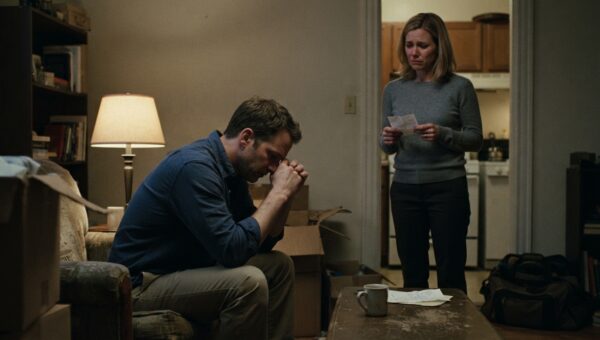
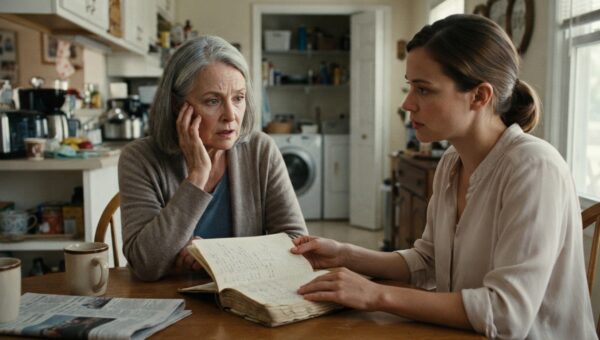
Back in November of 2005, the house had smelled of damp wool and furnace dust when I found that black-and-white composition notebook shoved between the box springs and the mattress. Chloe had always been stubborn, the kind of kid who would bite her lip until it bled rather than admit she didn’t know how to spell a word in her spelling bee list, but that notebook wasn’t schoolwork. It had dates written in blue ink. Plans for a Greyhound bus ticket out of Milwaukee. Savings tallied up to eight hundred and forty dollars.
And his name over and over again in the margins like a chant. Martin. The man who fixed transmissions at the station down by the railway crossing, twenty-eight years old with grease permanently stained into the creases of his knuckles and a habit of waiting by the back fence after track practice.
I didn’t sleep that night. I sat at the kitchen table with the kitchen light off and watched the frost crawl across the glass. I kept seeing her face when she was seven, sitting on the braided rug with her skinned knees, asking me to put a purple bandage on them because purple meant it wouldn’t hurt anymore. By dawn, the fear had turned into something cold and metallic in my throat. I didn’t talk to her father because he had walked out five years prior and left us with a leaky roof and a stack of past-due utility bills. There was nobody else to make the call.
So I called Martin’s boss at the garage first thing at eight o’clock, my voice cracking so hard I sounded like a stranger to myself. Then I called the county sheriff and told him about the notebook under the mattress and the bus tickets. I didn’t care about the laws or privacy or whether Chloe would think I was prying. I cared that she was sixteen and he was twenty-eight and she still left her dirty socks in the hallway.
Martin left town within four days. The sheriff came out to the house and told me in the driveway that the mechanic had packed his toolbox into the back of his pickup and headed south toward Illinois before anyone could serve him papers. I thought it was over. I thought I had closed the trapdoor just in time.
The afternoon Chloe found out, the kitchen was dead silent except for the hum of the refrigerator. She didn’t cry. She stood right by the stove with her school backpack slung over one shoulder, her face gone completely gray and flat.
“You didn’t protect me,” she said, and her voice didn’t even shake. “You humiliated me.”
“He was twenty-eight, Chloe,” I said, reaching for her arm across the linoleum, but she jerked back like I was carrying a hot iron. “You don’t understand what kind of world, “
“I understand you didn’t trust me,” she said. “And I understand I’m leaving the second I turn eighteen.”
She kept her promise down to the exact day. On her eighteenth birthday in 2007, she packed a blue canvas duffel bag, emptied her savings account down to three hundred dollars, and walked out the front door without looking back. She changed her phone number before the sun went down. When I tried sending letters to her high school friends, they came back stamped return to sender with the ink crossed out. For eighteen years, my only contact with her life was the silence she left behind in the hallway closet where her winter coat hung untouched until the moths got to the wool.
Sitting at my kitchen table last night with the television still glowing, I looked down at the rotary phone on the counter. The plastic casing had yellowed over the decades, turning the color of old corn husks. My fingers felt stiff as I picked up the receiver and dialed the local news station number from memory off the screen.
The line rang twice before a woman with a brisk, tired voice answered. “News desk, this is Karen.”
“I need to leave a message,” I said, and my throat felt like sandpaper. “For the founder of the safe house. The piece you just ran. Her name is Chloe.”
“Ma’am, we’re off the air now, but I can take a written message for the station archive to pass along to her administrative office tomorrow morning,” she said, her voice softening just a fraction because she could probably hear the rattle in my chest. “What’s this regarding?”
“Tell her,” I swallowed hard, staring out at the dark backyard where the porch light was casting long shadows across the frozen grass. “Tell her the woman with the chipped coffee mug called. Just tell her I saw the ribbon cutting. And tell her the front door here hasn’t been locked since the day she left.”
The woman on the other end was quiet for a long second, the kind of pause that lets you hear the hum of distant telephone wires. “I’ll make sure she gets it, honey,” she said softly. “What’s your name?”
“Darlene,” I said. “She knows.”
I didn’t expect much. I figured at best, the message would end up in a trash can beside a desk or get handed to Chloe by a harried receptionist who didn’t know twenty years of history from a grocery list. I spent the next three days sitting by the window with a wool blanket over my knees, watching the mail carrier walk up the gravel drive and drop off nothing but circulars and electric bills. The silence in the house felt heavier than it had in years, the sort of quiet that presses against your eardrums until you start hearing things that aren’t there.
Then on Thursday afternoon, a gray sedan turned into my drive.
The engine cut out with a dry click. A woman in a dark green coat got out, her boots crunching over the frozen gravel the exact same way Chloe’s used to, though she walked slower now, with the deliberate, careful gait of someone who spent her days carrying too much weight. She stood on the front porch for a long time, staring up at the peeling white paint around the screen door before she finally raised her knuckles and knocked twice.
I didn’t run to the door. My knees wouldn’t have let me anyway. I just walked down the hallway at my own slow pace, wiping my palms against the sides of my apron out of sheer habit.
When I pulled the door open, the cold March air rushed into the hallway carrying the smell of damp earth and highway exhaust. Chloe stood there with her hands shoved deep into her coat pockets, her breath pluming white in the afternoon air. She looked tired, the skin around her eyes showing the fine lines of too many long nights and difficult phone calls, but she was standing straight.
“You still have that awful rug in the entry,” she said, and her voice had that old, dry edge I remembered from the kitchen in 2005.
“It covers the spot where the water heater leaked back when you were twelve,” I said, my voice trembling so much I could barely get the words out. “Come inside before you freeze.”
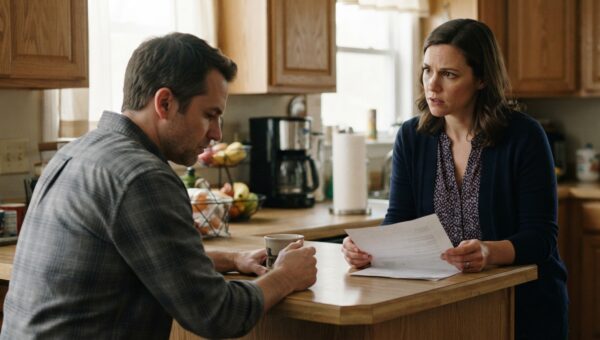
She didn’t rush in. She stepped across the threshold slowly, her boots leaving a small wet footprint on the linoleum right where the old scuff mark used to be. We sat across from each other at the same kitchen table where I had stayed up all those nights waiting for a phone call that never came. There was no screaming, no cinematic apologies, and no magic words that could sweep away eighteen years of empty plates and locked doors.
“I didn’t come back to tell you that you were right about Martin,” Chloe said after a long time, looking down at her hands folded on the laminate surface. “He was garbage. It took me a long time to see it, but he was. That part wasn’t wrong.”
“I was scared,” I said simply, not offering excuses, just laying it out the way it was. “I was terrified of losing you the way I lost everything else.”
“I know you were,” she said, looking up at me with eyes that looked so much like my mother’s it made my chest ache. “You were so scared of breaking me that you forgot you were allowed to talk to me instead of calling the sheriff.”
“I know,” I whispered. “I’m sorry about the way I did it, Chloe. I’d stop him again today if I had to, but I’d do it differently. I’d talk to you first.”
She was quiet for a long moment, the refrigerator giving its familiar click and hum in the corner. Then she reached into her coat pocket and pulled out a small brass key on a braided leather ring, sliding it across the table until it came to rest right beside my chipped coffee mug.
“The safe house has an office,” she said quietly, her fingers lingering on the cold brass. “The front door stays open until nine every night for girls who don’t have anywhere else to go. You can come help with the paperwork on Tuesdays if you want something to do besides stare out this window.”
She didn’t wait for me to answer before she stood up, grabbed her coat collar, and walked back down the hallway. I didn’t follow her to the porch. I stayed right there at the kitchen table, looking at the small brass key resting beside my cup, listening to the heavy front door click shut against the afternoon wind.