The smell of damp wool and stale peppermint always sits right behind my teeth when I think about that afternoon at Grace Lutheran. The parking lot was full of cars with mud splattered high up on their rocker panels from the slush out on the county road. I was holding a church bulletin that had already gone limp from the sweat on my palms.
I was thirty-eight years old, an accountant making fifty-four thousand dollars a year in a beige cubicle on the third floor of an office park, and I had spent three solid years being very, very proud of how hard I could be.
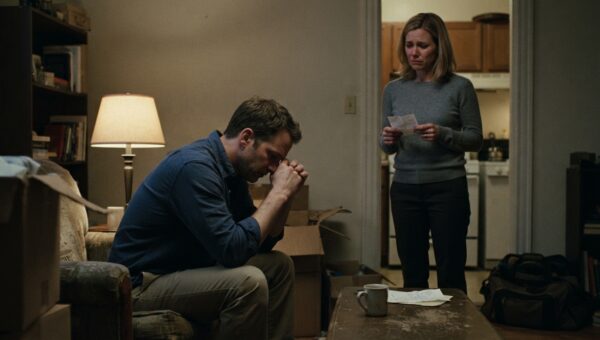
Ray caught me right by the trunk of Aunt Clara’s station wagon before we could get inside for the luncheon. Ray works the day shift at the office park where I punch the clock every morning at 7:55. He wears a navy uniform jacket with silver buttons that are always missing one or two threads. He didn’t look like he wanted to be there in that black clip-on tie, but he reached out and touched my elbow with fingers that looked like dried hickory wood.
Mrs. Ellis, he said. I need to tell you something about your father.
I stopped because I didn’t have a choice. The wind coming off the creek bottom was freezing, and my black wool coat wasn’t nearly heavy enough for March.
My dad, Arthur, had been in the ground for about twenty minutes, and my head felt hollowed out like an old gourd.
Your father parked in the visitor lot every day at noon, Ray said. Same spot. Third row. Blue Buick. He ate a sandwich. Watched the front door.
I stared at him. The gray gravel under my heels crunched as I shifted my weight. I honestly didn’t know what he was talking about because Arthur lived twenty miles north in a drafty little house with bad copper plumbing, and he didn’t have any business at my office park. He certainly didn’t have any friends there.
For how long, I asked. My voice sounded thin, like tissue paper tearing.
Ray looked down at his black shoes and then back up at my face. Three years, he said. Since twenty-two. When you stopped talking to him.
The ground seemed to tilt sideways for half a second. Twenty-two was the year we had that final, screaming fight in my kitchen over whether I should take the senior auditor promotion that required traveling down to Pittsburgh every other week.
Arthur had pounded his fist on my laminate counter so hard the sugar bowl jumped. He told me I was abandoning the life I should have been building, and I told him he was a bitter, narrow-minded old man who couldn’t stand to see his daughter outearn him. I told him not to call me anymore. And he didn’t. He never called, and I never picked up the phone. I thought I was protecting my peace.
I held the church bulletin tighter. My knuckles went white.
I asked him once why he came, Ray whispered, his eyes watery against the wind. He said, I just need to see her walk through that door. That’s how I know she’s okay.
I started shaking right there by the station wagon. The cold went straight through my coat. Ray reached into his pocket and shifted his weight from one foot to the other like he was carrying something too heavy for his coat lining.
There is something else, Ray said, and his voice dropped down to almost nothing. Every day, he had a second sandwich on the passenger seat. Wrapped in foil.
The reception inside the church hall was loud with the sound of plastic forks scraping against paper plates of potato salad and baked ham. Aunt Clara was sitting at a folding table near the coffee urn, talking to people I hadn’t seen since I was twelve. She looked tired, her gray hair pinned up in a careless knot that was already slipping down her neck. I walked straight past the ham and asked her for the keys to Arthur’s blue Buick.
You want to go out there now, Clara asked, looking up over her bifocals. The wind is howling out by the gravel, honey. You ought to eat something first.
I just need to see it, Clara, I said.
She reached into her oversized leather handbag and pulled out a brass ring with two keys and a plastic tag from the hardware store on 4th Street. She didn’t ask any questions. She just dropped them into my palm and closed my fingers over them. Arthur had been her only brother, and she had spent forty years listening to both of us be as stubborn as fence posts.
The blue Buick was parked down at the end of Clara’s long gravel driveway behind her shed. The car looked older up close, the paint faded on the hood where the winter sun had beaten down on it year after year. The tires were flat on the bottom from sitting through two weeks of hospital visits and hospice care before Arthur finally let go. I had to pull hard on the driver-side door handle twice before the latch gave way with a heavy, frozen clunk.
The inside of the car smelled exactly like my childhood. It was a mixture of spearmint Chiclets, stale cigarette smoke that he hadn’t done inside the house since my mother died, and old wool blankets. A box of tissues sat on the back dash, bleached white by the sun. I slid into the driver’s seat and pulled the door shut, and the sudden silence inside was so thick my ears popped.
I turned and looked across the center console.
The passenger seat was empty of people, but it wasn’t empty of him. There was a yellow legal pad with some grocery lists written in his shaky, block-letter handwriting. There was a thermos with a dented silver cap. And right in the middle of the upholstery sat a square of aluminum foil, folded over neatly at the edges like a little package from a diner.
My hands were shaking so hard I dropped the keys onto the rubber floor mat. I didn’t pick them up. I just stared at that foil package sitting there in the dim light coming through the dirty windshield.
Three years. Every single day at noon, Arthur had driven twenty miles down the highway, parked in the third row of my office park, and sat there in the cold or the heat just to watch me walk in from the parking lot. He didn’t come inside. He didn’t call my name. He didn’t want to start another fight about my job or my clothes or the way I lived my life. He just wanted to make sure the door didn’t swallow me up for good.
I reached across the console and my fingertips brushed the crinkled edges of the foil. It was cold, stiff, and greasy from sitting there since the day he went into the county hospital.
I lifted the corner of the foil. Inside was a sandwich made on thick white bakery bread, the crusts carefully trimmed off just the way I liked them when I was nine years old and home sick with the flu. There was sliced ham and a thin smear of yellow mustard, laid down with the precise, stubborn care of a man who didn’t know how to say I am sorry with his mouth, so he said it with a loaf of bread and a butter knife.
He had made it for me every day. For three years. He packed two because he kept hoping that today might be the day the office door would open, that I would walk out toward the visitor lot instead of in, that I would look over and see him sitting there behind the steering wheel and remember how to talk to him.
I sat in that car until the dashboard clock changed from 2:14 to 2:47. The heater vents stayed dark and cold because I hadn’t turned the key in the ignition. The tears finally broke over my lower lashes and ran down into the corners of my mouth, tasting like salt and old copper.
You were a stubborn old fool, Arthur, I whispered into the empty upholstery. You were the most stubborn man God ever put on this earth.
The sandwich stayed right where he left it on the passenger seat. I didn’t eat it, and I didn’t throw it away. I just sat there holding that one square of wrinkled aluminum foil while the midday sun finally moved off the office park roof three miles away, leaving the windshield in shadow.