Money makes some folks forget that God made us all out of the same common dirt, and my brother and sister proved that the very afternoon the lawyer finished reading the will.
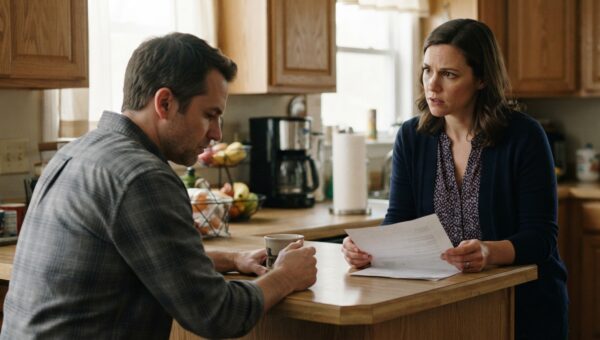
We were sitting around the drop-leaf table in the kitchen where Grandfather had eaten his toast every morning for forty years, listening to the legal clerk pack up his leather briefcase with all the important papers.
Grandfather had been gone three days, and the house still smelled faintly of his cherry pipe tobacco and the bitter black coffee he brewed in an old dented percolator.
My brother Dennis leaned back in his chair, rocking the wooden legs against the linoleum floor with a self-satisfied grin that had been stuck to his face since the funeral. He had already claimed the A-frame cabin by the lake down in Ocala, the one with the metal boat dock and the screened-in porch where we used to clean bluegill on humid July afternoons.
My sister Clara was busy tapping numbers into her smartphone calculator, her thumb moving fast enough to break the glass, counting out her share of the savings account. The ninety thousand dollars Grandfather had tucked away in the credit union was landing in her account by Monday morning, and she was already pricing granite countertops for her suburban kitchen.
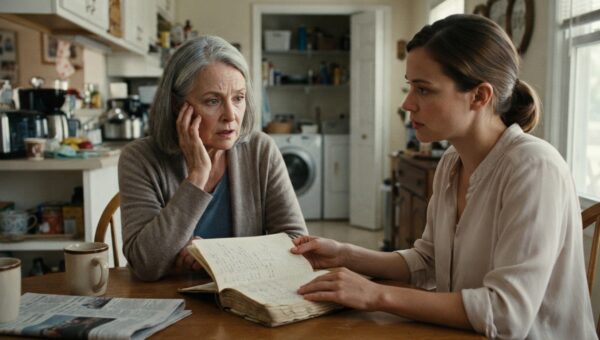
I sat quietly near the pantry door with my hands folded in my lap, watching the dust motes dance in the shaft of sunlight coming through the small window over the sink.
“Well, Clara gets the cash and I get the weekend place,” Dennis said, looking over at me with a smirk that didn’t reach his eyes. “Grandfather left you that old wooden crate out in the shed, didn’t he? Hope you like lawn ornaments.”
Clara didn’t even look up from her screen. “They were his pets,” she murmured, echoing something Grandfather used to say when people asked why he spent his evenings out in the drafty workshop with a pocketknife and a block of white pine. “Twelve carved birds, paint flaking off most of them. Honestly, Vada, you can probably just leave them out by the curb for the trash truck.”
I didn’t argue with them because arguing with Dennis and Clara was like shouting into a cistern, and I was too tired for it anyway.
Grandfather had lived to eighty-six, and for the last four years of his life, I was the one who drove out three times a week to stock his pantry, check his blood pressure pills, and listen to him talk about the old days when the river rose up over the road and cut off the town. Dennis and Clara only showed up on major holidays with store-bought pie and an eye on what they might inherit someday.
When the lawyer finally left and my siblings drove off in their late-model SUVs with their heads high, I walked out to the weathered wooden shed behind the house.
The crate sat in the far corner, buried beneath a tangle of rusted garden hoses and empty fertilizer sacks. It was heavy, smelling strongly of cedar shavings and damp cellar air. I managed to drag it out to the trunk of my old sedan, a tired blue compact with a rusted quarter panel that rattled every time I hit sixty miles an hour.
I set the crate on my back porch that evening, lifting the slatted lid to look inside. Twelve wooden ducks stared back at me with dark, painted glass eyes. Their paint was blistered and chalky, flaking off in tiny gray curls like dried fish scales. They looked like old junk someone’s grandfather had whittled on the front porch to pass the long winter afternoons when the snow piled six feet deep against the barn door.
I didn’t think much about them, honestly, because I had bigger problems sitting right in my driveway.
Two days later, I backed out of my gravel lane to head into town for groceries, and the transmission in my sedan made a horrible metallic clunk before giving up completely. The engine revved high, but the wheels wouldn’t turn an inch. I coasted backward into the grass, shut off the ignition, and just sat there for a minute listening to the ticking of the cooling manifold, wondering how I was going to come up with seven hundred dollars for a rebuilt unit.
The mechanic down on Route 6, a straight-talking fellow named Marcus, wouldn’t take payments. He needed cash upfront before he would even touch the lift.
I walked back to the house, feeling that familiar, heavy knot of working-class panic settle right behind my ribs. I looked at my kitchen counter, then out the screen door toward the back porch where the crate of wooden ducks sat in the shade. It felt a little disrespectful, taking something Grandfather had spent his quiet hours carving, but seven hundred dollars was more money than I had in my checking account by a long shot.
I reached down into the crate, picked up the heaviest bird, a mallard drake with a notched tail and a flat, scarred bill, and wrapped it in an old flannel shirt so the flaking paint wouldn’t rub off on my sleeves.
The antiques shop on Route 6 was housed in a converted brick blacksmithing building with a crooked sign hanging over the door that simply said Hall’s Relics and Goods. Arthur Hall had been running the place since before I was old enough to drive, a tall, gaunt man with silver hair and half-moon spectacles perched permanently on the end of a sharp nose. He spent most of his afternoons sitting behind a glass display counter filled with rusted pocketknives and yellowed postcards, reading old regional newspapers.
The bell over the door chimed as I walked in, the smell of old paper and linseed oil hitting me all at once.
Arthur looked up from his paper, his gray eyes scanning me over the rims of his glasses before dropping down to the flannel bundle in my arms.
“Morning, Vada,” he said, his voice dry like autumn corn husks. “What’s in the bundle? You cleaning out your grandfather’s attic already?”
“Morning, Mr. Hall,” I said, stepping up to the counter and setting the flannel-wrapped bundle down on the scarred oak surface. “I’m in a bit of a bind with my car transmission, and I need to see if this has any value. My grandfather whittled these.”
I unwrapped the flannel carefully, revealing the battered mallard with its dull green head and chipped wooden chest.
Arthur Hall didn’t reach for it right away. He just stared.
The silence in the dim shop stretched out for five long seconds, thick and absolute, broken only by the steady tick of an old pendulum clock on the wall. Arthur lowered his newspaper completely, sliding his glasses up the bridge of his nose with a thin, trembling hand.
He leaned forward across the counter, his eyes fixed on the wooden bird. Then he reached out very slowly, as if he were touching something fragile in a museum case, and lifted the duck by its breast and tail.
He didn’t say a word. He turned the heavy wooden body upside down, running a rough thumb across the flat, weighted bottom where the keel met the belly.
My chest tightened until it felt like a iron band was cinched around my ribs. I swallowed hard, waiting for him to tell me it was worthless pine worth maybe ten bucks at a flea market.
Arthur’s breath hitched. His voice dropped to a low, gravelly whisper that barely carried over the clock’s ticking.
“Ma’am, do you know who carved these?”
I blinked, confused by the sudden change in his tone. “My grandpa did. He spent hours out in his shed tinkering with wood blocks.”
Arthur shook his head slowly, his eyes wide behind the thick lenses of his glasses, and said, “Your grandfather wasn’t just tinkering, Vada. These aren’t just farm decoys.”
He set the mallard down gently on a scrap of green felt and reached into his desk drawer for a brass-rimmed loupe, snapping it into his eye socket. He bent down close to the flat base of the decoy, studying the small, faint initials burned deep into the pine wood near the tail weight.
“Look right here,” Arthur said, pointing a shaking finger at the tiny, interlaced letters. “A.J.M. Do you know whose mark that is?”
“They’re his initials,” I said, my voice sounding small in the cavernous room. “Arthur James Mercer.”
Arthur let out a sharp breath that sounded almost like a laugh. “Arthur J. Mercer vanished from the folk art scene forty years ago after a fire destroyed his workshop down by the river. Every collector in the Northeast thought his entire early collection went up in smoke. People have spent decades looking for a verified Mercer original, let alone a matched set of twelve.”
He straightened up, his face pale and serious, looking at me with an intensity that made me want to take a step back toward the door.
“Your grandfather didn’t just whittle, Vada,” Arthur said softly. “He was A.J. Mercer. The reclusive master carver. And if this one bird is authentic, what you’ve got sitting on your back porch isn’t a box of junk. It’s a museum-grade treasure.”
I stood there by the glass counter because my brain kind of stopped working for a second, unable to connect the old man who drank instant coffee from a chipped mug with a legendary artisan whose work commanded thousands of dollars among serious collectors.
“Are you sure?” I finally managed to whisper.
Arthur reached for his desk phone. “Bring the rest of them in here right now, Vada. Every single one.”
An hour later, my trunk was empty, and the twelve wooden ducks were lined up across Arthur’s back worktable under the glare of an adjustable swing-arm lamp. Arthur had called a regional folk art historian from the university up in Gainesville, a sharp-eyed woman named Dr. Helen Vance who drove down in a dusty sedan within forty minutes after hearing Arthur mention the burned initials over the phone.
Dr. Vance spent nearly an hour examining each bird through her own magnifying glass, checking the feather striations, the weight distribution, and the specific lead-weighted keels that only Mercer ever used. When she picked up the last one, a pintail hen with a slightly turned neck, she looked up at me with absolute awe in her eyes.
“There are only two known complete sets of Mercer’s early work documented in any public archive,” she said, her voice steady and clear. “Both of them were thought to be destroyed in the seventy-four workshop fire. This is the third. And it is entirely intact.”
She stood up, dusting a few grains of ancient pine sawdust from her woolen skirt, and looked right at me. “Do you have any idea what these are worth on the open market, Ms. Mercer?”
I shook my head, feeling numb. “My brother called them lawn ornaments. My sister told me to leave them by the curb.”
Dr. Vance offered a thin, knowing smile. “If these go to auction through a reputable house in Boston or New York, each piece could easily fetch upwards of eight to ten thousand dollars. A complete, authenticated set of twelve in this condition… you are looking at six figures, easily.”
Six figures.
The phrase echoed in the quiet corners of the antiques shop, bouncing off the shelves of old clocks and silver spoons. My mind flashed back to Clara tapping away on her smartphone, counting out her ninety thousand from the credit union, and Dennis smirking as he hooked his thumbs into his belt loops while claiming the lake cabin. They thought they had walked away with the family fortune, leaving me the scrapings from the bottom of the barrel.
They didn’t know because Grandfather never told them. He didn’t tell them because whenever Dennis and Clara came around, they spent the whole visit talking about stock portfolios, real estate values, and how much money they were making at their corporate jobs. They never sat on the wooden bench in the shed for three hours listening to him talk about the grain of cedar or the way the mallards nested in the reeds down by the bayou. I was the only one who stayed quiet, who listened without checking a watch, who handed him his tools when his hands shook too badly from the arthritis.
The wooden crate wasn’t a consolation prize. It was the only part of his life he trusted us with, and he left it with the only person who actually cared about the man behind the work.
I thanked Arthur and Dr. Vance, wrapped the mallard back in the flannel shirt, and walked out to my broken-down sedan. I didn’t care about the transmission anymore. Marcus could take his time fixing it, because I had enough money in my pocket from a small advance Arthur insisted on giving me just to hold the mallard for safe-keeping that I could have bought a brand-new car off the showroom floor if I had a mind to.
By Friday evening, word had somehow leaked out the way small-town news always does.
My phone started buzzing while I was sitting at my kitchen table drinking a cup of coffee. It was Dennis, calling twice in a row, followed by a text message from Clara that read: *Vada, call me immediately. What is this nonsense about Grandfather’s old ducks being in an antique shop registry?*
I let the phone ring. I didn’t answer.
Thirty minutes later, the crunch of gravel in my driveway signaled the arrival of Dennis’s Ford pickup. He slammed the driver’s side door hard enough to rattle my windowpanes, followed quickly by the sound of Clara’s SUV door shutting with a sharp thud.
They didn’t bother knocking. Dennis turned the doorknob, pushed the screen door open, and stepped right into my kitchen with a face red from anger and disbelief. Clara was right behind him, her eyes wide and frantic.
“What in the hell is going on, Vada?” Dennis demanded, his voice echoing off the plaster walls. “Arthur Hall told Bill down at the hardware store that you brought in a duck carved by some famous artist named Mercer. He said the whole set is worth a fortune. A absolute fortune!”
Clara stepped up beside him, her hands trembling slightly as she gripped her handbag. “Grandfather left those to you because he was senile, Vada! That was supposed to be part of the general estate! You can’t just take family property and sell it behind our backs!”
I stayed sitting right at the table, taking a slow sip of my coffee before setting the mug down on the laminate surface. The porcelain made a small, sharp clink against the table.
“Family property?” I asked quietly, looking up at them. “You called them lawn ornaments, Clara. You told me to leave them by the curb for the trash truck.”
“That was before we knew!” Dennis shouted, taking a step closer and planting both hands flat on my table. “That was before we knew they were worth six figures! Mom and Dad’s will didn’t specify individual carvings, which means estate law says, “
“Estate law already settled everything, Dennis,” I interrupted, my voice level and calm, carrying none of the panic they brought through my door. “You took the lake cabin in Ocala. Clara took the ninety thousand dollars from the credit union savings. And Grandfather left the crate in the shed to me.”
“He didn’t know what they were!” Clara snapped, her voice rising to a sharp pitch. “He was an old man living out in the sticks! He didn’t realize he was giving away a hundred thousand dollars in wooden toys!”
I stood up slowly from the chair, looking at both of them with a steady gaze that made Dennis pull his hands back off the table.
“He knew exactly what he was doing,” I said, my voice dropping to a whisper that filled the room. “He knew every single time you both came out here just to check what was in his bank account. He knew you didn’t care about his workshop, or his stories, or the way he spent sixty years perfecting his craft. He gave the cabin to the ones who wanted money, and he gave his life’s work to the only person who stayed long enough to ask him how he made the feathers look so real.”
Dennis opened his mouth to say something else, some sharp retort about lawyers and courts, but he stopped when he saw the folded authentication document from Dr. Vance lying right there beside my sugar bowl.
He stared at the university letterhead, his face turning slack as the reality finally settled in behind his eyes.
“You can talk to my lawyer if you want to,” I added softly, walking past them toward the front door and holding it wide open. “Or you can get back in your SUVs and go enjoy your granite countertops and your dock in Ocala. But you aren’t touching a single feather in that crate.”
They didn’t say another word. Dennis glared at the floor, his jaw tight with a bitter, defeated fury, while Clara turned around and walked out the door without looking back. Their tires spun gravel across the yard as they tore out of the driveway, heading back to the lives they had built entirely on the measurement of cash.
When the tail-lights vanished down the county road, the quiet settled back over the house, deep and steady and clean.
I walked out to the back porch where the remaining eleven decoys sat safely inside the wooden crate, waiting for the climate-controlled display cases Arthur was helping me arrange through the regional historical society.
Inside the house, under the warm, amber glow of the living room lamp, I placed the authenticated mallard drake right in the center of the restored wooden mantelpiece above the fireplace. It sat there on the polished pine, its weathered wood and dark glass eyes catching the light, completely removed from the dust and the noise and the greedy hands of my family.
For the first time since Grandfather passed away, the house didn’t feel empty at all. It felt like he was still sitting right there in the corner, carving another bird out of a block of white pine just to watch the way the evening light hit the grain.