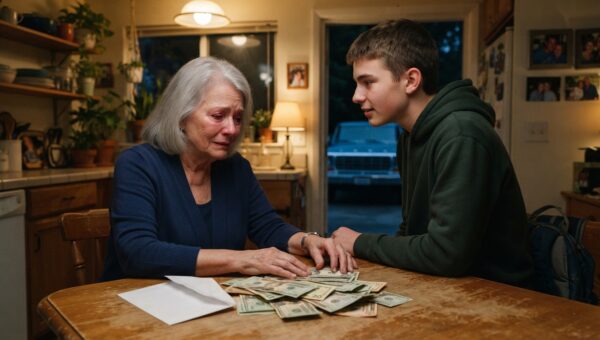
I got a lot of things wrong during those four winters, but trusting the city housing office was the worst mistake I made. For four years, my children Leo and Maya wore their winter coats and mittens while sitting at our kitchen table because the radiators stayed stone cold. I paid $2,180 every single month on the first, right on time, without missing a beat.
But whenever I called Arthur Vance to complain about the dropping temperatures, he just laughed.
“Buy your own heater,” Arthur said over the phone one bitter January afternoon, his voice dripping with casual cruelty before he hung up on me.
The indoor thermometer on our hallway wall read 48 degrees, and my youngest daughter’s lips had a faint blue tint to them that I will never forget. I called the city housing inspectors twenty-seven times that first year alone. They came out twice, scribbled on little clipboards, and filed paperwork that went absolutely nowhere. Arthur paid whatever minor fines trickled down to him and kept right on cashing my rent checks.
I thought I was just stuck in a bad lease with a greedy man who did not care if we froze. I figured complaining louder was the only tool I had, so I kept logging call numbers and taking photos of frost on the inside of our single-pane windows.
But the truth was much darker than simple neglect. Arthur Vance was running a calculated slumlord empire, keeping dozens of aging buildings intentionally neglected while hiding his assets behind a maze of shell companies.
By the winter of 2026, I was completely exhausted. My son Leo had developed a persistent winter cough that kept us both awake half the night, and my grocery budget was constantly drained by space heaters that kept tripping the old circuit breakers. I finally stopped calling the local inspectors who clearly had deep ties to Arthur’s payroll. Instead, I drove across town to a modest downtown office and dropped four years of heavy, meticulously organized folders onto the desk of a quiet, graying housing attorney named Julian Cross.
Julian did not look like the flashy lawyers you see on television. He wore a slightly frayed wool suit and drank black coffee out of a chipped mug.
But when I slid my stack of utility bills, rent receipts, and temperature logs across his wooden table, he did not just nod sympathetically. He opened a locked metal drawer and pulled out a thick file folder marked with a single handwritten name.
“I have been tracking Arthur Vance for fourteen years,” Julian said quietly, his eyes steady behind wire-rimmed glasses. “You are not the first tenant to freeze in his buildings, but you brought me the exact missing paper trail I needed.”
Julian explained that he had been slowly building a massive RICO-level case against Arthur, piecing together forged inspection certificates, municipal bribery, and intentional endangerment across nearly forty properties. My four years of meticulous records were the final linchpin connecting Arthur’s personal negligence to systematic corporate fraud. Over the next few weeks, Julian worked behind the scenes while I quietly reached out to families in our building and two neighboring ones owned by the same shell company.
One by one, the wall of silence cracked. Thirty-nine tenants joined our consolidated class-action lawsuit, bringing forward their own boxes of evidence. There were medical bills for children’s respiratory issues, text messages threatening eviction for withholding rent, and utility statements showing exorbitant electric bills just trying to stay warm. We weren’t just angry tenants anymore; we were a unified front with thousands of pages of irrefutable proof.
The trial arrived on the coldest day of February 2026. The wind howling off the river cut right through the old courthouse steps, but inside, the atmosphere was thick with anticipation. I sat on the wooden bench with Leo, now ten, and Maya, now seven, holding their small, cold hands in mine. We had dressed in our Sunday best, simple clothes that looked entirely out of place in the grand limestone courtroom.
At exactly nine o’clock, the heavy oak doors swung open, and Arthur Vance strolled in. He wore a brand-new $4,800 designer cashmere coat that looked like it cost more than my car, his silver hair neatly combed and a smug, confident smile plastered across his face. He didn’t even look in our direction. He greeted his high-priced defense attorney with a light chuckle, clearly expecting this to be just another minor administrative hiccup where he wrote a check and walked away like he had done a hundred times before.
The judge took his seat, adjusting his glasses and scanning the towering stacks of evidence binders sitting on the prosecution’s desk. For two agonizing hours, the judge read through the findings of fact. He detailed the systemic neglect, the falsified safety clearances, and the deliberate decision to cut heating budgets while raising rents across thirty-nine properties.
When the judge finally reached the civil portion of the ruling, the numbers echoed off the high ceiling. Arthur was ordered to pay multi-million dollar restitution payouts to cover full rent reimbursement, medical damages, and severe punitive penalties for every single family involved. The smug smile slowly faded from Arthur’s face, replaced by a tight, rigid jaw as his lawyer whispered frantically in his ear.
Arthur reached into his coat pocket as if he thought he could simply settle the debt right then and there with a swipe of a platinum card. But the judge raised a single hand, cutting off the defense table before they could even request a recess. The courtroom fell into a heavy, absolute silence so deep you could hear the distant hum of the building’s vents.
“That concludes the civil liabilities,” the judge said, his voice cold and flat. “However, the court finds sufficient evidence of intentional recklessness and systematic endangerment of minors under freezing conditions. Effective immediately, this bench is issuing criminal felony indictments against Arthur Vance, alongside an emergency freezing order on all personal assets, corporate accounts, and property portfolios held under his name or associated shell entities.”
A sharp gasp escaped someone in the back row, but otherwise, the room stayed dead silent. Arthur stood up so fast his chair scraped loudly against the parquet floor, his face draining of every drop of color as the reality of handcuffs and asset seizure finally crashed down on him. His $4,800 coat suddenly looked like a cheap costume for a man who had just lost everything he owned.
We walked out of that courtroom into the crisp winter air, my children walking beside me with their heads held high. The legal battle was finally over, and the slumlord empire had crumbled under the weight of its own greed.
Now, sitting in our warm, sunlit living room, ten-year-old Leo and seven-year-old Maya sit comfortably on the sofa without heavy coats, watching dust motes dance in the steady, reliable heat radiating from an unblocked radiator.