The notification pinged on my phone screen at 4:14 on a Tuesday afternoon, right while I was staring at the water stains on the ceiling of my cramped apartment. It was a digital PDF from a corporate recruiter in Pittsburgh, three pages of dense text that ended with a base salary of six hundred and fifty thousand dollars a year.
For three long seconds, I didn’t breathe. My hands started shaking so badly I dropped the phone onto the worn-out rug near my kitchen sink. I had spent seven years eating generic brand oatmeal, working sixty-hour weeks at the regional logistics firm, and telling myself that someday the grind would amount to something more than a stack of past-due electric bills. This was the something more.
The very first thing I did, because I was foolish enough to still believe that milestones belonged to families, was pick up the phone and dial my father’s number. Arthur answered on the second ring, his voice flat and heavy with the familiar exhaustion of a man who treated every conversation like a tax audit. When I told him the number, the line went quiet for so long I thought the call had dropped. He didn’t cheer, didn’t ask how I pulled it off, and didn’t tell me he was proud.
He just told me to drive home for dinner by six o’clock sharp because Evelyn had already put a salmon in the oven. I didn’t know then that the salmon was just bait.
The drive out to the valley took forty minutes through a gray drizzle that blurred the tail lights of the coal trucks rattling down Route 19. My parents’ house smelled like it always did, a dense mix of boiled cabbage, lemon Pledge, and the faint, permanent dampness of a basement that leaked every time it rained. Evelyn met me at the screen door with a dry peck on the cheek that didn’t reach her eyes, her gray hair pinned back in that severe bun she had worn since I was ten. She muttered something about my coat being wet before turning her back to stir a pot on the stove. Arthur was already seated at the head of the dark oak dining table, his glasses slid down his nose as he smoothed out a fresh sheet of yellow legal paper with the edge of his thumb.
I dropped my keys into the small ceramic dish by the front door and walked into the dining room, expecting at least a bottle of cheap champagne or a pie from the bakery down the street. Instead, there was a cold piece of baked salmon sitting on a chipped china plate, flanked by a dull fork and a black ballpoint pen. Arthur didn’t look up when I pulled out my chair. He just cleared his throat, a dry, grating sound that used to make me freeze when I was a kid turning in a report card with a B-minus on it. Chloe, my twenty-six-year-old sister who still lived in the finished basement and spent her afternoons scrolling through boutique furniture sites, sat across from me picking at her cuticles with an expression of supreme boredom.
“Sit down,” Arthur said, tapping the corner of the yellow legal pad. “We need to talk about logistics before you start spending money you haven’t even earned yet.”
I sat, my knees bumping against the heavy wooden apron of the table. “Hello to you too, Dad. It’s good to see you.”
“Save the pleasantries,” Arthur said, sliding the legal pad across the polished wood until it rested right beside my cold salmon. The paper was covered in neat, aggressive columns of blue ink, every line ruled with a straightedge. “We’ve already run the numbers based on what you told me on the phone. Six hundred and fifty thousand gross means roughly four hundred net after federal and state. We’ve divided it according to household need and prior investments.”
I looked down at the paper. At the very top, written in Arthur’s blocky capital letters, were three percentages that took up half the page. Fifty percent for Arthur and Evelyn to clear the remaining mortgage and fund their retirement account. Thirty percent for Chloe to settle her credit cards and secure a down payment on a townhouse in the city. Twenty percent left over for me to cover rent, gas, and miscellaneous personal expenses. It was so absurdly methodical that for a second I thought it was some kind of grim joke, a test to see if I still had any spine left after thirty-one years of conditioning.
“Is this a request?” I asked, keeping my voice lower than the hum of the old refrigerator in the kitchen.
Mom stopped stirring her pot, the wooden spoon clicking against the rim of the cast-iron skillet. She wiped her hands on a floral dish towel, walked slowly into the dining room, and stared straight into my eyes with that terrifying, flat certainty she always used when she was about to lay down the law.
“No,” Evelyn said.
That was the exact moment something inside me cracked, but instead of bleeding, it turned to ice. For my whole life, every scholarship I won, every promotion I scraped together, and every dollar I saved had been treated like communal property belonging to the family trust. They had convinced me that my achievements were just interest payments on the debt of being born. If I refused this new arithmetic, Arthur’s parting threat was always the same old hymn about loyalty. If I refused, I could lose the family.
I smiled. It wasn’t a warm smile, but it was convincing enough for people who only saw what they wanted to see. I picked up the fork, pushed the cold salmon to one side of the plate, and nodded slowly.
“Of course,” I said.
Arthur grunted, clearly satisfied with my submission, and reached for the butter dish. “Good. We expected you to see reason. Chloe needs to look at properties by next month, so we’ll need the first wire transfer set up as soon as your onboarding clears.”
The next three weeks were the quietest and most dangerous weeks of my life. I drove out to Sunday dinners every seven days, brought lemon bars from the bakery, and listened to Arthur talk about how he planned to landscape the back slope of the yard once the first fifty percent started rolling in. I nodded at all the right times, asked Chloe about her interior design ideas, and kept my mouth shut. But behind that polite facade, I was working sixteen-hour days that had nothing to do with my new corporate title. I spent my lunch breaks sitting in my parked car outside the office building, talking in whispers to a corporate employment lawyer in downtown Pittsburgh who specialized in executive compensation and asset protection.
By week two, I had moved my personal banking entirely away from the credit union where Arthur still held my old savings account from college. I opened an encrypted digital account through an institution two states away, routing all future direct deposits through a dedicated corporate security portal that required three-factor authentication and a biometric token. I updated my HR profile, changing my emergency contacts, my tax withholdings, and my bank routing numbers while sitting under the harsh fluorescent lights of the fourteenth-floor breakroom. Every digital click felt like cutting a heavy steel cable with a pair of kitchen scissors.
The silence from my end was absolute, but my parents took it for steady compliance. They thought I was just the same dutiful, exhausted kid they had molded in that damp valley house. On the third Friday of the month, payroll processed at 4:14 in the morning. I was already awake, sitting at my kitchen table with a cup of black coffee, watching the balance update on my laptop screen. The full sum cleared into my independent, locked account, exactly six hundred and fifty thousand annualized, pro-rated to the bi-weekly cycle without a single red cent diverted toward Arthur’s columns.
At 9:15 that morning, my phone buzzed against the wood. It wasn’t a text; it was Arthur calling. Then Chloe. Then Evelyn. I let every single call go straight to voicemail, watching the little notification counter climb to seventeen missed calls by noon. By three o’clock, my phone was ringing continuously, a rhythmic, frantic vibration that sounded like a trapped insect against the glass.
I didn’t answer until Sunday evening, when I drove back out to the valley for our usual weekly dinner. This time, I didn’t bring lemon bars.
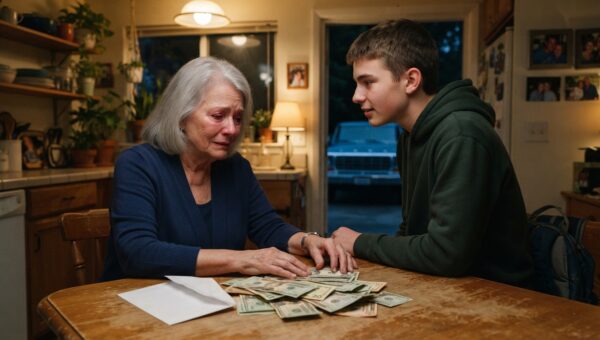
The front door wasn’t locked. I walked straight into the kitchen without knocking, the rubber soles of my shoes squeaking slightly on the linoleum. Arthur was standing by the landline phone on the counter, his face flushed a dark, mottled red, while Evelyn sat at the kitchen table with her hands wrung so tight her knuckles were porcelain white. Chloe was pacing near the pantry, her phone clutched in her hand like a weapon.
Arthur spun around so fast he nearly knocked over the toaster. “Where the hell have you been?” he roared, his voice cracking on the first syllable. “Do you have any idea how many times we tried calling you? The transfer didn’t go through. The bank teller told us the routing number was invalid. Explain yourself right now.”
I didn’t take off my coat. I stood right there in the doorway, letting the cold air from outside drift into the stale kitchen.
“The routing number is fine, Dad,” I said, my voice sounding stranger to me than it did to them because it didn’t shake at all. “It just isn’t yours.”
Chloe stopped pacing, her jaw dropping open. “What are you talking about? Dad said you agreed. You signed off on the legal pad.”
“I said ‘of course,'” I replied, stepping further into the room. “I never said I was going to do it.”
Evelyn stood up from the table, her eyes narrowing into cold slits of pure venom. “We raised you. We put food on your table and a roof over your head. You owe us every single dime of that salary. Without us, you’re nothing.”
Arthur lunged forward, grabbing the yellow legal pad from the counter where he must have been recalculating the losses all afternoon. He shoved it toward my chest, his fingers trembling with rage. “You take that phone out right now and fix this, or you are dead to this family. You hear me? You are out.”
I reached out, took the yellow legal pad right out of his hand, and tore it neatly down the middle, right through his careful percentage columns. The paper made a clean, sharp rip in the quiet kitchen. I dropped the two pieces onto the floor near his shoes.
“You keep the family,” I said softly. “I’ll keep my labor.”
I turned around, pushed open the screen door without looking back, and walked out to my car. The engine started on the first turn of the key, and as I backed down the gravel driveway for the very last time, I didn’t look at the porch lights or the windows where they stood watching me go. I just drove back toward the city, where the apartment was quiet, the desk was clean, and the future belonged to nobody but me.