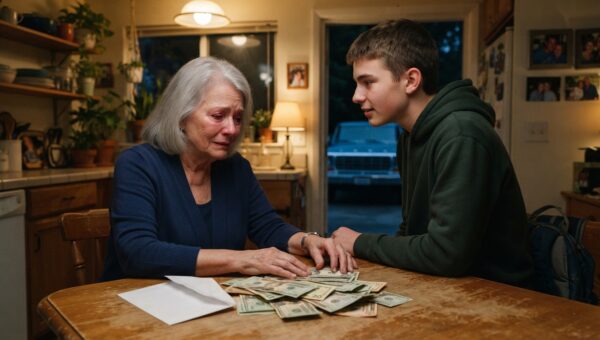
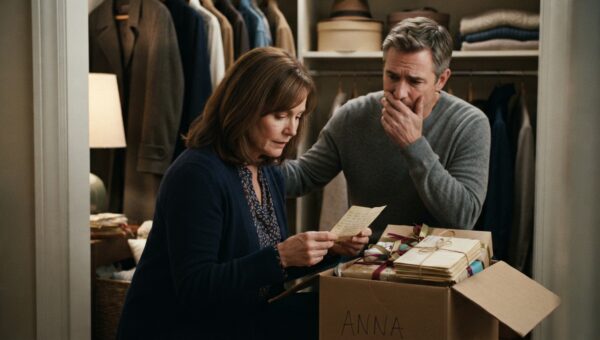
The radiator in the hallway always gave a sharp metallic ping right before it started rattling. I sat on the edge of the radiator cover with a mug of chicory coffee, watching the frost feather across the lower corner of the front window. Outside, the Maple Street sidewalks were gray and hard with February ice, the kind of cold that gets right down into your marrow no matter how many wool sweaters you have on.
In the corner of the room, tucked beside Mama’s old armchair, sat the wicker basket she used for her knitting projects. It had been sitting there for nearly a year. Every time I walked past it, my chest tightened just a fraction, because moving it felt like admitting she wasn’t going to walk back down the stairs in her flannel slippers to ask me for a glass of tepid water.
Mama had lived with us in spirit long before she actually passed away in that narrow hospital bed at St. Jude’s. For three years, while her lungs slowly forgot how to pull in enough air, I was the one who drove her to the pulmonologist on Tuesdays and brought her low-sodium broth on Thursdays. My older brother David and my sister Chloe called on Sundays, usually right around four in the afternoon when their golf matches or tennis clinics were wrapping up.
They had opinions about her care, of course. David would lecture me over speakerphone about the best medical trusts while his car engine idled in some suburban driveway three states away. Chloe would send expensive organic vitamin supplements that sat unopened in the pantry because Mama didn’t have the stomach for them.
When the end came on a Tuesday night during the worst sleet storm of the decade, David and Chloe flew in on Thursday afternoon. They looked sharp in their charcoal wool coats and waterproof leather boots, smelling faintly of airport lounges and expensive espresso. We stood in the drafty church basement after the service, drinking lukewarm coffee from Styrofoam cups while the wind howled against the stained glass. David cleared his throat, adjusting his silk tie with the practiced air of a man accustomed to leading board meetings. He told me that he and Chloe had already met with Attorney Vance to look over the probate paperwork, just to save me the administrative headache.
“You’ve got your hands full at the dental clinic, Clara,” David had said, using his reasonable, soothing brother voice that always made me feel like I was twelve years old and had dropped an ice cream cone on the carpet. “You wouldn’t want to get bogged down in real estate deeds and brokerage accounts. We’ve got it all sorted out.”
Chloe had agreed, her diamond tennis bracelet clicking against her coffee cup. She was the one who handled the final distribution of the small estate a week later in the lawyer’s conference room. David walked out owning the family house on Maple Street, complete with the detached garage where Dad used to fix lawnmowers. Chloe walked out with the primary savings accounts and the mutual funds Mama had accumulated over decades of strict frugality. As for me, the dental hygienist who spent four days a week scraping tartar off local gums for twenty-eight dollars an hour, Mama had supposedly left a very specific token of appreciation.
Chloe had smirked when she handed me the slip of paper transferring ownership of the wicker basket. She didn’t even bother to keep the triumph out of her voice. “The hygienist gets the basket of yarn,” Chloe had said, leaning back in her leather chair with a little chuckle. “Knit yourself a life, little sister.”
For eleven months, that basket stayed right where it was. I couldn’t bring myself to unpack it, and I couldn’t bring myself to throw it out. It smelled like the peppermint hand lotion Mama used to rub into her knuckles when the arthritis flared up. Every time I looked at it, I felt that familiar, heavy mix of grief and humiliation, the stinging reminder that my daily physical labor of turning Mama in her bed, washing her hair, and spoon-feeding her applesauce was valued at zero in the eyes of my successful siblings. They had their big careers, their stock portfolios, and their grand suburban homes, while I had my dental tools and a wicker basket of leftover wool.
Then came Wednesday. The clinic was closed for deep cleaning, and the house was entirely silent except for the hum of the refrigerator. I finally walked over to the armchair, dropped down onto my knees on the hardwood floor, and reached into the basket. The top layer was a tangle of dusty rose and cream-colored acrylic yarn, still wound around three wooden needles where Mama had abandoned her final project, an afghan she never got to finish. I started lifting the skeins out one by one, placing them gently into a cardboard box.
My hand brushed against something flat and rigid at the very bottom of the wicker weave, hidden beneath a false bottom made of heavy cardboard covered in floral lining fabric. I froze for a second, my fingers curling around the edge of a thick, heavy object. I pulled it free, turned it over in the pale afternoon light, and my heart slammed up into my throat with such force I actually gasped out loud.
It wasn’t a ball of string. It was a black leather-bound ledger, the kind with stitched binding and lined pages yellowed at the edges. Tucked inside the front cover was a heavy parchment envelope addressed in Mama’s shaky, deliberate cursive to me.
I sat back on my heels, the cold from the floorboards creeping through my jeans. With trembling fingers, I slid the flap open and pulled out a single sheet of heavy paper accompanied by several folded legal documents stamped with the official seal of Attorney Thomas Vance. The date at the top of the ledger entry was from eighteen months before Mama passed.
The words were written in that familiar, spidery hand that used to sign my permission slips and birthday cards. It didn’t sound like a grieving old woman. It sounded like the sharp, calculating bookkeeper Mama had been before her lungs gave out.
“If you are reading this,” Mama had written, “it means David and Chloe have taken everything they think they’re entitled to under the old 2004 will, and they’ve left you with my knitting. They think you’re small because your hands are tired at the end of the day. They don’t know that hands that work are the only ones you can trust.”
I turned the pages of the ledger with a sort of slow, mounting horror. Every single loan David had taken out for his failing import business over the last decade was documented down to the penny, complete with signed promissory notes he had begged Mama to keep quiet. There were records of the thirty-five thousand dollars he took when his second mortgage went under, money drawn directly from the equity of the Maple Street house. And below that were the detailed records of Chloe’s so-called medical emergencies and venture capital losses, funds that Chloe had convinced Mama to release from the joint accounts under the promise of repayment.
Tucked behind the ledger was a formal codicil to the will, signed, dated, and witnessed by Attorney Thomas Vance and our next-door neighbor, Mr. Henderson, who had been a notary public for thirty years. In clear, ironclad legal prose, Mama had formally revoked the distribution of the house and the primary savings accounts, citing undue influence and financial misrepresentation by her older children. She had reallocated the entire estate to me, leaving David and Chloe only the symbolic sum of one dollar each, with a clause stipulating that any funds previously advanced to them must be legally accounted for against the remaining property value.
I sat there on the living room rug for a long time, the ledger heavy in my lap. The silence in the room wasn’t comforting anymore. It was thick with the weight of a secret Mama had carried through all those long winter nights while I held her hand and listened to her wheeze. She hadn’t been helpless. She had been waiting. She knew exactly what David and Chloe were, and she knew exactly who I was.
The next few days passed in a blur of telephone calls and appointments. I didn’t call David or Chloe. I walked straight down to Attorney Vance’s office on Main Street on Thursday morning, carrying the ledger in a canvas tote bag. Mr. Vance took off his reading glasses, looked at the document, and let out a long, low whistle that rattled the papers on his desk.
“Your mother was a remarkably thorough woman, Clara,” he said, tapping a finger against the codicil. “She brought this in right after her seventy-second birthday. She made me promise not to file it until she was gone, because she wanted to see if her children would come to visit her out of love or out of calculation. When they only showed up for the holidays and sent checks instead of time, she made her choice.”
David and Chloe were hosting a celebratory dinner party at David’s sprawling house out on the lake to finalize the sale of some of Mama’s old antique furniture. They had invited me as an afterthought, probably to rub in their financial victory and show off their new granite countertops. I drove out there on a Saturday evening, wearing my nicest navy blue cardigan and carrying the canvas bag.
The house smelled of roasted lamb and expensive wine when David opened the front door, wearing a silk button-down shirt and a wide, patronizing smile. “Clara! Glad you could make it. Come in, leave your coat in the hall. We were just talking about listing the Maple Street property next month. Market’s up twelve percent.”
Chloe was sitting at the massive mahogany dining table with a glass of Pinot Noir in her hand, laughing at something her husband said about tax write-offs. I walked past them, sat down uninvited at the head of the table, and placed the black leather ledger squarely in the center of the place setting where a plate of appetizers had just been cleared away.
The table went completely quiet. Chloe looked at the book, then up at me, her smile faltering. “What is that?”
“It’s Mama’s knitting basket,” I said, my voice sounding much steadier than my hands felt. I opened the cover to the first page, where David’s signature sat beneath a column of figures totaling over ninety-four thousand dollars. “Or rather, it’s what was at the bottom of it. I think you should take a look at page fourteen, David. It turns out Mama kept better books than your accountant.”
David stepped forward, his face flushing a dark, mottled red as he glanced down at the columns of numbers in his own handwriting. “Where did you get this? This is private. This was supposed to be destroyed under the old agreement.”
“Nothing is destroyed when it’s witnessed by Thomas Vance,” I said quietly, looking right into my brother’s panicked eyes. “You told me to knit myself a life, Chloe. Well, Mama just handed me the yarn to do it.”
The fallout was swift and ugly, just as you would expect from people whose entire world is built on paper and bluff. David started shouting about forgery and undue influence, slamming his hand against the mahogany table until the wine glasses rattled. Chloe burst into tears, accusing me of manipulating a sick old woman who didn’t know what she was signing. They threatened lawsuits, criminal charges, and complete estrangement. I didn’t raise my voice once. I simply slid Attorney Vance’s business card across the polished wood and told them they could discuss the equity distribution with him on Monday morning.
It took three months of legal maneuvering before the paperwork finally cleared. David and Chloe tried to contest the codicil, but Mr. Vance’s documentation of Mama’s mental competency during her final years was airtight. In the end, they realized the ledger would expose their financial loans to public scrutiny in probate court, which would ruin David’s business credit and Chloe’s standing in her corporate firm. They settled out of court, signing over the deed to the Maple Street house and forfeiting any claim to the remaining estate in exchange for my agreement not to press further financial audits on the loans they had already drained.
The day I got the keys to the house on Maple Street, I didn’t throw a party. I walked through the empty rooms alone, smelling the lingering scent of lemon oil and old cedar that always belonged to Mama. The dust motes were dancing in the afternoon sun streaming through the bay window in the front parlor, right where her armchair used to sit.
I brought the old wicker basket with me from my apartment, setting it down in the exact same spot beside the window. The half-finished afghan was still resting on the wooden needles inside. I sat down in the wooden rocker, picked up the pink yarn, and began to knit. My fingers moved slowly at first, clumsy and stiff, but after a few rows, the familiar rhythm came back to me. The house was mine now, paid for not with money or corporate ambition, but with forty-seven winter nights of holding a dying woman’s hand and listening to her breathe. Outside, the Maple Street breeze rattled the bare oak branches against the glass, but inside, the room was warm, steady, and quiet at last.