For six months my son insisted I was losing my mind. I would lose words right in the middle of a sentence, drift off while washing the dishes, and sleep half the day away. David had papers drawn up for a memory care home down in Grand Rapids, $7,800 a month, and a form making him my power of attorney. “It’s for your own good, Mom,” he said, sliding the pen across the kitchen table. I am 74 years old. I almost signed it.
My granddaughter Maya begged me to see one doctor first, away from David’s watchful eye. Dr. Patel did not talk down to me the way the specialists downtown always did. She drew blood, read the results twice, then pulled her chair close. “Florence,” she said, “this is not dementia.” I gripped the armrest of the examination chair. She tapped one number on the page. The fog, the sleeping, every bit of it had been caused by something heavy and deliberate sitting in my morning tea.
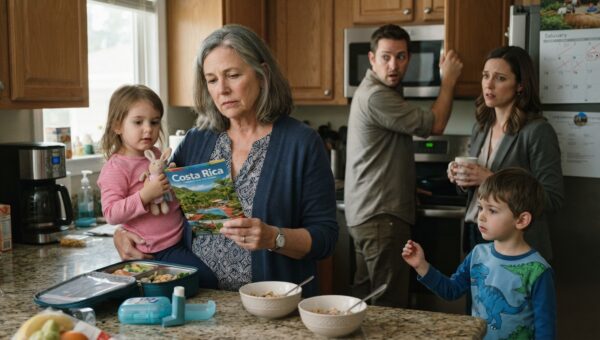
My mind kept slipping back to those Tuesday mornings in my own kitchen. David would always arrive around eight with a warm travel mug or a fresh cup of lemon-ginger tea, claiming he wanted us to share a quiet moment before my errands. “Drink it while it’s hot, Mom,” he would say, standing right there by the counter until I took the first sip.
I thought it was just him being a dutiful son after my husband passed. I didn’t know he was watching me swallow a steady, crushing dose of lorazepam just to build a paper trail of decay.
David was drowning in failed real estate ventures up near Traverse City. He had four empty lots sitting on a limestone ridge where nobody wanted to build, and the bank taxes were coming due every thirty days. My house was paid for in full back in 1984, sitting on three acres of prime lakefront timber that developers had been eyeing for years. He didn’t want to see me safe in a facility. He wanted the title free and clear before the foreclosure notices landed on his own porch.
Maya had seen the way my hands shook whenever David left the room, even when I hadn’t touched his tea. She pulled me aside in the grocery store parking lot three days before the signing date. “Grandma, you were never this tired before he started bringing you those mugs,” she whispered, her fingers digging into my arm. “Let’s just get a second opinion. Please. For me.”
Dr. Patel’s toxicology panel didn’t lie. The lab printout showed steady, non-therapeutic levels of a central nervous system depressant that built up in my bloodstream faster than my liver could clear it. “You aren’t losing your memory, Florence,” Dr. Patel said, her voice steady and low. “Someone is systematically turning your lights out.”
I went home that afternoon with a clear head and a cold fury sitting right behind my ribs. David was waiting in the kitchen, leaning against the counter with the manila folder tucked under his arm. “Did you lose track of time at the clinic, Mom?” he asked, flashing that practiced, worried smile he used whenever he wanted me to feel fragile. “We need those signatures notarized before the office closes today.”
I hung my coat on the maple peg by the door and walked slowly to the kitchen table. The pen was still lying there on top of the power of attorney forms, right where he had left it twenty-four hours ago. “I think we need to talk about the tea, David,” I said, my voice barely above a whisper.
His smile twitched for half a second, just a tiny drop of color draining from the corners of his mouth before he smoothed it back into place. “What are you talking about, Mom? The tea is just lemon and ginger. You always loved lemon and ginger.”
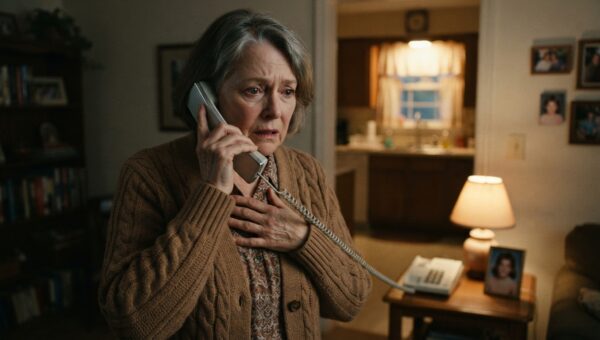
“Dr. Patel called it something else,” I said, pulling the folded lab report out of my purse and laying it flat on the wood. “She called it lorazepam. Five milligrams dissolved in hot water every single morning for half a year.”
The silence in the kitchen was so heavy I could hear the refrigerator compressor humming down in the utility room. David stared at the paper, his hands flattening against the edge of the table as if he wanted to sweep it off the surface. “You went behind my back to some quack doctor,” he muttered, the nice-son mask finally cracking right down the middle. “You don’t even know what you’re reading. You’re confused.”
“I was confused,” I said, standing up so I was looking right across the wood at him. “For six months I thought my own brain was rotting away. But my head is clear now, David. Crystal clear.”
Maya stepped out from the pantry hallway holding her phone up with the green recording light blinking softly near the lens. On speakerphone from her pocket, our family estate lawyer, Mr. Henderson, spoke clearly into the room. “We have the toxicology report, David, and we have your mother’s explicit revocation of any pending power of attorney filings. Any further attempt to access her accounts will be met with immediate criminal referral.”
David looked from Maya to the phone, his face turning a dull, sickly gray. All that real estate debt, all those months of playing the devoted caregiver, collapsing into nothing because he thought an old woman wouldn’t check the numbers. “You’re ruining me,” he whispered, his voice cracking with genuine panic. “The bank is going to take the lots by Friday.”
“That is between you and the bank,” I said, pointing straight toward the front door. “You have two hours to get your things out of the guest room before I call the county sheriff myself.”
He didn’t argue. He grabbed his jacket from the back of the chair, snatched the manila folder off the table, and walked out without looking back, the screen door slamming behind him with a sharp, hollow rattle.
The house was quiet after he left, the kind of quiet that feels like fresh air after a long storm. I walked over to the sink, rinsed out the mug David had used that morning, and set it upside down on the drying rack. Then I filled my favorite blue ceramic mug with plain, hot tap water and a slice of real lemon from the crisper drawer. I carried it out to the front porch, sat down in the old wicker rocking chair, and watched the sun go down over the lake without a single cloud in my head.