The linoleum under my bare feet was cold the morning the phone finally rang from a number I did not recognize. For three years, the silence between Clara and me had grown heavier than the old oak wardrobe in the hallway. We used to talk about everything. We used to share coffee on the screened porch while the morning mist rose off the bayous, talking about nothing at all and everything of consequence. Then she married Donald, packed her life into the back of a rented box truck, and moved an hour away to Lake Charles. The calls got shorter. Then they stopped coming entirely.
I tried to tell myself it was just what young married couples do. They build their own nests, they find their own routines, they forget to look back over their shoulders. But last year she forgot my birthday altogether, not even a card in the mailbox or a quick ring before evening. And this year, on my sixty-third birthday, my phone buzzed on the kitchen counter at noon. I picked it up with shaking fingers, hoping for a voice, but the screen only showed two words. Happy birthday. I sat at the kitchen table and cried into my coffee cup until the liquid went cold and bitter.
A week later, the unfamiliar number flashed across my screen while I was wiping down the stove. I answered it automatically, figuring it was another telemarketer trying to sell me insurance or roof repairs. Instead, a voice I barely recognized as Julian, Donald’s brother who lived across town from them, came through the tiny speaker with a ragged edge. Please don’t tell her I called, he whispered, his breathing shallow like he had been running. I immediately thought something was wrong with their marriage. I thought Donald had done something foolish or walked out.
Instead, Julian asked a strange question. Have you noticed her pulling away from everyone lately? I said yes, of course I had, because I had spent three years living in the ghost town of her absence. He told me she had been seeing a specialist in New Orleans for months, driving down there twice a week in secret, and refusing to tell anyone in the family what was actually wrong. Before I could ask what kind of doctor or what kind of sickness, he cut me off. The doctor thinks the problem started when she was a child, and she says you’re the only person who can confirm what happened in the summer of…
The line went silent for a second, but I did not need him to finish the year. The breath left my lungs all at once. The summer of her tenth year. The summer the sun felt too hot and the ditches ran dry and we all pretended that what happened behind the machinery shed was just a bad dream that would wash away with the autumn rains.
I didn’t wait for Donald or ask for permission. I grabbed my car keys off the hook by the back door, got into my old sedan, and drove the hour down the interstate to Lake Charles. My hands gripped the steering wheel so tight my knuckles turned the color of chalk. The highway stretched out flat and gray under a heavy, overcast sky that looked like wet slate. I kept replaying Julian’s words in my head. He had met me behind a quiet diner off the highway exit, away from Clara and Donald’s house, sitting in his truck with the engine idling and the air conditioning humming.
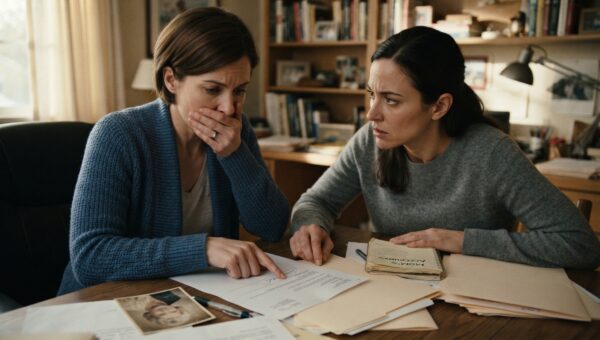
She can’t sleep, Julian had told me, his hands shaking as he held a manila folder across the console. She wakes up screaming, Mom. Not words, just sounds. And her hands have this tremor she tries to hide by sitting on them. Dr. Thorne says it’s a neurological disconnect. Her brain is literally locking up because it’s trying to protect her from a memory she was forced to bury when she was ten years old.
He opened the folder and showed me the notes, page after page of neat medical handwriting detailing severe somatic dissociation, nervous system overload, and trauma-induced physical decline. Dr. Thorne believed Clara’s body was paying the physical price for a secret she had carried alone. She thought her own mother had lied to her, that I had been part of the cover-up that made the world unsafe. That was why she pulled away. Every time she looked at me, she didn’t just see her mother; she saw the silence that nearly destroyed her.
When I parked in front of Clara’s house, the yard was quiet. No car in the driveway except Donald’s pickup, but Donald was at the hardware store downtown; Julian had made sure of that. I walked up the wooden steps of the front porch, the boards groaning under my boots just like they used to when she was a little girl running inside for a glass of sweet tea. I didn’t knock. I just turned the brass knob. It was unlocked, the way we always left our doors back home before the world got so complicated.
Clara was sitting at the kitchen table in a gray oversized sweatshirt, staring down at a white coffee mug with both hands wrapped around it. Her hair was pulled back in a loose, messy knot, and her face looked thin, almost translucent around the cheekbones. When she heard the floorboards creak, she looked up, and her eyes went wide with a mixture of shock and something very close to fear.
What are you doing here? she asked. Her voice was thin, almost a whisper, and her right hand twitched against the ceramic mug, a tiny, involuntary jerk she tried to instantly suppress by pressing it harder against the surface.
I walked across the kitchen and pulled out the chair opposite her, sitting down without taking off my coat. The air in the room smelled like stale coffee and old paper. I looked at her, really looked at her, seeing past the distance she had put between us for three years, seeing the little girl who used to skin her knees on the gravel driveway and run to me for a clean rag and some iodine.
Julian called me, I said, and my voice didn’t shake the way I thought it would. It was steady, heavy with the weight of thirty years of pretending.
Clara stiffened, her jaw locking so hard a muscle jumped in her cheek. She didn’t yell. She didn’t tell me to leave. She just looked down into her coffee cup like she was searching for the bottom of a well. You shouldn’t have come. Donald said you wouldn’t understand. Donald doesn’t know anything about it, I said, reaching across the table until my fingers rested on the cool wood between us. I remember that summer, Clara. I remember every single second of it.
Her head snapped up, her eyes burning into mine with a sudden, fierce heat. You told me to forget it. You told me if anyone asked, nothing happened behind the shed. You told me to keep my mouth shut so the family wouldn’t fall apart.
She said the words like a physical blow, each one landing square in my chest. And she was right. I had said those exact words. On a scorching July afternoon when the cicadas were screaming in the pecan trees, when her older cousin came running toward the house with blood on his shirt and panic in his eyes, and the old tractor had rolled backward into the deep irrigation ditch with a sound like breaking bones. We had pulled the cousin out, we had sworn an oath of absolute silence to protect his name and the family pride, and we had looked straight into ten-year-old Clara’s terrified face and told her that if she ever spoke of what she saw, everything we had built would turn to ash.
I didn’t protect you, I whispered, and the confession tasted like dry dust in my mouth. I protected everyone else, and I left you out there all by yourself in the dark.
Clara let out a ragged breath, a sound that started as a scoff and ended as something broken. For years, Mom, I thought I was losing my mind. Every time I tried to talk about the noise of the engine or the way the dust smelled, my head would pound until I thought my skull would crack. Dr. Thorne says my brain tried to erase it because it was too big for a child to hold, but my body kept the score. My hands wouldn’t stop shaking. My chest wouldn’t let me breathe. And every time I looked at you at Thanksgiving or Christmas, smiling and passing the potatoes, I felt like I was suffocating all over again because you acted like nothing ever happened.
She started to cry then, not the quiet, polite tears she used to cry when she was sad, but deep, racking sobs that shook her entire frame. The heavy sweatshirt seemed too big for her as she slumped forward, burying her face in her hands while her shoulders heaved.
I got up from my chair, walked around the table, and knelt beside her on the worn kitchen tiles. I didn’t care about my knees or my old bones. I pulled her arms away from her face and wrapped my arms around her shoulders, drawing her head down against my shoulder the way I used to do when she was small enough to carry.
I am so sorry, I whispered into her hair, my own tears finally spilling over and running down my chin. I am so sorry I made you carry my cowardice. You didn’t imagine it. It happened. And you don’t have to keep it a secret anymore.
She didn’t push me away. For a long moment, she just stayed rigid in my arms, fighting decades of muscle memory and conditioned fear. Then, slowly, with a long shudder that seemed to start at the base of her spine and ripple all the way to her fingertips, her body went completely limp. The nervous tension that had held her in a vise for months seemed to drain right out of her, leaving her soft and trembling against me. She gripped the back of my cardigan with both fists, holding on so tight her knuckles turned white, and cried until she had no voice left.
Later that afternoon, after Donald came home and found us sitting together on the back porch swing with a fresh pot of tea between us, nobody tried to hide anything anymore. Donald looked at Clara’s face, saw the color returning to her cheeks and the terrible tension gone from her shoulders, and he didn’t ask questions. He just pulled up a lawn chair and sat across from us, quiet and steady.
We sat together as the sun dropped low behind the live oaks, painting the sky in shades of deep amber and bruised purple. Clara’s hand was resting on the wooden arm of the swing, her fingers still slightly pale, but steady. I reached over and placed my hand over hers, palm to palm, feeling the warmth of her skin against mine. The silence between us wasn’t heavy anymore. It was just the quiet of the evening, finally healed of everything that had lived in the dark for so long.