The house on Maple Street was too quiet after Arthur passed away. I used to keep the radio on just to have a voice in the kitchen, but after forty-one years of marriage, the silence has a weight to it that no talk show can lift. When my grandson Darren pulled his dusty sedan into my gravel drive on a Tuesday morning last October, I thought he was just stopping by to check on his grandmother.
He brought a box of cinnamon rolls from the bakery down on Fourth Street and sat at my kitchen table with that easy, crooked grin he got from his father.
He told me he needed a reliable way to get to the new warehouse job across town. The old sedan was dropping transmission fluid on every driveway it touched, and the boss had made it clear that punctuality was the whole ballgame. He laid a single paper on the laminate table, right beside my sugar bowl.
“Grandma, I just need a little help with the signature,” he said, his voice as smooth as warm butter. “The credit union wants a co-signer because I haven’t been at the warehouse long enough to build up a proper score. It’s just for a plain commuter car. Four years, small monthly payments. I wouldn’t ask if I had anyone else, but you know how my dad’s credit is right now.”
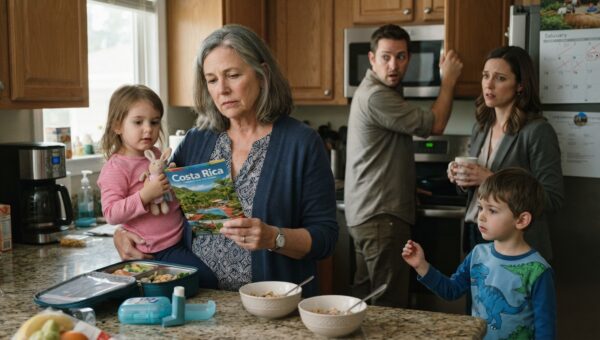
I looked at his face. He had his mother’s eyes, wide and earnest, and I remembered changing his diapers when his legs were no bigger than breadsticks. I was seventy-six years old, and my pension from the county office was small, but it was steady. I figured that was what grandmothers were for. To bridge the gap when the road gets steep. I didn’t read every line of the small print because I trusted him the way I would have trusted Arthur with my life. That was my first and worst mistake.
The bank calls started six months to the day after I signed that paper.
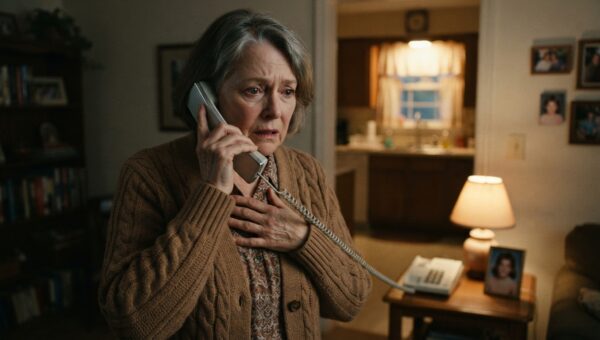
The first one came at 8:15 in the morning while I was standing at the stove trying to boil an egg. A woman with a sharp, businesslike voice asked for Arthur’s widow. When I told her Arthur had been gone for over a year, she didn’t soften her tone at all.
She just told me the November payment on loan account ending in 4092 was thirty days past due, and since the primary borrower was unreachable at the registered number, the full balance of the secondary guarantor was now subject to immediate wage and pension garnishment.
“What loan?” I asked, and my hand started shaking so hard the tea strainer rattled against the rim of the mug.
“A seventy-two-month commercial vehicle financing agreement for a 2023 Ford F-150 SuperCrew,” she said, reading it off like a grocery list. “Total financed amount: fifty-four thousand two hundred dollars.”
I sat down at the table so fast my knee caught the wooden drawer. Fifty-four thousand dollars. That wasn’t a commuter car to get to a warehouse job. That was a palace on four wheels with leather seats and a price tag bigger than the mortgage we paid off back in ninety-four. Darren hadn’t bought a little sedan.
He had used my name, my clean credit history, and my signature to buy himself a brand-new truck with every extra bell and whistle the dealership could slap onto the chassis.
Over the next three weeks, the county pension office sent me the official notice of administrative levy. Four hundred and eighty-two dollars and sixteen cents was carved right out of my monthly check before it ever hit my credit union account. That was nearly half my grocery money. I looked at the little brown plastic bottle of metoprolol sitting on the kitchen windowsill and did the arithmetic the way my father had taught me over ledger books at the grain elevator. If I cut the pills in half with a razor blade, I could stretch the refill from thirty days to sixty. My chest had this dull, fluttering ache behind the ribs anyway, but I told myself it was just grief playing tricks on an old body.
When I finally called Darren’s cell phone, it went straight to voicemail three times before he picked up with a heavy sigh.
“Grandma, I’m in the middle of a shift,” he said, background noise rattling with heavy machinery. “Can this wait?”
“You need to come over here tonight,” I told him. My voice didn’t shake. I was surprised by how cold it sounded to my own ears. “Tonight, Darren. Or I go straight to your mother’s house and show her the bank papers.”
He showed up at 7:00 pm, smelling of gasoline and cheap cologne. He didn’t sit down at the kitchen table this time. He stood by the screen door with his hands shoved deep into his jeans pockets, looking at my braided rug like he was inspecting a stain.
“Look, I know things got a little tight,” he said before I could even lay the bank statements out. “The overtime at the yard got cut back. It happens.”
“You bought a truck, Darren,” I said, pointing a finger at the figure circled in red ink. “You told me it was a sedan for work. This is fifty-four thousand dollars. They’re taking four hundred and eighty dollars out of my pension every month. I had to split my heart pills today.”
He didn’t look sorry. He didn’t even look surprised. He just let out a short, ugly breath through his nose and shifted his weight from one boot to the other.
“Grandma, it’s your signature on the paper, not mine,” he said, and the casual cruelty in his voice felt like a splash of cold well water. “You’re the one on the hook, legally. I’ve got a family to think about. You’re an old lady, what do you even need money for anyway? Should’ve read closer.”
My own grandson. My medicine money was something I didn’t need because I had already lived most of my years.
I didn’t cry. Not a single tear came to my eyes. The shock of it seemed to freeze everything inside me into hard, clear glass. I looked at him standing there in my kitchen, wearing shoes I probably paid for without knowing it, and I felt something snap clean off.
“Well, maybe you’re right,” I said quietly.
He blinked, clearly expecting me to start yelling or throwing things the way my sister Clara might have done. When I didn’t, he shrugged, turned the handle of the screen door, and let himself out into the dusk without another word.
Chloe, the nineteen-year-old girl who lives two doors down and helps me carry my groceries up the front steps on Thursdays, found me sitting in the dark kitchen half an hour later. She didn’t ask questions. She just turned on the small lamp by the stove and saw the bank papers spread across the table.
“My uncle is a paralegal down at the county legal aid clinic on Main Street,” Chloe said softly, looking at the garnishment notice. “He sees this kind of thing twice a week. People taking advantage of seniors who still trust a handshake. We are going down there tomorrow morning, Mrs. Gable.”
We went at 9:00 am sharp. Chloe drove me in her little red hatchback with the rattling muffler. Mr. Henderson, the legal aid advocate, was a bald man with sleeves rolled up to his elbows and a desk piled so high with files it looked like a paper beaver dam. He read through Darren’s credit union application, then he looked at the copy of the dealership bill of sale that Chloe had managed to download from the online portal using my account number.
“This isn’t just a default,” Mr. Henderson said, adjusting his wire-rimmed glasses and tapping a pencil against the margin. “Your grandson listed your household income as ninety thousand dollars a year on the digital application. He checked the box indicating you were the primary purchaser and he was the co-buyer. That’s not just misrepresentation, Mrs. Gable. That’s bank fraud.”
“Can they put him in jail?” I asked.
“They can void the co-sign liability entirely once we file a formal affidavit of fraudulent misrepresentation with the lender’s fraud division,” Mr. Henderson said. “And the garnishment stops the moment the bank receives the sworn notice of identity exploitation. But it takes a few days to process. It won’t clear before the weekend.”
“That’s all right,” I told him, smoothing down the front of my wool skirt. “I have somewhere to be this Sunday anyway.”
The week crawled by like an injured dog. I took my half-pills and kept the radio off. On Saturday night, I took my good church dress out of the cedar closet, the navy blue crepe with the small white buttons down the front, and laid it across the foot of the bed beside my black leather handbag.
Sunday afternoon was clear and hot, the kind of dry Texas heat that makes the cedar trees smell like pepper. Chloe picked me up at 1:30 in the afternoon. She had pressed her own blouse and looked sharper than any girl her age has a right to be. When she helped me out of the car in front of Darren’s ranch-style house on the north side of town, the yard was already packed with cars.
Music was bumping from a set of big black speakers on the patio, and the smell of charcoal smoke and burning lighter fluid hung heavy in the air. A banner that said *HAPPY 1ST BIRTHDAY JACKSON* swung between two oak trees by the fence.
My son Ray, Darren’s father, saw me coming up the driveway first. He had a pair of barbecue tongs in his hand and a beer resting on his hip. He looked surprised to see me, mostly because I rarely went out to these big family bashes since Arthur passed.
“Mom! You made it,” Ray said, wiping his palm on his apron before giving me a quick, awkward hug that smelled of stubble and barbecue sauce. “Darren didn’t think you were coming. Come on back, everybody’s by the cake table.”
I followed him past the horseshoe pit where my nephew Toby was holding a cold can of beer, past the cousins and aunts I hadn’t seen since Thanksgiving. Darren was standing by the patio table holding his little boy on his hip, laughing at something his brother-in-law had just said. When he saw me walking across the grass in my good navy dress, his smile hitched. The color drained out of his cheeks just a little bit, though he tried to cover it with a quick, nervous smirk.
“Grandma,” Darren said, loud enough for the group around the table to hear. “Glad you could make it. You want a soda or something?”
I didn’t take my handbag off my arm. I stopped about three feet from the patio table, right where the gravel path met the concrete slab. The music from the speakers was thumping in the soles of my shoes.
“No, thank you, Darren,” I said. My voice carried easily over the yard because everyone had gone quiet the second they realized I was speaking. “I didn’t come for soda.”
Ray frowned, setting his tongs down on the edge of the grill. “Mom? Is something wrong?”
“Everything is fine, Ray,” I said, and I reached into my black leather handbag. I pulled out a thick manila folder with the legal aid stamp right across the corner, along with the certified printouts from the bank showing the fifty-four-thousand-dollar truck loan and the pension levy notices. “Or at least, it’s going to be by the time I leave here today.”
Darren stepped forward, his face turning a dark, blotchy red. “Grandma, don’t do this here. This is Jackson’s birthday party. What is wrong with you?”
“You asked me what I needed money for last Tuesday, Darren,” I said, looking right into his eyes so he couldn’t look away. “You told me I was an old lady and my medicine wasn’t important because I’ve already lived my life.”
Ray turned sharply toward his son, his brow furrowing into hard lines. “What is she talking about, Darren? What medicine?”
“Nothing, Dad, she’s confused, ” Darren started, his voice cracking on the last syllable.
“She’s not confused at all,” I said, and I laid the top document, the fraud affidavit bearing the county seal and the bank’s formal dispute stamp, right on top of the birthday cake box on the table. “Your son forged my income on a loan application to buy a fifty-four-thousand-dollar truck behind my back. The bank has been taking four hundred and eighty dollars out of my monthly pension check every single month since November to pay for his wheels. That’s why I had to cut my heart pills in half last week, Ray. Because your boy needed leather seats to drive to his warehouse job.”
The backyard went so quiet you could hear the wind rustling the dry oak leaves in the alley behind the fence. Toby dropped his beer can in the grass; it didn’t break, but the sound of it hitting the dirt made everyone jump.
Ray picked up the paper from the cake box. His hands were shaking worse than mine had at the kitchen table. He read the first three lines, then he looked up at Darren with a look so dark and heavy it made me take half a step back.
“Darren,” Ray said, and his voice wasn’t loud, but it sounded like a door slamming shut in an empty house. “Is this true?”
Darren didn’t answer. He just stood there holding his baby, his mouth opening and closing like a fish on a riverbank, while his wife started asking what the hell was going on from the other side of the patio table.
I didn’t wait for him to find his tongue. I turned around on the concrete, adjusted the strap of my handbag over my shoulder, and started walking back down the long gravel driveway toward the street where Chloe was waiting with the engine running.
The heat of the afternoon sun hit the back of my neck, but I didn’t feel cold anymore. My steps were steady on the loose stones, one after the other, straight toward the red hatchback parked by the curb.