The house on Maple Street has always had too many rooms for one person, ever since Arthur passed away last spring. The hallway clock still chimes every hour, hollow and loud, bouncing off walls that haven’t seen a visitor in months until Chloe drives her little blue hatchback up the drive to check on me. I spent forty-eight years making coffee for a man who kept his screwdrivers in a cigar box by the back door, and then suddenly I was just a woman alone with a stack of bills and a bottle of small white tablets that cost more than my weekly groceries.
I keep thinking about the Tuesday morning Arthur’s grandson Leo showed up on my front porch holding a stale box of cinnamon rolls from the gas station. Leo was always good at looking like he had the weight of the world on his narrow shoulders. He stood there in his faded canvas work jacket, shuffling his boots against the welcome mat until I finally opened the screen door all the way and told him to come inside before the heat escaped.
“Grandma, I hate even asking you this,” he told me, sitting down at the kitchen table and staring hard at the grain of the wood like he was ashamed. He said he needed a reliable car just to get to his new warehouse job across the county line. He promised the monthly payment would be under two hundred dollars, and he swore up and down that my name would only be on the paperwork as a formality because his credit was shot from when he was twenty-one and foolish.
I didn’t want to do it, but Arthur had always believed in helping blood when they were trying to climb up out of a hole. I trusted the boy because he had his father’s eyes, wide and earnest, and because the silence in my kitchen had grown so heavy I would have signed my own name in blood just to hear another human being talk about something normal for ten minutes.
The first six months were quiet. Too quiet, looking back on it now. I made my tea every morning at seven, sat by the front window, and watched the mail carrier walk past my box. Then came the first official envelope from the credit union with the red lettering across the top window.
My pension check arrived on the first of the month, but by the third, four hundred and thirty-two dollars was missing before I could even write out my electric bill.
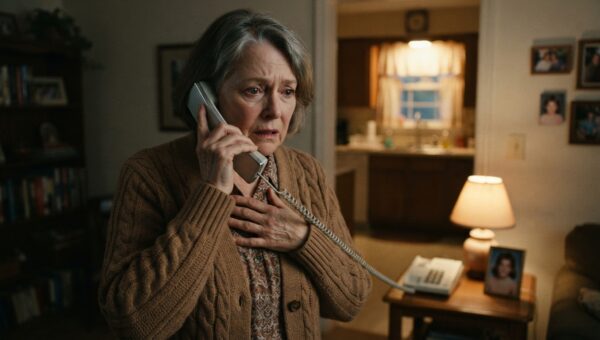
I called the number on the letter, and the woman on the other end had that flat, practiced voice they teach people who deliver bad news for a living. She explained that the loan wasn’t for a sensible sedan at all, but for a forty-eight-thousand-dollar four-wheel-drive pickup truck with leather seats and an extended cab. Leo had missed the very first payment, and since my name was primary on the note, they didn’t bother calling him twice before reaching straight into my retirement.
I had to start cutting my heart pills in half with a kitchen knife just to make the bottle stretch until the next check came through. My chest felt tight every time I walked up the three front steps, a dull, squeezing pain that I didn’t dare mention to Chloe when she brought me my mail on Thursdays. I kept thinking about Arthur sitting in that very same armchair, telling me that family is the only thing that stays when the floor rots out from under you.
By the time I finally tracked Leo down at his apartment complex downtown, my legs were shaking so hard I had to lean against the brick pillar outside his door before I could knock. When he swung the door open, he was holding a can of cold beer and wearing a gray t-shirt with grease stains near the hem. He didn’t look surprised to see me standing there in my sensible walking shoes.
“Leo, we need to talk about the bank,” I said, my voice sounding smaller than I wanted it to. “They took half my pension this month. I can’t buy my medicine, Leo.”
He leaned his shoulder against the doorframe, took a long swallow of his beer, and gave me a look that made fifty years of memories turn sour in my chest. He didn’t even look angry. He just looked bored.
“Grandma, it’s your signature on the paper, not mine,” he told me, shaking his head like I was a slow child who couldn’t grasp a simple lesson. “You’re the one on the hook, legally. I’ve got a family to think about, you’re an old lady, what do you even need money for? Should’ve read closer.”
My own grandson, and my medicine money was what do I even need it for. The kitchen behind him smelled of old pizza boxes and wet laundry. I didn’t cry. I didn’t scream or raise my voice the way my mother used to when she was pushed past her limit. I just looked at the way his jaw twitched, exactly the way his father’s did when he was lying about where he’d been until three in the morning.
“Well, maybe you’re right,” I said quietly, turning around on the worn concrete landing before he could say another word.
I let him show himself out of my thoughts for about twenty minutes, and then I called Arthur’s old friend Arthur Vance Jr., who still runs accounts down at the county credit union. Arthur Jr. didn’t ask any questions when I walked into his office on Wednesday afternoon carrying my canvas purse. He pulled the original file from the secure cabinet behind his desk, spread the thick packet across the dark wood surface, and adjusted his reading glasses.
“He didn’t just add a truck, Helen,” Arthur Jr. told me, tapping a finger against a shaded line near the bottom of page four. “He substituted the VIN number on the addendum after you signed the initial disclosure page. This isn’t just a default. This is an altered contract.”
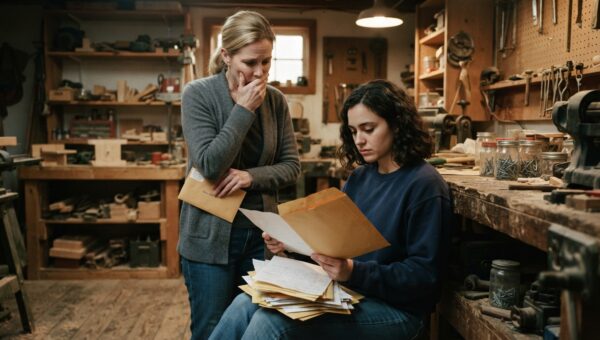
We sat in that small office for an hour while he printed out three clean copies of the original loan application, the trade-in valuation forms that Leo had faked, and the bank ledger showing every single dollar they had pulled from my retirement account. Arthur Jr. slid the papers into a heavy manila envelope with a metal clasp, handed it across the desk, and told me I had every right to walk right into a courtroom.
I told him I had a better place to be on Sunday.
Sunday morning arrived with a thin gray fog hanging over the lake down the road, the kind of damp morning that makes your joints ache before you even get out of bed. I pulled my good navy-blue dress out of the back of the closet, the one with the small white buttons down the front that I wore to Arthur’s memorial service. I brushed my hair until it lay flat against my scalp, pinned my silver brooch to the collar, and set the little amber pill bottle back on the kitchen counter right where it belonged.
Chloe pulled her blue hatchback into my gravel drive right at eleven-thirty, exactly when she said she would. She took one look at me standing on the porch with my leather handbag and the heavy manila envelope tucked under my arm, and she didn’t ask a single question. She just reached over and unlocked the passenger door from the inside.
“You look nice, Mrs. Gable,” she said softly as I pulled the door shut.
“Thank you, dear,” I said. “Drive us over to Leo’s place. The whole family’s there today.”
The yard behind Leo’s rented house was packed tight with cars parked half on the grass and half in the dirt. There was a black grill smoking up toward the oak trees, and someone had strung up plastic blue and yellow banners from the porch railing to the clothesline for the baby’s first birthday. Laughter and music were spilling out over the grass, loud and careless, floating past the shiny blue truck parked right by the back gate with temporary dealer plates still taped to the rear window.
I walked around the side of the house, my sensible heels clicking steady against the concrete patio blocks while cousins and uncles I hadn’t seen since Thanksgiving called out hellos around paper plates full of potato salad and barbecue chicken. Leo was standing near the cooler with a pair of silver tongs in his hand, laughing at something his brother-in-law had just said about the football scores.
When he saw me coming across the grass in my navy-blue dress, his smile didn’t drop entirely, but it hitched for a second before he tried to smooth it back out for the benefit of his aunts. He probably thought I had come to bring a twenty-dollar bill in a birthday card to keep up appearances in front of the clan.
“Well, look who made it,” Leo called out over the music, wiping his hands on a paper napkin and walking over with that easy, lazy stride he used whenever he wanted people to think he was the charming one. “Grandma, I didn’t think you were going to brave the crowd today. Grab a seat by the picnic table before the wasps get the cake.”
He reached out to pat my shoulder the way he always did when he wanted something, his fingers nearly touching my collar. I didn’t step back, but I didn’t let him touch me either. I opened the metal clasp on the manila envelope and pulled out the crisp, white pages Arthur Jr. had printed out three days ago.
“Not yet, Leo,” I said, and my voice carried clean across the backyard patio, clear enough that the music near the speaker seemed to drop an octave.
Leo stopped halfway, his hand hovering in the air between us like a discarded branch. “What’s that?”
“This is the loan application you brought to my kitchen table back in October,” I said, my voice staying flat and steady, the way Arthur used to talk when he was checking the ledger down at the lumberyard. “And this is the altered addendum you slipped in after I signed the first page, substituting a forty-eight-thousand-dollar truck for the sedan we agreed on.”
Around us, the backyard went entirely silent. A cousin dropping a soda can on the grass made a sharp clatter that sounded like a pistol shot, and then even the crickets in the tall weeds down by the fence seemed to stop their noise. Leo’s mother, my own daughter-in-law Martha, froze with a bowl of potato salad halfway between her chest and the table, her eyes darting from my face down to the papers in my hand.
“Grandma, what are you doing?” Leo muttered, his face turning a dark, mottled red under his summer tan as he took a half-step back toward the cooler. “You’re making a scene in front of everyone over nothing. Just take a seat.”
“I am not making a scene, Leo,” I said, stepping closer so he couldn’t back away without turning his back on his own mother and uncles. “I am reading the numbers out loud so your father and your uncles know why my pension was garnished four hundred and thirty-two dollars this month. I am explaining to them why I had to cut my heart medication in half with a paring knife last week.”
Martha dropped the bowl. It hit the grass with a wet thud, white potato salad splashing out across her clean white sneakers, but nobody looked down at it. Every single eye in that backyard was locked on Leo, who stood there with the silver tongs still gripped in his right hand, his mouth opening and closing twice before any sound came out.
“Helen, what is she talking about?” Leo’s father stepped out from the porch steps, his face hardening as he looked from his son’s guilty, frozen expression back to the official credit union letterhead in my fingers. “Leo. Did you take out a loan in your grandmother’s name for a truck?”
“It’s nothing, Dad, she’s confused, she doesn’t understand how the financing works, ” Leo started, his voice cracking on the last word as he tried to wave his hand dismissively at the paper.
“She understands well enough that you told her an old lady didn’t need her medicine money,” I said, my voice dropping an octave, cold and level in the afternoon heat. “Those were your exact words in your kitchen, Leo. You told me to read closer. Well, I had Arthur Jr. read it for me down at the credit union. And now you’re going to sign the release form transferring this entire debt back into your own name, or your father is going to read these addendums right alongside the police report Arthur Jr. prepared for us this morning.”
The silence in that yard didn’t feel heavy anymore. It felt sharp, like a glass blade being dragged slowly across wood. Leo looked around at his father, then at his uncles, who were standing shoulder-to-shoulder near the back fence with their arms crossed over their chests like stone pillars. Nobody stepped forward to put a hand on his shoulder. Nobody told him it was going to be alright.
“Get inside and get the checkbook,” Leo’s father said, his voice so quiet it barely carried past the picnic table, but there was a weight behind it that made Leo flinch harder than any shout could have. “Right now, Leo. Before I look at those papers myself.”
I didn’t stay to watch him walk back into the house with his head down. I folded the papers back into the manila envelope, secured the metal clasp with a firm click, and turned around to find Chloe standing by the garden gate with her car door already open, waiting for me.
By five o’clock, the sun was dropping low behind the oak trees at the edge of my own yard, throwing long, cool shadows across the front porch boards. The house was quiet again, the way it usually is on a Sunday evening before the week begins. I walked up the three front steps, my breathing even and deep, feeling the steady thumping of my heart against my ribs without a single hitch or squeeze.
I pushed the screen door open, walked straight into the kitchen, and picked up the small amber pill bottle from the counter. I opened it, tipped two full, uncut tablets out into my palm, and swallowed them down with a glass of tap water that tasted clean and cold all the way to my chest.