Six years. Two thousand one hundred and ninety days of lifting, washing, spoon-feeding, and listening to the rattle in Mama’s chest that sounded like dry leaves in a gutter. My brothers, Keith and Galen, managed to drive out from the county seat about four times a year. They always stayed just long enough to eat my pot roast, complain about the price of diesel, and check their watches like they had important business waiting back in town.
When Mama finally let go on a Tuesday morning with the sun just hitting the kitchen window trim, Keith didn’t even take off his ball cap while the hospice nurse checked her pulse. He just stood by the sink and asked if I had any coffee ready.
I didn’t answer him. I was too busy smoothing the quilt over Mama’s chin, my thumbs tracing the thin blue veins on the back of her hand where the skin had gone translucent like onion paper. I knew every notch on those knuckles because I’d rubbed them with mentholated salve every single night since her stroke back in ninety-four. Keith and Galen didn’t know which brand of depends she wore or how she liked her oatmeal boiled down so she wouldn’t choke. They just knew the farm was paid for, seventy-four acres of bottomland sitting right where the county was talking about running the new bypass.
The reading of the will happened in the back room of Attorney Finch’s office downtown, a cramped little space that always smelled of stale peppermint and damp wool rugs. Finch didn’t look up from his legal pads when we walked in. He just motioned us to the folding chairs with a yellow pencil eraser and cleared his throat twice before he started reading through the boilerplate about sound mind and disposing property. Keith sat with his ankles crossed, tapping his cowboy boot against the metal leg of the chair, while Galen scrolled through text messages on his phone with the screen turned up way too bright.
“The house, the outbuildings, and the primary acreage situated on County Road 12 are hereby devised in equal shares to my sons, Keith and Galen,” Finch read, his voice flat and dry like parchment. “The commercial bank accounts held at Farmers State are likewise divided between them, subject to minor disbursements.”
Galen grinned and nudged Keith with his elbow. Keith didn’t smile, but he sat up a little straighter, hitching his belt like he’d just won a calf-roping contest.
Finch paused, adjusted his bifocals down his nose, and turned the heavy stapled page. He looked over the rims of his glasses right at me, and for half a second his old eyes looked almost sorry.
“To my daughter, Arlene,” Finch read, his voice dropping an octave, “who kept the kitchen warm and the sheets clean when nobody else came around, I leave the oak butter churn that sat on the back porch since her grandmother’s day.”
Galen let out a short, wet laugh that bounced off the acoustic tile ceiling. He leaned forward, resting his forearms on his knees, and looked at me like I’d just been handed a bag of wet laundry.
“Don’t spend it all in one place, sis,” Galen said, shaking his head. “Might get you enough cream at the Piggly Wiggly for a biscuit.”
Keith didn’t say anything, but he gave a little snort through his nose and reached into his shirt pocket for a toothpick.
They didn’t stay for lunch. They had to go meet a surveyor out at the south pasture to talk about staking out lots for the equipment sheds they were planning to put up once the deeds cleared the courthouse. I didn’t argue with them. I didn’t cry in front of Finch either. I just folded my cardigan across my lap, stood up on my stiff knees, and told them I’d come by the house later to pick up my inheritance.
The churn was sitting right where it always had, tucked into the corner of the back porch behind a stack of empty canning jars and a rusted spare tire from Mama’s old Buick. It was heavy, made of old-growth white oak bound with three rusted iron hoops that had pitted into the wood over the decades. The handle was worn smooth where generations of hands had gripped it, dark with the grease of a hundred churnings. I didn’t have a truck like my brothers, so I had to lay the backseat flat in my old sedan and slide the thing in sideways, bruising my thumb against the door frame in the process.
When I got home to my little rented house on the edge of town, the sun was already dipping behind the maple trees and turning the sky that dusty bruised purple that always meant a drop in temperature. I didn’t unload it right away. I left it sitting in the trunk because my back was throbbing from three days of funeral arrangements and grieving people bringing casseroles I didn’t want to eat. I sat at my small kitchen table with a cup of instant coffee and stared out at the clothesline, wondering how I was going to pay the electricity bill now that Mama’s pension checks had stopped coming into the shared account we’d set up for her groceries.
It was three days later before I finally dragged the churn into the kitchen. The linoleum was cold against my bare feet as I wrestled the heavy wood out of the hallway and set it down near the refrigerator. The house smelled faintly of bleach because I’d spent the morning scrubbing the bathroom until my shoulders burned. I figured I ought to clean the churn out before I parked it in the corner of the parlor as a keepsake. I filled a galvanized bucket with warm water and a splash of vinegar, grabbed a stiff nylon brush, and set to work scrubbing the gray dust and dried cobwebs off the staves.
The wood drank the water greedily, swelling up in the damp heat of the kitchen. When I reached inside to scrub the bottom, my hand brushed against the wooden dasher, and I noticed something felt wrong. The handle didn’t wobble the way it was supposed to. It was wedged tight, jammed against the sides at an angle that defied how the thing had been built. I tried to pull the dasher straight up, but it wouldn’t budge an inch. It was locked in place like it had been glued down with industrial resin.
“Now what,” I muttered to the empty kitchen, wiping a damp strand of hair out of my eyes with the back of my wrist.
I took a flashlight from the junk drawer and leaned over the rim of the churn, shining the beam straight down into the dark cedar belly. The bottom looked wrong. Instead of the usual tongue-and-groove planks that showed the age and grain of the wood, there was a secondary floor fitted inside the barrel, dark and smooth and held down by four heavy brass screws with square heads. They weren’t modern screws. They were old ones, the kind you had to turn with a flathead screwdriver and a lot of muscle.
My heart didn’t stop, and the room didn’t spin like something out of a cheap novel. Instead, my brain just went very quiet, the way it did whenever Mama had a sudden turn in the middle of the night and I had to move fast without waking the neighbors. I walked over to the silverware drawer and pulled out the old butter knife with the ivory handle that Mama had used since the Carter administration. The tip was blunted from years of prying jar lids, but it was thin enough to wedge into the narrow gap between the false bottom and the ancient staves.
I knelt down on the linoleum, my knee hitting a stray piece of gravel I’d tracked in from the porch. I didn’t care. I jammed the tip of the butter knife into the seam and twisted. The old wood groaned, a dry, protesting sound that made my teeth ache. I leaned my weight into it, my shoulder muscles trembling from the strain, until I heard a sharp crack like a dry twig snapping under a boot.
The cedar panel gave way with a sudden heave, smelling powerfully of stale camphor and old wool as the trapped air rushed out into the room. I reached my hand into the dark cavity beneath the false floor, my fingers brushing against something thick and heavy wrapped in layers of yellowed newspaper from the winter of nineteen-eighty-two.
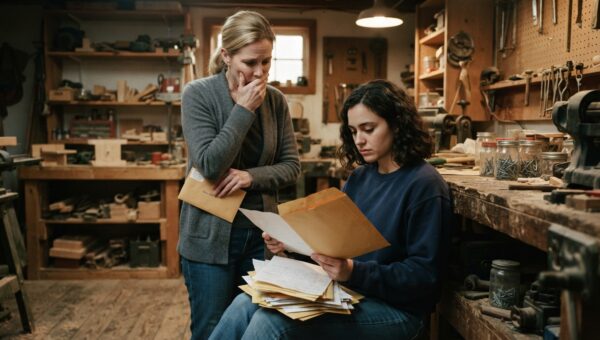
The first thing I pulled out was a bundle of cash wrapped in heavy twine, thick as my wrist, hundred-dollar bills banded together with paper strips from the First National Bank of Coldwater. Underneath that lay a folded parchment deed with the embossed gold seal of the county clerk, dated three weeks before Mama had her first major stroke, transferring full unencumbered title of the timber acreage and the home place not to her sons, but to my name alone.
Right on top of the deed was a yellow legal pad sheet covered in Mama’s spidery, uneven handwriting, the ink smeared slightly where her thumb had pressed against the margin. I held it up to the overhead light, my hands shaking so hard the paper rattled like dry leaves in the wind.
The first line read, ‘For the one who actually showed up. The land they’re fighting over was already signed off the books, but Keith and Galen didn’t check the courthouse archives before they hired their slick lawyer.’
I sat there on the kitchen floor for a long time, the cold linoleum soaking through my jeans, listening to the hum of the refrigerator and the distant sound of a semi truck shifting gears out on the state highway. I didn’t laugh, and I didn’t feel the triumph people talk about in stories. I just thought about Keith sitting by the sink with his ball cap on, and Galen texting his buddies about the new equipment sheds they were going to build on land they didn’t actually own.
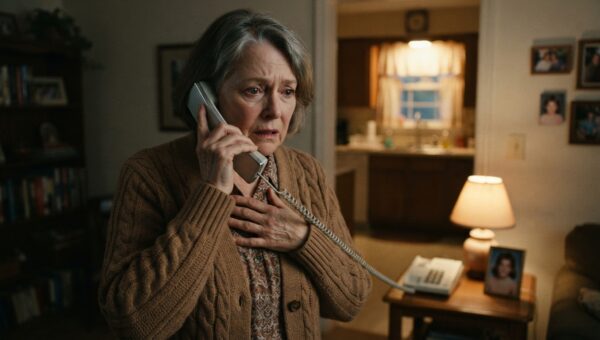
I laid the letter down beside the thick roll of hundred-dollar bills, folded the deed back up along its original creases, and reached for the telephone on the wall. I didn’t call my brothers. I dialed Attorney Finch’s direct office line, and when his secretary answered on the second ring, I told her who I was and asked if the lawyer had five minutes to look over some old paperwork I’d just dug out of the family belongings.