For forty years, Eunice sat beside me in the third pew at Grace Baptist. Same spot, left side, every Sunday. We shared mints from the same crumpled yellow wrapper, nudged each other when Deacon Miller dozed off during the third verse of the opening hymn, and held opposite corners of the same maroon songbook because the binding had broken back during the Carter administration.
Then we fell out three years ago over something so small I can’t even name it now. A casserole dish, maybe. A word said wrong. Pride is a stubborn thing, and once you let it dig its heels into the dirt, it grows roots right through your floorboards.
She moved across the aisle to the right side, two rows back. We sang the same hymns twenty feet apart and never once looked over. We walked past each other in the vestibule without nodding, pretending the other person was just part of the wainscoting or the Sunday coat rack. I told myself she was the one who was being difficult. I figured she had started it with her stiff chin and her tight little mouth. It felt easier to stay mad than to admit I missed her.
Last Sunday her pew was empty. The dark blue upholstery looked flat and abandoned without her cardigan draped over the back.
Pastor Hill stood up at the pulpit to read the prayer list, his voice carrying over the quiet hum of the overhead fans.
“Eunice Mercer, at County General, not expected to last the week,” he said.
The hymnbook slid off my lap and hit the industrial carpet with a dull thud. Nobody looked down, but I knew they heard it. I sat through the whole service like a stone, staring at the back of Mrs. Gable’s hat and hearing absolutely nothing of the sermon. That afternoon I had my grandson Toby drive me down to the hospital. Room 214. I stood outside her door for a long time, listening to the rhythmic hiss of the wall monitor and the squeak of rubber-soled shoes coming down the linoleum corridor.
Then I went in, took her hand, and sat down in the plastic chair beside the bed.
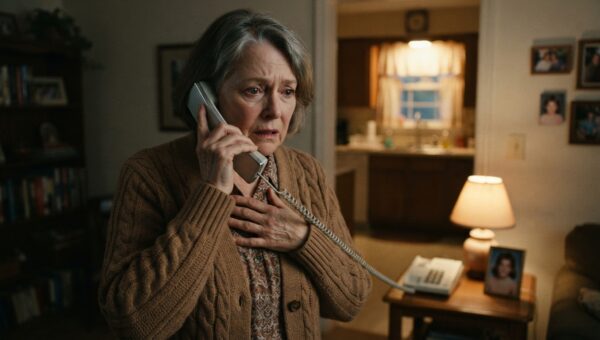
Eunice looked smaller than she had in the pew. Her skin had that thin, pale look of parchment left out in the sun, and her breathing was shallow, catching just a little at the end of each inhale.
I didn’t say anything for a long time. I just held her hand, noticing how the age spots on the back of her knuckles looked just like the ones on mine. We were cut from the exact same cloth, no matter how hard we had both tried to prove otherwise over the last three years.
After a few minutes, her eyelids fluttered. She blinked against the harsh fluorescent glare of the room, her gaze drifting slowly toward the window, then down to our joined hands, and finally up to my face.
She didn’t look surprised. She just looked tired.
“You took your time, Martha,” she whispered. Her voice was like dry leaves scraping across a porch.
I let out a shaky breath that came out sounding half like a laugh and half like a sob. “Toby drives like a Sunday school teacher,” I said, leaning closer so she wouldn’t have to strain to hear me. “I told him to step on it, but you know how boys are nowadays.”
Eunice let out a tiny, dry puff of air that might have been a chuckle back when we still shared mints.
She squeezed my fingers, and her grip was surprisingly firm for someone the doctors said was fading out.
“That casserole dish was aluminum anyway,” she muttered, staring up at the white acoustic ceiling tiles. “I didn’t even like it.”
“I threw it out,” I lied, though the truth was it had been sitting at the back of my bottom kitchen cabinet under a stack of pie plates ever since the fight. “It was dented to begin with.”
We sat there in the quiet hum of the hospital room for an hour, talking about nothing and everything. We didn’t talk about the three years we had thrown away. There wasn’t enough time left for apologies and justifications. Instead we talked about the choir director’s new wig, how Pastor Hill’s sermons had gotten ten minutes longer since he turned sixty, and how much Grace Baptist had changed now that the young families were bringing those noisy plastic toys into the basement fellowship hall. It felt so natural, sitting across from her, that for a few minutes I almost forgot the plastic tubes and the IV pole standing like a silent guard in the corner.
“I tried to leave it on your porch,” she said suddenly, her voice dropping so low I had to lean my ear right down to her lips.
I frowned, pulling back just enough to look into her clouded eyes. “What did you leave?”
“A year ago,” she murmured, her thumb rubbing a slow circle against my wrist. “Blackberry preserves. I made them in August. Left them right on your welcome mat with a little note tucked under the lid.”
My stomach gave a hard, ugly twist. I remembered that jar. I had found it sitting on my front step on a Tuesday morning last summer, wrapped in a square of checkered cloth with no name attached. I had assumed it was from one of the young couples down the road, or maybe a church outreach project. I had put it in the pantry, and eventually, when the lid didn’t pop right, I had thrown it away without opening it.
“I didn’t know it was from you,” I whispered, and my voice cracked right down the middle. “Eunice, I swear to you, I didn’t know.”
She closed her eyes for a second, her chest rising and falling in that slow, uneven rhythm. “I know,” she said softly. “Pride is a stubborn thing.”
Those were almost the exact words I had used in my own head earlier that morning. Hearing them come from her made the room feel very small and very quiet. I didn’t say anything else. I just squeezed her hand back and held on tighter, as if the physical pressure of my fingers could keep her anchored to the mattress against whatever pull was waiting for her at the end of the hall.
Over the next three days, I went back to County General every afternoon. Toby drove me without me even having to ask, parking his little truck right in the visitor lot and waiting out by the lobby with his phone and a paperback book. I sat in Room 214 and read old devotional booklets to Eunice, even when she was too tired to keep her eyes open. I fluffed her pillows and straightened the blanket over her thin shoulders. We didn’t talk about the church much anymore. We just sat together in the space we had cleared out between us, leaving no room for the three years of foolishness that had kept us apart.
By Thursday evening, her family had all gathered from out of town, a niece from Albany and a nephew from Syracuse who looked at me with polite, confused curiosity when they found me sitting in the corner armchair. I helped them keep track of the nurses’ shifts and made sure there was always a cup of lukewarm black coffee on the bedside table. I didn’t belong to her by blood, but forty years in the third pew makes a different kind of family, the kind that doesn’t need a certificate to prove it.
Eunice passed away quietly on Saturday morning just before dawn, while the rain was tapping a soft, steady rhythm against the hospital windowpanes. The nurse on duty came in to check the monitors, looked at me sitting in the chair by the bed, and gently touched my shoulder without saying a word. I stayed there until the men from the funeral home arrived, smoothing down the collar of Eunice’s favorite floral nightgown and making sure her glasses were packed safely in their hard metal case.
The funeral was held on Tuesday morning at Grace Baptist. The sanctuary smelled of fresh-cut carnations and old pine polish. The organist played that slow, heavy rendition of “Abide With Me” that always made the front rows sniffle into their handkerchiefs.
I didn’t sit in my usual spot. When I walked down the center aisle behind the family, I kept going past the second row, past the third, right up to the front where the flowers were banked. After the service ended and the murmuring crowd began to drift out toward the gravel parking lot, I walked back inside the empty sanctuary.
The left side of the third pew was completely vacant. The sunlight was pouring through the high stained-glass windows, casting red and amber patches of light across the worn oak seat. I walked over and sat down right in the middle of it, smoothing out my skirt.
Resting quietly on the wooden rack where the songbooks lived was a single hymnal, its edges frayed and its spine held together with yellowed packing tape. Someone had slipped a faded silk ribbon between the pages to mark the place for Sunday week. I reached out, my fingers brushing the cool grain of the wood, and I sat there in the empty church for a long time, listening to the wind outside rattle the old oak trees.