The hospital bill came six weeks after my fall, tucked into a windowed envelope that looked just like every other piece of junk mail I toss straight into the recycling bin. I only went in for a swollen wrist after tripping over the braided rug in the hallway. I sat down at the kitchen table to check the charges line by line, the way Arthur taught me back when we still had the hardware store and every penny had to be accounted for before we paid the suppliers on Fridays.
There was the wrist X-ray charge. The ace bandage charge. Even a twelve-dollar aspirin that made me shake my head at the price of modern medicine. Twelve dollars for a single little round pill you could buy a whole bottle of for a dollar ninety-eight down at the pharmacy. Then my finger stopped on a line right near the bottom that made no sense at all. Chest CT, incidental finding, radiology.
Nobody had mentioned a chest scan while I was sitting in that cold little examination cubicle with an ice pack strapped to my arm. I am seventy-six years old and I live on a fixed income of $1,580 a month from Arthur’s old pension and my small social security check, so I read every single word twice to make sure my eyes weren’t playing tricks on me. My budget is balanced to the nickel every month, and an extra charge for a test I never agreed to or even knew about was something I couldn’t just let slide.
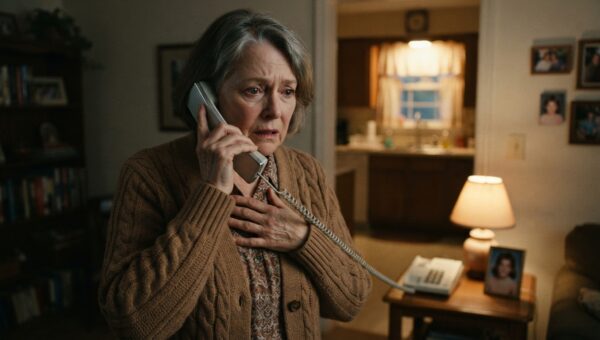
I walked over to the landline on the wall and dialed the number printed at the top of the statement with my thumb trembling just a little bit against the plastic buttons. The girl who answered put me on hold for what felt like half an hour while tinny classical music played through the speaker. When she finally came back, her voice had changed from that bright, cheerful customer service tone to something careful and much too soft.
She told me that a doctor had tried to reach me back in April about the results, and that the notification letter must have gone astray when I changed addresses two summers ago. Then she said the scan showed something in my chest that needed looking at. She gave me a name and a department extension before she clicked off, leaving me standing in the quiet kitchen with the dial tone humming against my ear like a little trapped bug.
I sat back down at the table and opened my green ledger book, the one with the black cloth binding where I keep track of the electric bill, the water, and the pharmacy refills. My hands felt clumsy and cold against the paper. Arthur always said that if you don’t keep your own books straight, somebody else will do it for you, and they won’t be doing it in your favor. I looked at the little column of numbers representing my monthly balance of $1,580, minus rent, minus groceries, minus the supplement insurance that went up three dollars every January. There was nothing left in that column for unexpected medical tests, but there was even less room for ignoring a doctor who had tried to reach me back in April.
I didn’t want to call my niece Clara because Clara has two teenage boys and a part-time job at the library, and she always gets that worried look on her face that makes me feel like a burden.
Instead, I put on my good wool coat, tucked the hospital bill and my insurance card into my handbag, and walked the three blocks down to the community center where the senior outreach volunteers keep an office on Tuesdays.
The office smelled of floor wax and old newspapers, and Martha was sitting behind her desk drinking weak tea out of a paper cup. Martha has known half the people in this county since we were girls going to the consolidated school, and she knows how to talk to people who work behind counters without making them put their backs up. I laid the bill down on her blotter and pointed right at that strange line about the chest scan.
Martha didn’t say anything for a long minute while she adjusted her bifocals and read the paper. Then she looked up at me over the frames with her eyebrows pulled together in that familiar stubborn way she used to have when we played basketball in the gym. She told me we needed to get the actual medical records straight from the hospital records department instead of just talking to billing clerks who didn’t know a chest scan from a box of staples.
We spent the next morning filling out three different yellow forms and paying four dollars in exact change for photocopy fees out of my grocery envelope. Martha drove us over to the main medical center on the highway, her little blue sedan rattling every time she hit a patch of gravel on the county road. We sat on those hard plastic chairs in the records lobby while a young man with very shiny hair tapped away on his computer keyboard and muttered about database migrations and old server backups.
When he finally slid a thick manila envelope across the counter toward us, it felt heavy enough to hold a brick. Martha took it and tucked it right under her arm like it was a valuable package of seed corn. We didn’t open it in the car because we both knew what we were looking for was inside those pages, and neither of us wanted to read medical terms in a parking lot between the pharmacy and the physical therapy wing.
We went back to my kitchen table and made a fresh pot of tea, the cheap kind in the red box that Arthur always bought two at a time when it went on sale. I opened the manila folder and spread the pages out under the brass lamp. There was the emergency room admission sheet from the afternoon I fell, and right beneath it was the radiologist’s report signed by a doctor named Helen Vance.
My finger traced the lines down the page until I found the paragraph about the lower lobes. It wasn’t some mysterious shadow that could mean anything or nothing. It was a small, localized nodule measuring twelve millimeters sitting right there in the upper right lobe of my lung, caught by pure accident while the technician was scanning my upper spine and ribs for the wrist fall. Dr. Vance had written a formal request for a follow-up appointment back in April, right before the hospital switched over their computer billing system and lost half the forwarding addresses of anyone who had moved since the previous census.
Martha read the signature and then looked across the table at me with her mouth set in a straight line. She asked me if I wanted her to help me draft a letter to the patient relations office, or if I wanted to call Dr. Vance’s office directly and bypass the front desk altogether. I told her I would make the call myself because Arthur always said if you want a fence mended right, you don’t send the neighbor boy to do it.
The following Tuesday morning, I sat in a small consultation room on the third floor of the medical center across the table from Dr. Vance, a woman with graying hair and tired eyes who looked like she hadn’t slept properly since the previous autumn. She had my file open right in front of her, and she didn’t try to hide behind fancy medical words or hospital policy when she spoke to me.
She looked right at me and told me that the administrative handoff during the software migration had dropped my follow-up notice into a digital folder that nobody checked after the old records clerk retired. She didn’t make excuses, which I appreciated more than a dozen apologies. She just told me that the nodule needed a proper biopsy and that catching it at twelve millimeters was a stroke of luck, even if it arrived via an unexpected line item on a bill for a swollen wrist.
I asked her straight out what the hospital was going to do about the charges and the delay, keeping my voice level and steady the way Arthur taught me when we had to negotiate with the bank during the drought years. I laid my budget ledger right there on her desk next to her medical charts to show her that seventy-six dollars a month for extra diagnostic tests wasn’t an item I could just scratch out of my grocery money.
Dr. Vance didn’t blink. She reached for her desk phone, spoke quietly to someone in administration for about three minutes, and then looked back up with a small, tired sign of relief. She told me that the hospital would absorb every single cost associated with the follow-up workup due to the notification failure, and that my chart had been flagged for an expedited pulmonology appointment with zero out-of-pocket expenses.
The billing department error that put that strange line on my statement didn’t fix itself, and the missing letter didn’t magically reappear in my hallway mailbox. But sitting there in that office, listening to the doctor outline the schedule for next Tuesday morning, I knew I had done the only thing that mattered. I had read the ledger line by line, refused to let a clerk brush me off with a soft voice on the telephone, and forced the machine to look at me as a person instead of an unpaid account balance.
When I got home that afternoon, the sun was sitting right at that low angle where the dust motes dance above the linoleum in the front hallway. I walked into the kitchen, took off my wool coat, and hung it carefully on the peg by the back door. I sat down at the table under the brass lamp and picked up my red ballpoint pen.
A neat manila folder rested squarely beside the pen and my budget ledger on the kitchen table, the lamp light catching the crisp edge of a scheduled appointment card for Tuesday morning. I opened the green book to a fresh page, drew a clean line under my monthly calculations, and wrote down the time of the appointment in the margin where I couldn’t possibly miss it.