The cold zinc handle of the bolt cutters bit right into my palm, but I didn’t care about the sting. Me and my brother Wayne barely spoke the last five years he was alive. Never really knew why. We were tight coming up, hunted together every deer season down by the river bottom, and split a booth at the Cracker Barrel every single Sunday after church.
Then somewhere along the way he just backed off. Quit calling. Made excuses at Thanksgiving. I figured I had done something to piss him off, though for the life of me I couldn’t guess what it was.
He passed last month. Fifty-nine years old, his heart just gave out while he was sitting in his recliner. No wife, no kids, so it fell entirely on me to clear out his little rental house over in Sapulpa.
It took me a whole Saturday, and it about broke me how little there was of him. His whole life fit right in the bed of my F-150. There was his old VFW cap hanging on a peg by the kitchen door, a pair of worn-out work boots, and a desk drawer full of unpaid medical bills that told me plenty about how his final years had gone.
The house smelled like stale instant coffee and old paper. I carried out his mattress, loaded up his clothes in heavy black trash bags, and swept the kitchen floor.
But when I got into the bedroom closet, I found something that didn’t fit with the rest of the bare-bones place.
It was a heavy metal storage cabinet, the kind they use in offices, and it had a shiny new brass padlock clamped through the latches. Everything else he owned was just sitting out in the open, unlocked and unguarded. That was the only locked thing in the entire four rooms.
Part of me didn’t want to open it. I stood there in the dust motes with my hands on my hips, listening to the hum of the refrigerator in the empty kitchen. But the landlord wanted the keys back by the first of the month, and I couldn’t leave a mystery behind him now that he was gone.
I walked back out to the truck, grabbed the heavy bolt cutters from behind the seat, and carried them back into the bedroom.
I jammed the jaws of the tool around the shackle of the lock. My hands shook a little bit, not from the weight of the metal, but from a strange, cold knot in my chest.
“Come on, Wayne,” I muttered to the empty room.
I squeezed the handles together. The brass shackle gave way with a sharp, metallic snap that echoed off the bare drywall. I pulled the lock free, let it drop onto the floorboards with a dull thud, and pulled the metal door open.
Inside, the cabinet wasn’t full of money or old heirlooms. It was packed tight with orderly stacks of manila folders, all labeled in Wayne’s careful, block-letter handwriting.
I reached out and pulled the top folder. The tab read *2019 – Medical*. I opened it up and sat down hard on the edge of the bare mattress, the springs groaning underneath me.
The first paper I looked at was a hospital discharge summary from St. John over in Tulsa, dated right around the time Wayne stopped returning my phone calls.
Diagnosis: congestive heart failure, advanced stage. Prognosis: guarded. Below that was a stack of denial letters from his health insurance provider, explaining in cold corporate language why they wouldn’t cover the specialized treatments he needed.
I flipped through the pages, my thumb catching on the rough edges of bill after bill. Thousands of dollars. Tens of thousands. Piles of past-due notices, collection letters, and payment plans he had tried and failed to maintain on his meager pension from the plant.
“You stupid bastard,” I whispered to the empty room, my throat tightening up until it burned.
Wayne had always been proud, stubborn as a mule and twice as hardheaded. When our daddy died owing half the county for feed and seed, Wayne worked two shifts at the foundry just to keep the homestead from going under. He didn’t know how to ask for help because asking for help felt like dying to him.
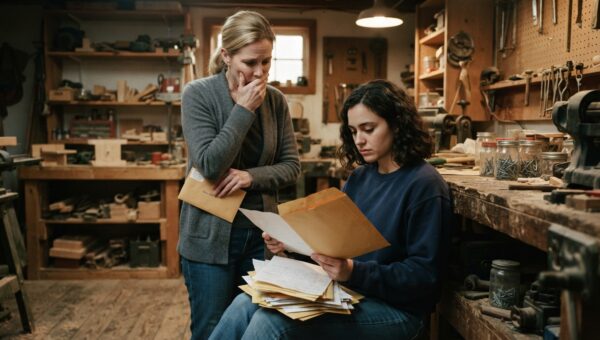
I kept digging through the cabinet. Beneath the medical files sat a thick bundle of yellow legal paper, bound together with a rubber band that had dry-rotted and snapped in half. I slipped the papers out and laid them across my knees.
They were letters. Dozens of them. Each one was dated, folded neatly, and addressed to me, but none of them had ever been mailed. No stamps. No envelopes. Just raw, handwritten words on lined paper.
I unfolded the top one, dated a little over four years ago.
*Tom,* it started out. *Tried to call you today. Saw your truck parked outside the feed store, but I turned around and drove past. My chest feels like someone’s sitting on it with a sack of gravel. The doctor said I’ve got maybe three years if I’m lucky, less if I keep working the dock. I can’t let you see me like this. You’ve got your girl starting college and your own bills. I won’t be an anchor dragging you down into the dirt with me.*
I stared at the ink until the letters started blurring together. My chest felt tight, too, matching the heavy silence of the room. I had spent five years being mad at him. Five years of sitting at our Sunday Cracker Barrel booth alone, stirring my coffee and wondering why my own brother decided I wasn’t worth a phone call anymore. I thought he was just being distant, or stubborn, or mean.
I turned to the next letter, then the next. Day after day, month after month, Wayne had written to me in the quiet of that little Sapulpa rental. He wrote about the weather, about remembering the big eight-pointer we bagged back in ’94, about how good the coffee tasted on crisp autumn mornings. He talked to me on paper because he couldn’t bring himself to say the words out loud.
“I miss you, little brother,” I read aloud from a page dated last Thanksgiving. The words caught in my throat, dry and heavy. “Cracker Barrel must be packed today. Hope you got a good table.”
The last letter in the stack was different. It wasn’t dated on the top corner like the rest. It was written on a single piece of plain white printer paper, folded in half and placed inside an unsealed envelope with my name written across the front in shaky, uneven handwriting that didn’t look like Wayne’s usual clean script.
I pulled the paper out and unfolded it slowly.
*Tom, if you’re reading this, I guess the old engine finally quit for good,* it said. *I’m sorry I shut the door. It wasn’t because I didn’t love you. It was because I loved you too much to let you watch me break apart piece by piece. Keep my VFW cap. Put me next to Mama if there’s enough left over after settling the accounts. Don’t be mad at the silence. It kept us safe.*
I sat there on the edge of that bare mattress for a long time, holding the paper in my hand while the afternoon sun cut a long, dusty diagonal across the floor. There was no grand revelation waiting for me in the cabinet, no hidden treasure or dark family secret. Just the heartbreaking math of a proud man trying to protect his little brother from the slow, ugly work of dying.
I didn’t cry right away. I just felt this deep, heavy ache settling into my bones, a kind of sorrow that didn’t have any sharp edges left to cut me. The anger I had carried around for five years just evaporated into the dusty air of the room, leaving nothing behind but the quiet truth of what Wayne had done.
I spent the next hour packing up the letters and the medical files into a cardboard box, making sure every last piece of his private life was tucked away safe. I walked over to the kitchen wall, reached up, and lifted his old VFW cap off the wooden peg. The wool was worn thin around the brim where his thumb used to rest.
I carried the box and the cap out to my truck and set them on the passenger seat. Then I walked back inside one last time to make sure nothing was left behind. The rooms were completely empty now, echoing with every step I took across the wooden floorboards.
I pulled the front door shut behind me, turned the heavy brass key in the lock for the very last time, and dropped the ring of keys onto the small wooden table on the porch.
The sun was dipping low behind the water tower at the edge of town, throwing long orange light across the asphalt of the parking lot. I climbed into the cab of the F-150, started the engine, and looked over at the passenger seat where the VFW cap sat next to the open envelope.
I put the truck in gear, pulled out onto the highway, and finally drove home.