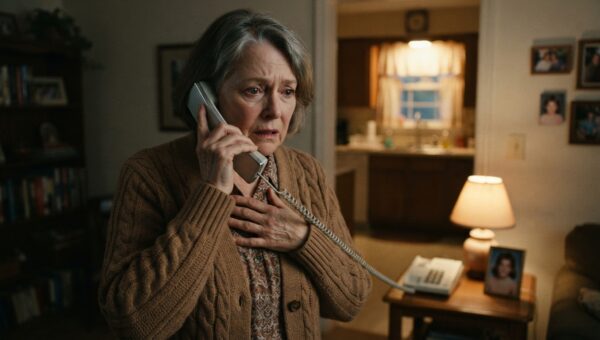
The phone call came at 2:14 on a Tuesday afternoon while I was halfway through folding a basket of laundry.
“Is this Bernadette Vance?” the voice on the other end asked, dry and formal like a tax form.
“Yes,” I said, pausing with a striped dishtowel half-tucked under my arm. “Who is this?”
“My name is Arthur Pendelton. I am an attorney representing the estate of Roy Callahan.
I need you to come by my office on 4th Street tomorrow morning at ten o’clock.”
My hand tightened around the cotton fabric until my knuckles went stiff. I hadn’t heard Roy’s voice in six years, not since the grocery store aisle where he pretended he didn’t see me behind the canned peaches. I hadn’t heard his name spoken out loud by a stranger in even longer.
“Roy is my ex,” I said, keeping my voice flat because I didn’t want the man on the line to hear the sudden hammering in my chest. “We haven’t been together for years. If this is about debts or property he left behind with his wife, you have the wrong person.”
“I have the right person, Ms. Vance,” the lawyer replied, his tone softening just enough to be irritating. “Mr. Callahan passed away last month following a motor vehicle accident on Highway 30.
His will was executed yesterday morning. You are the sole beneficiary of his entire estate.”
“That’s not possible,” I whispered, staring down at the basket of laundry on the sofa. “He has a wife. Brenda. They got married six months after he walked out on me.”
“Brenda Callahan has been notified,” Arthur Pendelton said smoothly. “Her name does not appear in the primary provisions of the document. Please be at my office tomorrow at ten. Bring your driver’s license.”
The line went dead with a soft click, leaving me standing in the middle of our quiet living room with the hum of the refrigerator filling the silence.
Roy and I spent thirty years together in that brick house down on Maple Street. We never bought rings and we never signed a license, mostly because we figured paper didn’t change the way we woke up and made coffee together every morning.
We built a life out of shared paychecks, two rescue dogs that lived to be fifteen, and a vegetable garden in the backyard that took over half the lawn. I thought we were the kind of old couple people write stories about. I thought we were permanent.
Then came the spring he started staying late at the lumber yard where he managed the accounts. He stopped looking at me across the dinner table. When I asked him what was wrong, he just stared at the television and told me I was imagining things.
“Nothing is wrong, Bern,” he said that last night, his voice hollow and flat. “Just leave it alone.”
The next morning, his closet was half-empty. The suitcase we took to Lake Michigan was gone from the hall closet. On the kitchen counter sat a folded note on a yellow legal pad that said he needed a change of pace.
Six months later, he married Brenda, a woman twenty years younger who worked the front desk at his office. I didn’t fight him. I packed my boxes, rented a small apartment across town, and had to learn how to sleep in a bed that only had one pillow on it.
It took me four years to put my life back together. I went back to school for my bookkeeping certificate, found a steady job at the county water board, and eventually met Marcus. Marcus was steady and kind in a way Roy never quite managed to be. When our daughter Chloe was born, I thought the past was finally dead and buried. I had a family of my own. I had peace.
Yet Roy still found a way to reach into my life. Every year on my birthday, a plain white envelope would arrive in the mail with no return address, containing a crisp fifty-dollar bill and a single sentence written in his familiar, left-leaning cursive: *Hope you’re doing well.* I always burned them in the kitchen sink. I didn’t want his charity or his guilty conscience.
Then Chloe turned two. Roy somehow heard about her through someone down at the water board, and his annual birthday greeting changed into something venomous. A postcard arrived in September with his handwriting shaking so badly I barely recognized it. *How could you do that? After all our years together, you go and have a kid with someone else? You promised me we were done with that.*
I stared at the postcard until the ink blurred. He acted like I had cheated on him, even though he was the one who packed his bags and married another woman years before Marcus and I even met. I threw the card away and blocked the number he had tried to call from twice that week.
Four months after that postcard, he drove his truck into a bridge abutment on a rainy stretch of Route 9.
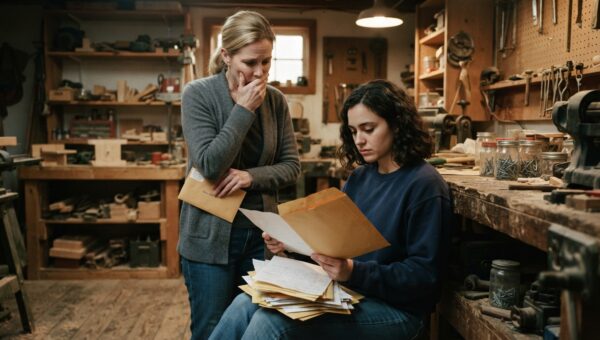
The next morning, I drove down to Arthur Pendelton’s office on 4th Street with my hands shaking on the steering wheel. The waiting room smelled of old leather and floor wax. Arthur didn’t waste time with small talk. He ushered me into a small conference room with dark wood paneling and slid a thick manila folder across the mahogany table.
“The total valuation of Mr. Callahan’s estate, including his private savings, the equity in the house he shared with Brenda, and his life insurance policy, comes to six hundred eighty-four thousand two hundred dollars,” Arthur said, adjusting his glasses. “It is all assigned to you.”
I sat back in my chair, the breath leaving my lungs all at once. “That’s insane. Brenda is his legal wife. She’s going to contest this until she owns the clothes on my back.”
“She has already tried,” Arthur replied, opening a red folder. “She threatened to sue me, the firm, and the state of Nebraska yesterday morning. But the will was drawn up three years ago, and it was updated six months before his death. Every signature is notarized. Every asset is cleanly separated. Mr. Callahan left his wife a modest vehicle and a small designated bank account, exactly as the law requires to prevent total disinheritance. The rest belongs to you.”
“Why?” I asked, my voice cracking. “Why would he do this to her? Why would he give it to me after everything?”
Arthur reached into the manila folder and pulled out a heavy, sealed envelope with my name written on it in that same familiar cursive. “He left this for you as well. He instructed me to hand it to you personally after the estate documents were reviewed.”
I took the envelope. It felt heavy, thicker than a normal letter.
“Take your time, Ms. Vance,” Arthur said, standing up and walking toward the door. “I’ll wait outside.”
I sat alone in that quiet room for ten minutes, staring at my name on the front of the envelope. The paper was high-grade stationery, the kind Roy never bought for himself. My fingers felt cold as I slid my thumb under the flap and tore it open.
*Bern,*
*If you are reading this, Arthur did his job, and I am finally where I belong. I know you hate me. You have every right to. Walking out the way I did was the most cowardly thing a man could do, and I spent every single day since wondering how I managed to look at myself in the mirror.*
I stopped reading for a second. My throat felt tight, and my eyes stung.
*I need you to know the truth about why I left. I didn’t meet Brenda at work because I fell in love with her. I knew what was coming before anyone else did. My father went the same way when he was sixty-two, forgetting his own name, forgetting who my mother was, living in a fog until his brain simply stopped firing. When the doctor gave me my diagnosis three weeks before our thirtieth anniversary, I knew I was carrying the same clock in my head.*
My chest went cold. I read the words three times, the letters blurring together on the page.
*I couldn’t do that to you, Bern. I couldn’t watch you spend the best years of your life changing my sheets, wiping my chin, and watching the man you loved turn into a stranger who didn’t even know your face. You loved our life. You loved our independence. If I stayed, I would have dragged you down into that dark house with me. So I manufactured the fight. I made you hate me so you would walk away cleanly while you still had enough time left to build something real.*
My hand started to tremble so badly I had to lay the letter flat on the table.
*Brenda knew the score from the start. We had an arrangement. She wanted a house and financial security, and I needed someone who wouldn’t break my heart when the bad days started. She wasn’t my wife in the way you were my wife, Bern. She was just a nurse who shared my roof. But when I heard you had a baby with your new partner, something inside me broke. It wasn’t jealousy. It was sheer panic. I spent thirty years terrified that I was passing this rotten wiring down through my blood, and hearing that you were raising a child made me lose my mind. I wanted to scream at you to protect yourself, to protect her, but I didn’t know how to say it without telling you the truth about my head.*
I covered my mouth with my hand, letting out a ragged breath that sounded like a sob.
*The money in this estate isn’t a gift. It’s yours. It represents every paycheck I hid away, every insurance policy I stacked up, and every dollar of the thirty years of labor you gave me without ever asking for a reward. You kept me afloat when I had nothing, and this is the only way I could figure out how to give you back your safety. Spend it on your little girl. Give her the college I never had. And please, if you can find it in your heart before the day is done, try to forgive the coward who loved you enough to let you go.*
*Roy.*
The office was dead silent except for the faint hum of the fluorescent light overhead. I sat there for a long time, staring at the final sentence until the words stopped being ink and started being just a man’s voice echoing in my memory.
Three days later, Brenda’s attorney sent a formal letter demanding a full surrender of the estate assets under threat of a protracted court battle. She claimed undue influence. She claimed Roy was not of sound mind when he signed the papers.
I didn’t yell, and I didn’t call my lawyer in a panic. I just sat at my kitchen table with Chloe playing with her wooden blocks on the rug beside me, and I signed the counter-notice Arthur prepared.
“She’s going to fight us every step of the way,” Arthur warned me over the phone that afternoon.
“Let her,” I said, looking out the kitchen window at the tomato plants struggling against the early autumn frost. “She got what she bargained for. But this belongs to our thirty years.”
The legal battle lasted four months, but the will held firm against every challenge Brenda’s lawyers threw at it. In the end, she settled for the house and her designated accounts, and the rest of the funds were transferred into a secure trust for Chloe’s future and a retirement account with my name on it alone.
Marcus didn’t ask questions about the money, and he didn’t ask why I kept that single envelope tucked safely inside the cedar box in the back of my closet. He just held my hand across the kitchen table one evening when the rain was tapping against the glass, and told me everything was going to be all right.
I still think about Roy sometimes, especially when the weather turns cold and the leaves start piling up against the back fence. I don’t think about the cruelty of the way he left, and I don’t think about the anger in those late-night phone calls anymore. I just remember the way he used to laugh when the old dog chased her own tail in the grass, before either of us knew how short our time really was.
The past is a heavy thing to carry, but once you finally know the weight of it, you can finally set it down.