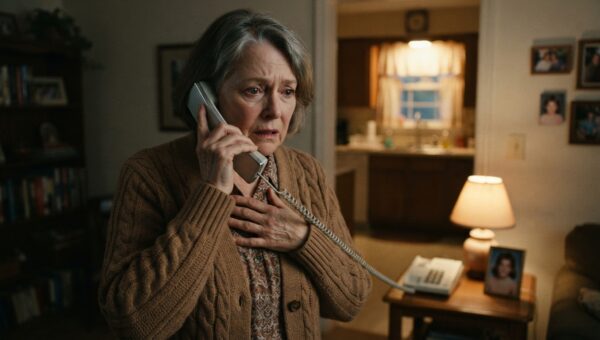
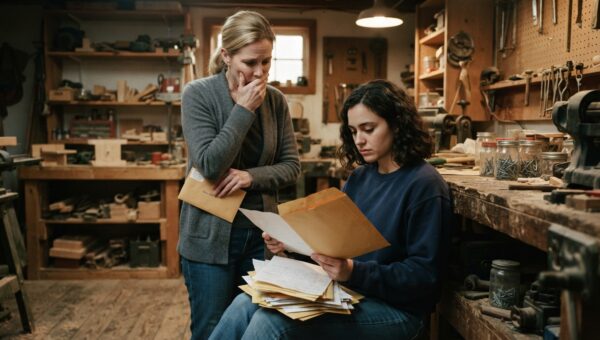
The heavy metal drawer of my steel desk had a sticky runner that always hitched an inch before closing, a small, stubborn friction I had grown to know by touch alone over twelve years of working as the parish secretary at Grace Fellowship. Inside that top drawer sat the green binder we called the prayer notebook, its cardboard edges softened from constant handling, filled with handwritten lists of shut-ins, surgical recoveries, stray financial worries, and the quiet private burdens of seventy-four regular parishioners.
I kept it locked every evening when I left at four, but during the day it stayed close at hand, a ledger of human trouble that I tended with the neat, colored ink of someone who believed order was a form of grace.
Six months before the copier incident, the church food pantry cash box came up short during our monthly audit. We maintained an emergency float of precisely eighty dollars in cash for perishable staples like milk or eggs when a family arrived between regular delivery days, and that Tuesday morning the tin box held only a few loose coins and a folded deposit slip. I remember standing by the folding table in the fellowship hall, holding the empty tin while the radiator hissed a dry, metallic rhythm against the baseboard. Mrs. Clara Lawson had been the last person to use the pantry room the previous afternoon, coming in alone to pack her weekly delivery of homemade potato soup for the three elderly shut-ins she looked after on Maple Street.
Clara lived entirely on a fixed income of one thousand seven hundred and forty dollars a month, mostly from a small survivor pension and social security, yet she always carried herself with a quiet, straight-backed dignity that made her seem almost untouchable. When I mentioned the missing money to committee chairwoman Brenda Vance later that afternoon, I didn’t mean to start a fire; I just thought we ought to keep track of things. Brenda sighed, shook her head, and said those exact words that set the wheel in motion. “Well, people under pressure do strange things.”
By the following Sunday, the whisper had found its own footing among the ladies who arrived early to arrange the hymnals. Nobody confronted Clara directly because small-town kindness often wears the mask of avoidance, but the pews on either side of her customary spot in the fifth row began to clear out like tide water pulling away from a piling.
When Clara walked down the center aisle in her navy cardigan with her silver hair pinned neatly back, she smiled her usual gentle nod to the people she had known for decades, only to find eyes dropping down to bulletins or hymn books. I watched her from my desk near the vestry, feeling a small, tight knot of self-righteous justification settle in my chest, telling myself we were simply protecting the church’s accounts.
The worst moment came three months into the silence, on a damp Thursday morning when Clara lingered by the coat rack in the back foyer after a mid-week service. I was sorting collection envelopes at the side table when she turned to me with her eyes shining with a tired, genuine confusion that should have broken my heart right then. She didn’t raise her voice, but her hands shook slightly as she adjusted the strap of her handbag. “Why won’t anyone sit beside me anymore?” she asked me, her voice thin and small against the empty sanctuary walls.
I looked away toward the bulletin board, mumbled something about people being busy with committee work, and let her walk out into the cold drizzle alone.
For three more months, the silence held. The prayer notebook filled with new names, and every Wednesday I dutifully jotted down requests for traveling mercies and healing bodies, never once writing down the one prayer Clara needed most, which was simply for someone to believe her. I didn’t think of myself as cruel. I thought of myself as an administrator keeping the books straight, a person who valued facts over sentiment, never realizing how easily a fact could be forged out of pure ignorance.
The change came on a Tuesday afternoon when our treasurer, a retired accountant named Arthur who moved with slow, deliberate precision, decided the office copier needed to be shifted two feet to the left so the repair technician could reach the main paper feed during the upcoming annual service. Arthur heaved the heavy machine toward the window while I held the power cord, and as the rubber feet scraped across the commercial carpet, a small, folded piece of pink paper slid out from beneath the front caster. Arthur picked it up, smoothed out the wrinkles against his palm with a thumb, and frowned through his bifocals. “What’s this doing under here?” he muttered, mostly to himself.
I walked over, took the slip from his hand, and my breath caught somewhere near my collarbone. It was an official local utility receipt stamped paid in full, dated the exact afternoon six months ago when the pantry cash box was short, bearing an account number belonging to Mrs. Evelyn Gable, the eighty-year-old widow who lived alone in the drafty house down near the railroad tracks. Tucked behind the receipt was a small square of church memo paper written in Clara’s familiar, sloping cursive. “Took $80 emergency float for Mrs. Gable power shutoff notice. Will replace November 1st. C.L.”
The copier hummed softly in the corner, its internal fan vibrating through the small office table while Arthur stared at me over his glasses. I didn’t even know why I remembered this part, but the radiator hissed the exact same dry, rhythmic sound it had made on the morning I first discovered the missing cash. I read the handwritten memo aloud in the empty office because my brain refused to process the words silently, my voice sounding thin and hollow in the small room. My cheeks burned with a sudden, searing heat that spread all the way down to my neck as I remembered Clara asking me why nobody would sit beside her, her small hand gripping her handbag strap in the empty foyer.
Before Arthur could ask a single question, the heavy wooden door to the outer hallway swung open and Pastor Thomas stepped into the office, holding a stack of youth group permission slips. He stopped when he saw my face, his expression shifting from mild administrative curiosity to immediate, heavy concern as he looked from the pink receipt in my hand to Arthur’s grim silence. “Is something wrong here?” he asked, his voice dropping into that quiet, steady register he reserved for moments of genuine crisis. Arthur didn’t hesitate, handing the receipt and the memo directly across the desk to the pastor without a word.
Pastor Thomas read both pieces of paper twice, his thumb tracing the edge of the utility stamp where the local power company had marked the account satisfied just hours before Evelyn Gable’s electricity was scheduled to be cut off during a week when overnight temperatures dropped into the teens. He looked up at me, his eyes dark with a disappointment so heavy it felt physical, like someone pressing a hand against my chest. “Bring me the prayer notebook,” he said, his voice entirely devoid of anger, which somehow felt infinitely worse than if he had shouted. “And tell the congregation who started the story.”
I stood frozen by the desk for three long seconds, wanting nothing more than to shrink down into the floorboards or pretend I hadn’t heard him, but the pink receipt lay right there under the fluorescent lights with Clara’s neat handwriting staring back at me. “I did,” I whispered, the words tasting like dry dust in my mouth. Pastor Thomas didn’t offer a word of comfort or an easy out; he simply laid the prayer notebook on top of the utility slip and told me to have my notes ready for Sunday morning.
The rest of that week passed in a blur of cold dread that settled into my bones every time I tried to sleep. On Saturday afternoon, I sat at my kitchen table with a yellow legal pad and a ballpoint pen, trying to draft what I needed to say to the people I had misled for half a year, crossing out sentence after sentence because every excuse I wrote down sounded hollow and cowardly in the quiet house. I realized then that my whole life had been spent keeping the peace through small omissions and polite avoidances, letting other people take the blame whenever it kept my own desk looking neat and orderly.
Sunday morning arrived with bright, cold autumn sunlight streaming through the stained-glass windows, casting long blue and amber shadows across the polished oak pews. The sanctuary was fuller than usual, the murmur of the congregation carrying that familiar, comforting Sunday morning chatter until the moment Pastor Thomas stepped up to the podium and announced that the normal order of service would be paused before the opening hymn. The silence that fell over the room was absolute, broken only by the faint hum of the ceiling fan high above the rafters.
I stood up from my usual seat in the front row, my knees shaking so badly I had to grip the sides of the wooden lectern to keep my balance as I walked up the three carpeted steps to the microphone. I looked out over the sea of faces, Brenda Vance in the third row, Arthur sitting near the back by the soundboard, and several other familiar women who had repeated my words on the prayer chain week after week. I didn’t look for Clara because I knew she wouldn’t be there, having stayed home rather than face another Sunday of empty space beside her.
“Six months ago, I made an assumption,” I began, my voice cracking slightly on the first word before I forced it to steady itself against the microphone. “I found eighty dollars missing from the pantry box, and instead of asking or checking the records, I whispered a suspicion that grew into a lie.” I read the utility receipt aloud, word for word, detailing how Clara Lawson had taken the emergency cash to pay Evelyn Gable’s electric bill during a bitter freeze while surviving herself on less than two thousand dollars a month. I read Clara’s handwritten note from beneath the copier, letting every name and every detail echo off the timber ceiling until the silence in the room felt thick enough to touch.
When I finished, nobody moved for a long, terrible moment. Then Brenda Vance let out a sharp, audible gasp, her hand flying up to cover her mouth as the full weight of what our little whisper network had done settled over the sanctuary. People began looking at one another with wide, shocked eyes, the realization of our collective cruelty dawning in real time across the pews. Pastor Thomas didn’t offer a benediction or a neat summary; he simply invited the congregation to spend ten minutes in silent prayer before dismissing the service early.
That afternoon, I drove my sedan down Maple Street with a heavy wicker basket filled with fresh bread, canned preserves, and a fresh notebook containing every apology the ladies’ committee had hurriedly written out after church. Clara’s small white-frame house sat back from the road behind a neat border of overgrown boxwood hedges, its front porch swept clean of fallen leaves. When Clara opened the front door in her worn housecoat, her expression was cautious and tired, the lines around her eyes deeper than I had remembered from six months of loneliness.
“Clara,” I said, my voice breaking as I held out the basket and the utility receipt between us. “I am so sorry. We were all wrong, and I’m the one who started it.” She stared at the paper in my hand for a long moment, her breath catching softly before she looked up into my eyes with a gaze that held no malice at all, only a profound, weary sadness. She didn’t slam the door, and she didn’t offer a grand speech of forgiveness; she simply stepped back, opened the door wider, and invited me inside out of the autumn chill.
The following Sunday, the morning light came through the tall stained-glass windows in slants of amber and deep crimson, warming the old wooden floorboards of the sanctuary just before the eleven o’clock bell rang out across the neighborhood. Clara Lawson walked down the center aisle in her navy cardigan, her head held high in that same quiet dignity she had never lost, and stopped at the fifth row where the pews had been deliberately left open. As she settled into her usual place, I slid into the seat directly beside her, opening our worn hymnals to the same page. Her worn velvet hymnal rested open on the wooden pew beside my hands, sharing a single shared book of common prayer under the stained-glass morning light.